Lesson 4 of 7 in Riding Fundamentals
Cornering, Ruts and Berms
To corner fast on an enduro bike, finish your hard braking in a straight line, pick the gear for the exit, then lean the bike while your body stays upright, with weight on the outside peg and your eyes on the exit. Stand for most trail corners. Sit in long ruts, fast flat turns and smooth sweepers, with your inside leg forward and up. In ruts and berms, commit to the lean, keep your head up and hold a steady throttle.
Updated October 2026. Sources are listed below. How we work
On this page
- Why fast corners matter in enduro
- Stand or sit: it depends on the corner
- Standing corners: lean the bike, not your body
- Seated corners and the inside leg
- Braking, gear and drive
- Flat, slick and soft turns
- Ruts: pick one, commit, hold the throttle
- Berms: let the wall hold the bike
- Reading the trail at speed
- Drills: flat field to real trail
- Cornering mistakes and fixes
- A 40-minute cornering session
- You're ready to move on when…
- Cornering questions
Why fast corners matter in enduro
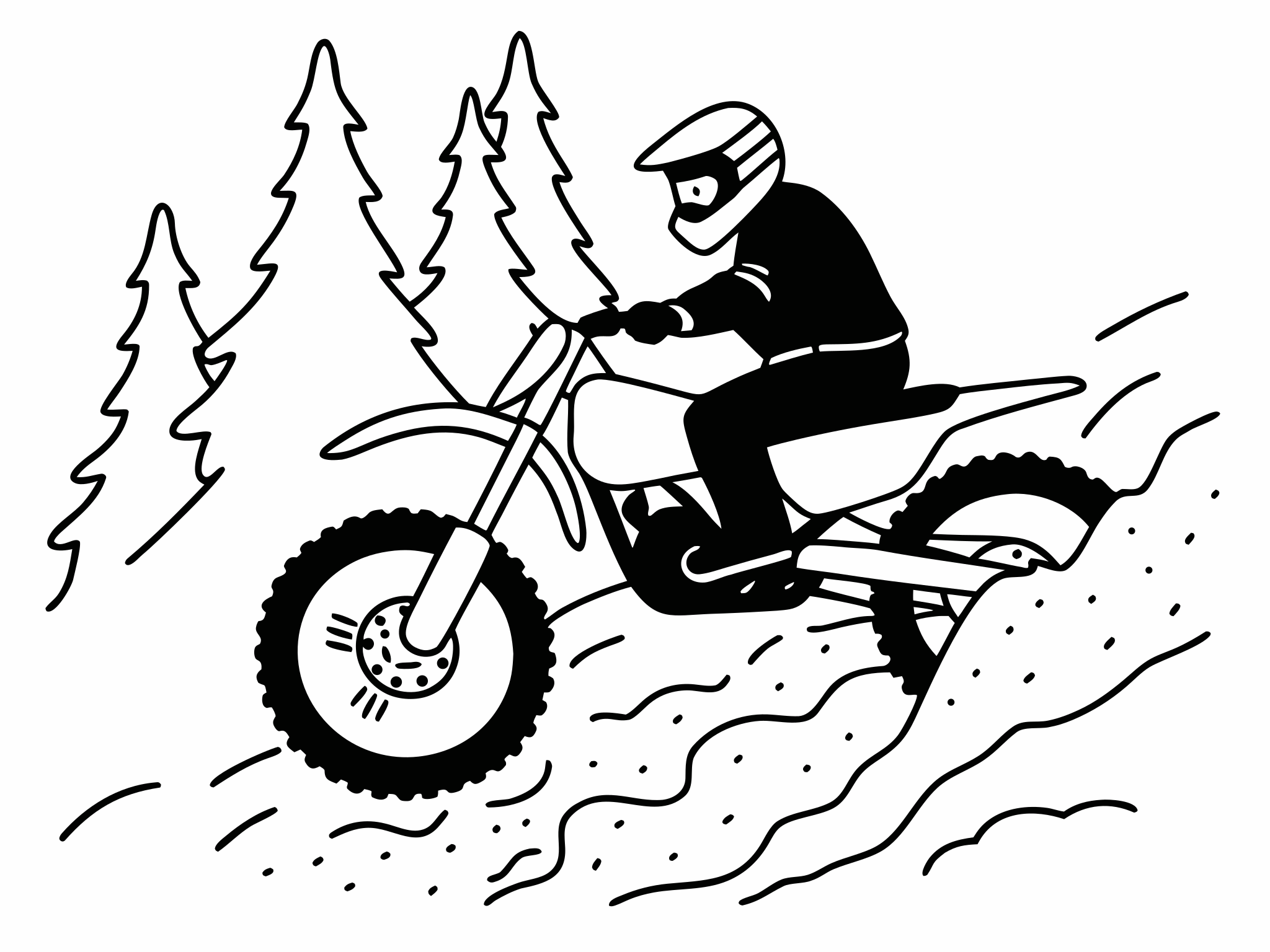
Hard enduro is slow in the hard sections. But every enduro and most hard enduro races also have fast trail: forest roads, flowing singletrack, grass special tests, rutted woods. Good cornering there gains time for free. Bad cornering burns energy you need for the climbs.
Chris Hollis, a two-time Australian Off-Road Championship (AORC) outright winner, gives the order of events: "get your hard braking done in a straight line before you tip the bike over too far".
Much of the best cornering coaching comes from motocross, and most of it carries over. Trail corners differ in three ways:
- You see each corner once. A motocross rut is ridden every lap. On a trail you meet it for the first time, at speed.
- Trail ruts have things in them. Scott Keegan, then a top-10 AORC outright racer, told Transmoto that "a majority of ruts are 'molested' by rocks, roots, uneven walls or other inconsistencies".
- Grip changes from corner to corner. Hardpack, then loam, then wet clay under leaves.
For turns too tight to ride round, see pivot turns.
Stand or sit: it depends on the corner
Standing is the default on trail, as body positioning explains. This table adds the fast corners.
| Corner | Position |
|---|---|
| Tight, slow turn or switchback | Usually standing. Sitting is an option in the very tightest turns. See body positioning and figure-eights. |
| Flowing singletrack, roots or rocks in the turn | Standing, both feet on the pegs. |
| Braking bumps on the approach | Standing until the bumps end. |
| Fast flat turn, smooth entry | Stand on the approach. Sit as braking ends, inside foot forward. |
| Long or deep rut | Stand if you can hold it to the end. Otherwise sit at the front of the seat on entry, inside leg forward and up, and slide back a little once the bike is locked in. |
| Open berm or sweeper | Standing if rough. Either if smooth. |
| Soft sand corner | Middle of the seat, sliding back on the exit. |
Standing corners: lean the bike, not your body
Dirt Rider asked Russell Bobbitt, "one of the best in the business", how to ride super-tight trails. His answer: "I try to ride standing up and keeping my feet on the pegs as much as possible, especially when cornering." Even when he sits in those tight turns, he keeps both feet on the pegs, "which keeps the rear wheel driving." Taking the inside foot off the peg is for fast flat turns and ruts, below.
Cross Training Enduro's standing-corner video gives the keys:
- Legs bent. They act as extra suspension.
- Bike leaned, body upright. Knees gripping the bike, backside swinging to the outside of the corner.
- Pegs in sequence. Weight the inside peg on entry and the outside peg on the exit. Arms up, especially the outside one. Look ahead, not at the front wheel.
- Lean far enough to see the front rim.
The outside peg also gives grip. On slippery ground, Australasian Dirt Bike (ADB) says "the amount of pressure you put on the peg determines how straight you're going to go."
While you practise, the same video says to keep the throttle and braking gentle and break the habit of swinging the rear out in a slide. Top extreme enduro riders are fast, it notes, but rarely get the rear wheel stepping out. Once that is smooth, its advanced cue for flat corners is a little more: just enough rear brake to have the rear wheel slightly skidding into the corner, then throttle until the rear is just about to break traction.
Seated corners and the inside leg
When to sit. Sit early, before you turn in. Riley Brough of RMX Academy, in a Rocky Mountain ATV MC video, tries to stand through braking bumps and sit as early as possible in long sweepers. Rocky Mountain ATV MC's order: get your braking done, sit down, get your leg up and look forward.
Where to sit. At the front of the seat on entry. In a rut, Keegan sits "right up the front of the seat", but "once I get the bike locked into the rut, I allow my arse to slide back a little." Dirt Rider describes Shane Watts, who won championships around the world, dropping "onto the front of the seat" and throwing his inside foot forward as braking ends. Both moves "weight the front tire to maximize traction and aid steering."
Where the foot goes. Forward and up. Keegan: "as close to the fork leg as possible in ruts where you need to be cranked over, and held up high enough so it doesn't snag on the ground and get pulled backwards." He adds: "keep a slight bend in your knee so it can absorb any hits, rather than hyperextend."
How high. In a shallow rut, Rocky Mountain ATV MC says, you don't need your leg up at the handlebar. Keep it tucked close to the shroud. On slippery or off-camber ground the foot can skim the surface. Keegan holds it "flatter so it can slide along the ground" in off-camber ruts. Skim it. Never plant it.
Keep squeezing. Brough sees riders switch their legs off when they sit. Then their arms do all the work, and arm pump follows. Grip with your knees.
Back to the peg. The Mx Factory's cue: the quicker the foot is back on the peg on the exit, the better.
Braking, gear and drive
Brake straight and early. The front brake lesson covers the squeeze and body position. At speed, add two details from Keegan:
- A light drag is fine. He often drags "the front brake slightly through the first half or even two-thirds of the rut to keep the front wheel more planted."
- Stay off the rear once you're cranked over in a rut. Keegan: "I stay off the rear brake once I'm in it because, if you lock the rear while cranked over, your back wheel will pop out of the rut in an instant." In slow, tight turns a light rear drag still helps, as rear brake and figure-eights explain.
Pick the gear for the exit. Shift before the turn. Shifting down early so the engine helps slow the bike, as in gear selection, still works for most corners. In long ruts and sweepers where you carry momentum, the gear for the corner itself is often one gear taller than feels natural. A taller gear has less engine braking, so the bike rolls through. Ben Grabham told ADB the same about long ruts: your "acceleration is not jerky and, if you get off the throttle, it doesn't engine brake hard and knife the front." Tight switchbacks still want first or second.
Drive out smoothly. Roll the throttle on. Don't snap it. On flat turns, Watts warns against fanning the clutch: it "only breaks the rear tire loose". If the rear slides on the exit, ADB says to "keep the throttle on and your weight on the outside peg". Backing off "while the bike is in a powerslide exiting the corner, this could lead to a highside." More on drive at speed in throttle control.
Flat, slick and soft turns
Flat turns. With no wall to lean on, grip comes only from the tyres. Watts's line: "enter the turn wide, drop down to the inside at the apex of the turn, then drift wide upon exiting." On loose hardpack with little grip, Hollis prefers "to come in a little faster and coast through the corner, rather than trying to get on the throttle really hard" mid-corner.
Slick turns. On wet clay, roots or polished hardpack, be gentler with everything. ADB: you "have to be super smooth with your braking because it's easy to lock up." Pick "a line with the most gentle radius". In the bush, ADB adds, "it is often best to avoid the obvious line that everyone else has been using." Leaf litter can grip better than bare clay.
Soft turns. Loam and soft dirt grip well and soon form ruts. Hollis: "With soft ruts, you have something to lean into and plenty of traction, so you can usually be aggressive with the throttle on the exit". Sand is the exception. Cross Training Enduro notes that sitting right at the front of the seat makes the front wheel more likely to sink. Sit in the middle of the seat, then slide back on the exit to keep the front light.
Ruts: pick one, commit, hold the throttle
Pick the rut. On trail you usually meet a rut for the first time. Keegan, standing on the approach, tries "to get a feel for the overall shape and length of a rut beforehand". Then he picks the point to lean hardest: "where the rut starts to deepen and where it has a firm edge."
Commit to the lean. The Mx Factory's most common rut mistake: riders won't commit to their lean, and the front rides up the wall and out.
Eyes up. Once the bike is settled, Keegan looks further ahead, "so I can anticipate any bumps or obstacles that might affect my drive on the exit".
Body upright, head up. Rocky Mountain ATV MC sees riders lean their head to the inside. The bike then wants to fall over. The only rescue is a burst of gas, and in a long rut that usually pops the front out. Keep your head up. Keegan still weights the outside peg in a rut, "to make sure your wheels stay locked into the rut."
Hold the throttle. Brough calls hammering the gas in a long rut a trap. It squats the suspension. Then the rider chops the throttle, the bike rebounds and climbs out. Brough gets on the gas as early as possible and holds that amount all the way through. If the bike drops too low, Keegan says, a little more throttle picks it up. If it stands up or tucks the front, Grabham's advice is to "grab a little clutch so the bike will keep moving" instead of shutting off.
Long ruts. Grabham: "Make sure you have spotted the end of the rut before you enter the corner". Carry more speed than you think. On position: "Standing is the best position if you can stay standing until the end". But "unless you're Daniel Milner you're probably going to need to sit through the rut."
Off-camber ruts. Shallow ruts on a slope hold the bike less. Keegan: "you need to be more gentle with them". He often gives up a little entry speed.
Berms: let the wall hold the bike
- Check it first. Cheyne Boyd, a former Yamaha factory motocross rider, told ADB that if you go too high "and the berm isn't in good nick, it can blow out", which puts you off the track or tucks the front. Trail berms are often soft at the top. Aim for the firm part of the face.
- Lean into the wall. Hold the bike too upright and the front rides over the top. The Mx Factory says this happens in a berm or a rut.
- Stay on the gas. Drive keeps the bike pressed into the wall. The Mx Factory's rule: once you commit to the throttle, it stays on all the way round. Boyd starts to "roll on the power" as he reaches the middle of the corner.
- Stand in open berms. Boyd: "The more open the corner, the better it is to stand. On a tighter corner, sitting may be the better option."
Reading the trail at speed
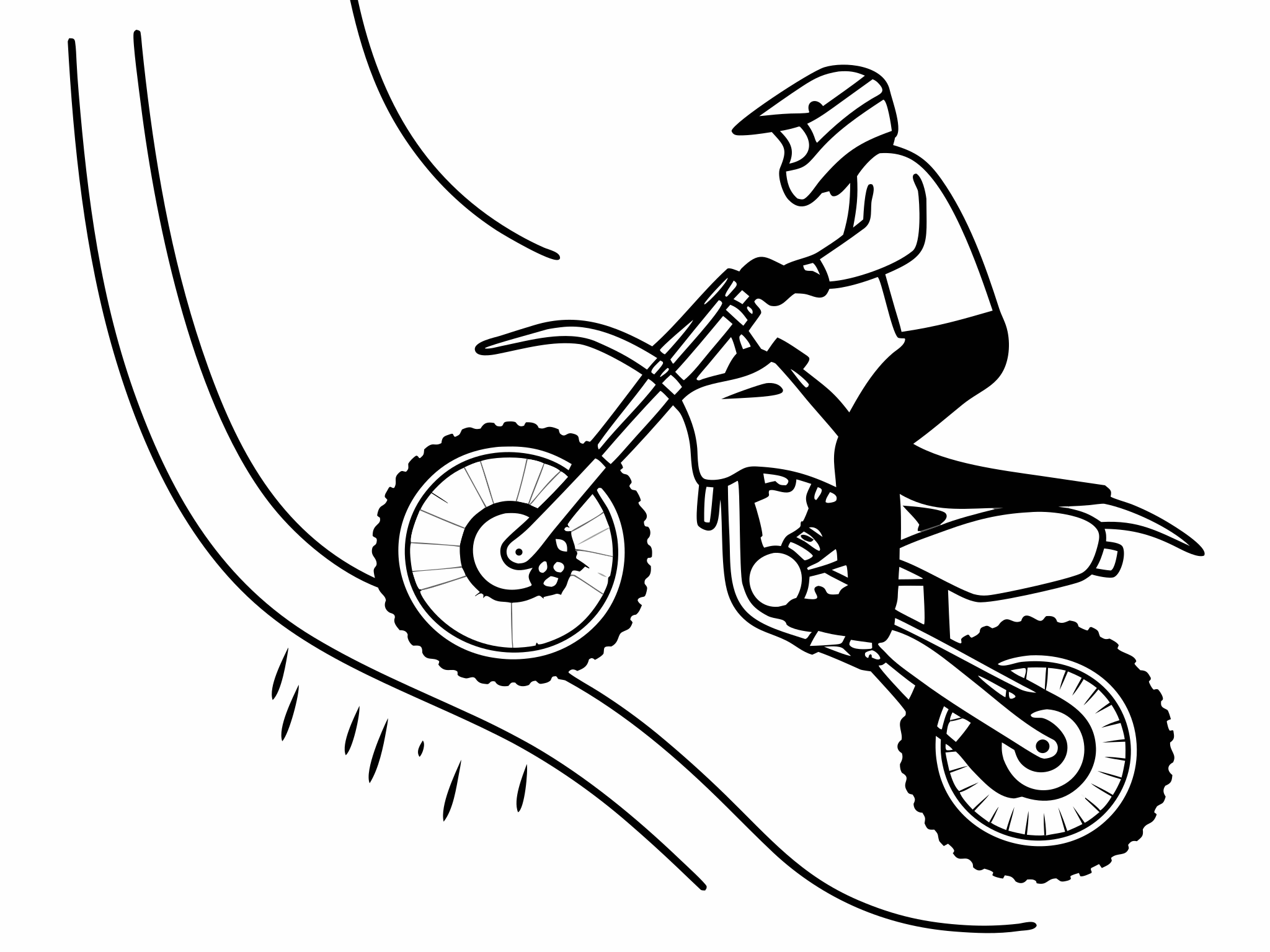
- Look far ahead. Hollis: "your vision should be focused well ahead – toward the corner exit or the next obstacle".
- Choose without stopping. Decide on the approach and commit. If the line is worse than it looked, ride it out.
- Leave the main line when it's worn. Hollis: "the main line is not always the best or fastest option, especially as it becomes worn".
- Keep the rhythm. On singletrack, exit each corner where it sets up the next. Bobbitt: "If you are on and off the brakes a lot, then you are going to have a herky-jerky motion, and you will lose time."
- Stay loose. Let the bike move between your knees. Bobbitt: "If you have a tight and rigid stance, you are more likely to be thrown off line if you hit a rock or a hole you didn't see coming."
Drills: flat field to real trail
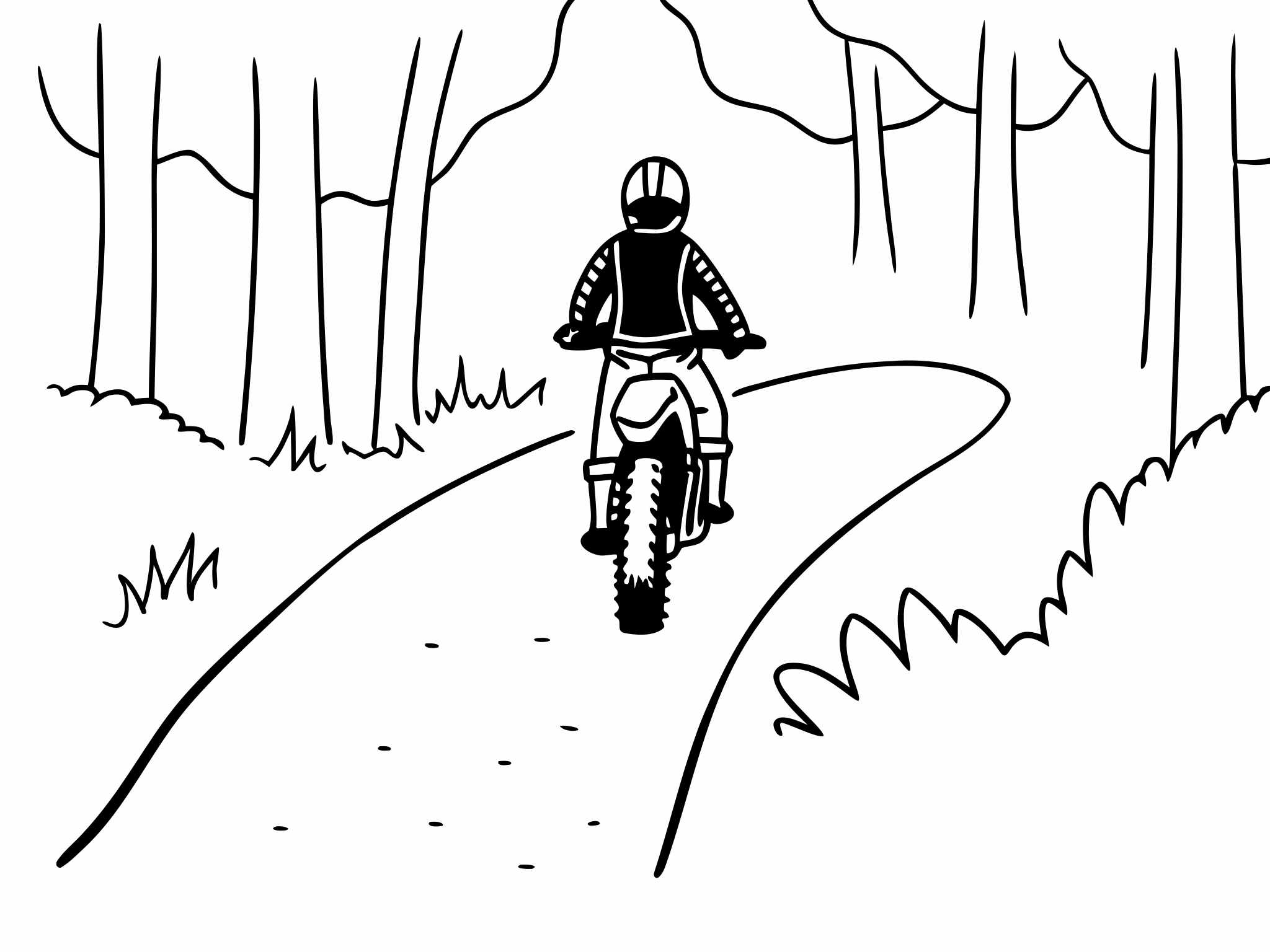
Start on a flat, grippy field. Ride every drill in both directions.
1Standing eights, bigger and faster
Start with the slow eights from figure-eights. Then, as Cross Training Enduro suggests, make them bigger and slowly build speed. Work up from second to third. Bike leaning, body upright, inside peg in, outside peg out.
2Two-cone entry drill
From Rocky Mountain ATV MC: put one cone about three metres before a turn and one halfway to three-quarters round. Release the brakes at the first. If you reach the second without throttle, your entry speed is right. As you improve, move the first cone a little later.
3Stand, brake, sit, foot forward
On a smooth flat turn, approach standing. Finish braking, sit forward, inside foot forward, turn. Foot back on the peg on the exit. Repeat until you always sit before turn-in.
4Short ruts, then long ones
Grabham's progression: begin with a rut that "isn't too long or too deep, so you can pop out of it", then longer and deeper ones. One gear taller than feels natural. Pick a throttle opening and hold it to the end.
5Trail rhythm at 70 percent
Ride singletrack you know at about 70 percent. Count your brake applications. Ride it again at the same speed with fewer. That means you are reading the trail earlier.
Cornering mistakes and fixes
You're still braking as you lean in, and the front washes out.
Fix: Brake earlier, upright and straight. Release as you turn in. Use the two-cone drill.
The front climbs out of the rut or over the berm.
Fix: Commit to the lean and hold a steady throttle. A late blip of gas lifts the front out.
You pin it, chop it, and the rut spits you out.
Fix: Pick a throttle opening early and hold it. A taller gear makes the drive softer.
You end up hovering over the seat.
Fix: Brough sees riders who mean to stand start to sit and get stuck halfway. Decide before the turn: stand fully, or sit fully at the front of the seat.
Your inside foot catches and gets dragged back.
Fix: Foot forward by the fork, high enough to clear the rut, knee slightly bent. Back on the peg as the bike stands up.
A 40-minute cornering session
A flat field with a marked turn, and ruts nearby.
| Time | Drill | What to focus on |
|---|---|---|
| 0–8 min | Standing eights, bigger and faster | Bike leans, body upright. |
| 8–16 min | Two-cone entry drill | No throttle between the cones. |
| 16–22 min | Stand, brake, sit, foot forward | Seated before turn-in. |
| 22–32 min | Short ruts, both directions | Taller gear, steady throttle, head up. |
| 32–40 min | Trail rhythm at 70 percent | Eyes far ahead, fewer brakes. |
Swipe the table sideways to see every column.
You're ready to move on when…
- Your hard braking is done before the bike leans, every corner of a lap.
- You pass the two-cone drill five times in a row.
- You can ride a short rut both ways without dabbing or climbing out.
- On a familiar trail, you brake less often at the same speed.
Cornering questions
Does motocross cornering technique work in enduro?
Mostly. Braking before the turn, outside-peg weight, a steady throttle in ruts and committing to berms all carry over. The differences: on trail you see each corner once, it may hide roots or rocks, and you stand through more corners. See motocross to enduro.
All lessons in Riding Fundamentals
Related lessons and guides
- Body positioningStanding posture, peg steering and when to sit.
- Full-lock figure-eightsThe slow-speed version of every corner here.
- Front brakeBraking before the turn.
- Gear selectionChoosing the gear before the feature.
- Pivot turnsFor turns too tight to ride round.
- Mastering throttle controlDrive out of corners at speed.