Lesson 5 of 7 in Riding Fundamentals
Static Balance
Static balance is holding a dirt bike still with both feet on the pegs. The base technique: stand with your knees bent, turn the bars to full lock, put your weight on the peg opposite the way the bars point, hold the bike with the front brake, and correct with small movements of your hips, knees and the bars. Learn it with the engine off, then running, then against a rock or log. Balancing at a standstill turns chaos into time: seconds to choose a line, reset or wait for the rider ahead.
Updated October 2026. Sources are listed below. How we work
On this page
- Why static balance matters in hard enduro
- How to balance a bike that isn't moving
- Three ways to practise, and what each teaches
- The "stuff": balancing against an obstacle
- Static balance drills
- Static balance mistakes and fixes
- A 20-minute static balance session
- Progress cues: you're ready to move on when…
- Static balance questions
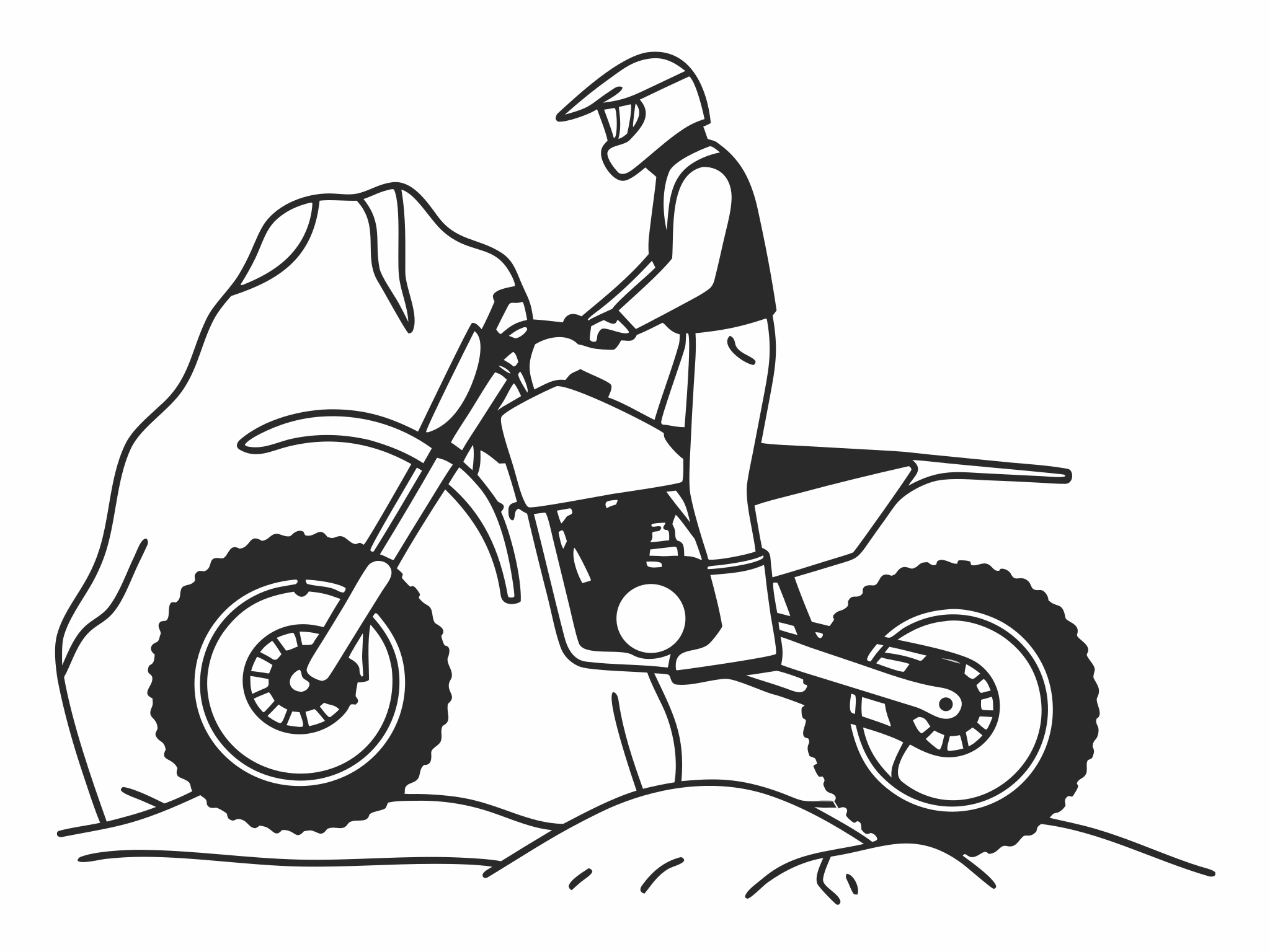
Why static balance matters in hard enduro
Balancing at a standstill turns chaos into time. It buys you seconds to choose a line, reset, or help a friend.
Without it, you're forced to keep moving. A Cross Training Enduro video puts the cost plainly: every time you stop and put a foot down, it takes at least a few metres before you're back on the pegs and balanced. Every hesitation becomes a dab, and a dab on a rock step or a steep root section often means the bike falls over, the line is lost and you're pushing. With it, you can stop on top of a rock, look at what's next, and carry on with your feet still on the pegs.
Dirt Bike Magazine's balance feature makes this point about the trials "stuff", where the rider holds the bike still against an obstacle: "This allows you to balance and analyze the obstacle versus being in too much of a hurry and jumping into something over your head." Upshift's Trials School feature says the same about balance generally: it helps with everything from "needing to take a pause on the trail for a second to read an obstacle" to cornering.
Static balance also underpins the harder skills. The Trials Training Center's advice before learning to hop the bike: "If you cannot balance the bike, then you will first need to learn this technique before you even consider trying to learn to hop."
How to balance a bike that isn't moving
A moving bike balances itself, mostly. A stopped one doesn't. You have to keep your combined weight, and the bike's, over the tyres' contact points, and you do it with tiny corrections.
Bars at full lock. Turning the bars puts the front tyre at an angle to the rear. Now a small movement of the bars moves the front of the bike under you, left or right, so you can catch a lean. Dirt Bike Magazine's instruction for the drill starts with it: "lock your bars and apply pressure to your outside peg, which is the opposite one from the direction you're turning your bars."
Weight on the outside peg. With the bars turned right, weight the left peg, and the reverse. Keep your weight centred front to back over the pegs.
Knees and hips do the work. Stand with your knees bent and apart. Correct a lean with your hips and knees before you reach for the bars. Dirt Bike Magazine: "A quick adjustment of your hips and waist can be all you need." Trials riders exaggerate this: a Dirt Bike Magazine writer at a trials day heard "Knees out!" shouted from the sidelines again and again.
Front brake holds the bike. One finger on the front brake stops the bike rolling. Your right foot can cover the rear brake, unless you may need it off the peg. With the engine running, the clutch and rear brake add another tool. If the bike starts to fall towards the side the bars are turned, a tiny bit of drive against the brake rolls the front wheel back under it. If it falls the other way, drive makes it worse: correct with your hips and knees.
When it starts to go, escalate. Cross Training Enduro's summary gives an order. First, tiny turns of the bars. Then small body movements. Then a leg out as an outrigger. Then slip the clutch to roll forward until you're balanced again, or rock the bike slightly back and forth. Holding the revs up a little adds gyroscopic stability, and low tyre pressures make all of it easier. The outrigger is why Tim Coleman, in a PrimalEnduro lesson, holds the bike with the front brake, not the rear: he may need his right foot off the peg.
Eyes up, breathe. Look at a fixed point a few metres ahead, not down at the front wheel. A relaxed upper body and steady breathing make the corrections smaller. Tense arms turn every correction into a jerk of the bars.
Three ways to practise, and what each teaches
| Method | How | What it teaches |
|---|---|---|
| Engine off | Bars locked, front brake on, balance with body only | Pure balance. Dirt Bike Magazine says you "must practice with your engine off" to rely on body English. |
| Engine running | Same, plus clutch and rear brake to correct a lean towards the turned bars | Using drive to correct a lean, as you will on the trail |
| Against an obstacle ("stuff") | Front tyre pressed into a log or rock, weight forward into the fork, clutch and brakes holding pressure | Holding still in real terrain while you read the next move |
Swipe the table sideways to see every column.
The "stuff": balancing against an obstacle
On the trail you rarely balance on flat ground. You balance with the front tyre against a rock or log, or with the bike perched on a ledge. The trials term for pressing the front tyre into an obstacle to hold still is the "stuff".
Dirt Bike Magazine describes it: "I move my weight forward into the front forks while also using the clutch and brakes to hold pressure on the front tire." The fork compresses, the front tyre is pushed into the obstacle and the bike is much more stable than on flat ground. From there the rider can look, choose and go.
Pressure is the key word. The engine pushes the bike forward through the clutch; the brakes stop it moving. As long as that pressure is held, the bike stays put. The rear brake lesson and clutch control teach the two halves.
Static balance drills
Wear your boots and riding gear. The first two drills can be done at home, engine off. Upshift's Trials School feature points out that you don't even need to run the bike for them, and that "20 minutes doing this a few times a week will pay dividends in short order".
1Engine off, next to a step
Park the bike on flat ground next to a bike stand or a low step. Sit on, turn the bars to full lock, squeeze the front brake and stand up. Put your weight on the outside peg and lift your other foot onto its peg. Dirt Bike Magazine suggests having a stand nearby "to step on once you start to tip over". It's also easier to get your feet on the pegs from a stand. Aim for three seconds, then five, then ten.
2Anchor the front wheel
Cross Training Enduro's fast-track drill: find a small rut that gives the front tyre plenty of contact. Go to full lock and hold both brakes, especially the front, which anchors the wheel in the dip. Have a friend hold the bike until you find your balance, then try alone. Next, on flat ground, twist the bars a few times so the front tyre digs a shallow dip. Last, stop with no dip at all. Coleman's PrimalEnduro lesson gets the same feel by wedging rocks against the wheels.
3Both locks
Repeat with the bars locked the other way. Most riders have a side that feels natural. Dirt Bike Magazine says to lock the bars "in either direction, depending on what feels comfortable", but on the trail you won't get to choose. Train the weak side until it matches.
4Rolling stops
Engine running, walking pace, standing. Turn the bars as you stop with the front brake, weight the outside peg and hold for three seconds with both feet up. Then release the brake, feed in the clutch and ride away. Build to five seconds, then ten.
5Clutch against the rear brake
Stop as before, but hold the bike with the rear brake and keep the clutch at the bite point with a steady throttle. When the bike leans towards the side the bars are turned, let a touch of clutch out against the brake to roll the front back under it. When it leans the other way, correct with your hips and knees. This is the version you'll use most in hard enduro.
6Stuff against a log or rock
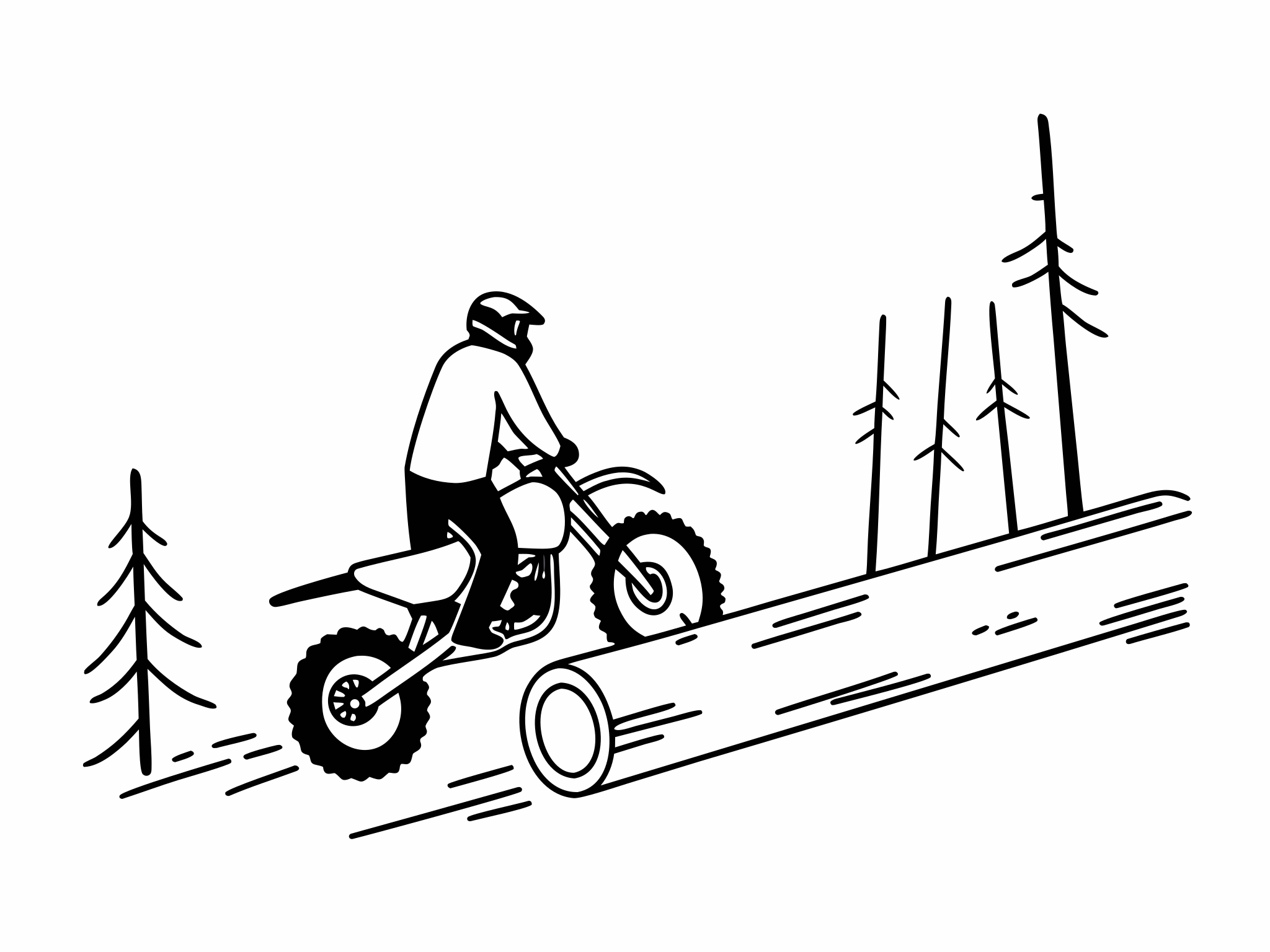
Ride slowly up to a log or rock about as high as your front axle. Let the front tyre touch it, push your weight forward into the fork and hold the bike still with clutch and brakes. Hold for five seconds, looking over the obstacle, then back off and try again.
7Stop on uneven ground
Take rolling stops onto a gentle slope and then onto roots and small rocks. Stop, balance, look, ride away. The goal is a calm pause wherever the trail asks for one. Then try Cross Training Enduro's version: pick a log, ditch or steep climb you'd normally need a run-up for. Stop a short distance from it, get up on the pegs, balance for a few seconds, then go.
Static balance mistakes and fixes
Big, jerky corrections with the bars.
Fix: Correct with your hips and knees first. Relax your arms so the bars move in small steps.
Looking down at the front wheel.
Fix: Fix your eyes on a point a few metres ahead. Your balance is better when your head is up.
Weight on the wrong peg.
Fix: With the bars turned right, weight the left peg; turned left, weight the right. Say it out loud until it's automatic.
Straight, locked legs.
Fix: Bend your knees and keep them apart. Straight legs can't make the small movements balance needs.
Holding your breath.
Fix: Breathe out slowly as you settle. Tension makes the bike twitchy.
Dabbing wherever the foot lands.
Fix: On a rock pile or ledge, a dab in the wrong place is a fall. Dirt Bike Magazine's advice: "always look for a safe zone to throw your leg if need be."
A 20-minute static balance session
Short and often beats long and rare. This works at home engine-off for the first half, and anywhere flat for the second.
| Time | Drill | What to focus on |
|---|---|---|
| 0–5 min | Engine off, next to a step, strong side | Outside peg, knees bent, eyes up. |
| 5–10 min | Engine off, weak side | Match your strong-side time. |
| 10–15 min | Rolling stops, engine running | Three to five seconds, feet up, ride away cleanly. |
| 15–20 min | Clutch against rear brake, then a stuff | Pressure holds the bike. |
Swipe the table sideways to see every column.
Progress cues: you're ready to move on when…
- You can balance engine-off for ten seconds with the bars locked either way.
- You can stop from walking pace and hold for five seconds with both feet on the pegs.
- You can hold the bike still against a log or rock with clutch and brakes while you look beyond it.
- You can pause calmly before an obstacle and restart without drama.
- Your corrections come from your hips and knees, not jerks of the bars.
Static balance questions
Should I practise with the engine on or off?
Both. Engine off forces you to balance with your body alone, which is the pure skill. Engine on lets you add the clutch and brakes, which is how you'll hold the bike on the trail.
Which way should I turn the bars?
Start with whichever feels natural, then train the other side. On the trail, the terrain chooses.
How long should I be able to balance?
A few seconds is enough to read a line, and that's what matters. Ten seconds engine-off is a good benchmark that your technique is sound.
Is static balance easier on a trials bike?
Yes. Trials bikes are light and built for it: Dirt Bike Magazine's balance feature says "Trials is by far the best machine to practice these techniques." But the technique is the same on an enduro bike, and it's worth learning on the bike you ride.
All lessons in Riding Fundamentals
Related lessons and guides
- Full-lock figure-eightsBalance at walking pace, before balance at zero.
- Front brakeHolding the bike still with the bars turned.
- Controlled front-end liftsWhat you do after you've read the obstacle.
- Logs and rocksWhere a calm pause saves the most energy.
- The mental gameStaying calm enough to stop and think.