Lesson 6 of 6 in Controls 101
Kill/Start Controls
Kill/start controls are the stop button, the starter and the routine you use when the bike stops somewhere awkward. The core skill is the hill restart: hold the bike with the rear brake, pull the clutch in, start the engine in gear, let the clutch out to the bite point before releasing the brake, then drive away. Around it sit two more habits: using the stop button without hesitation when something goes wrong, and knowing how to turn the bike round when a climb fails.
Updated September 2026. Sources are listed below. How we work
On this page
- Why kill/start control matters in hard enduro
- Know your controls
- Set up the switches
- When you stall on a hill: hold first, think second
- The hill restart, step by step
- Turning the bike around when a climb fails
- Kill/start drills
- Common kill/start mistakes and how to fix them
- A 25-minute kill/start session
- You're ready to move on when…
- Kill/start questions
Why kill/start control matters in hard enduro
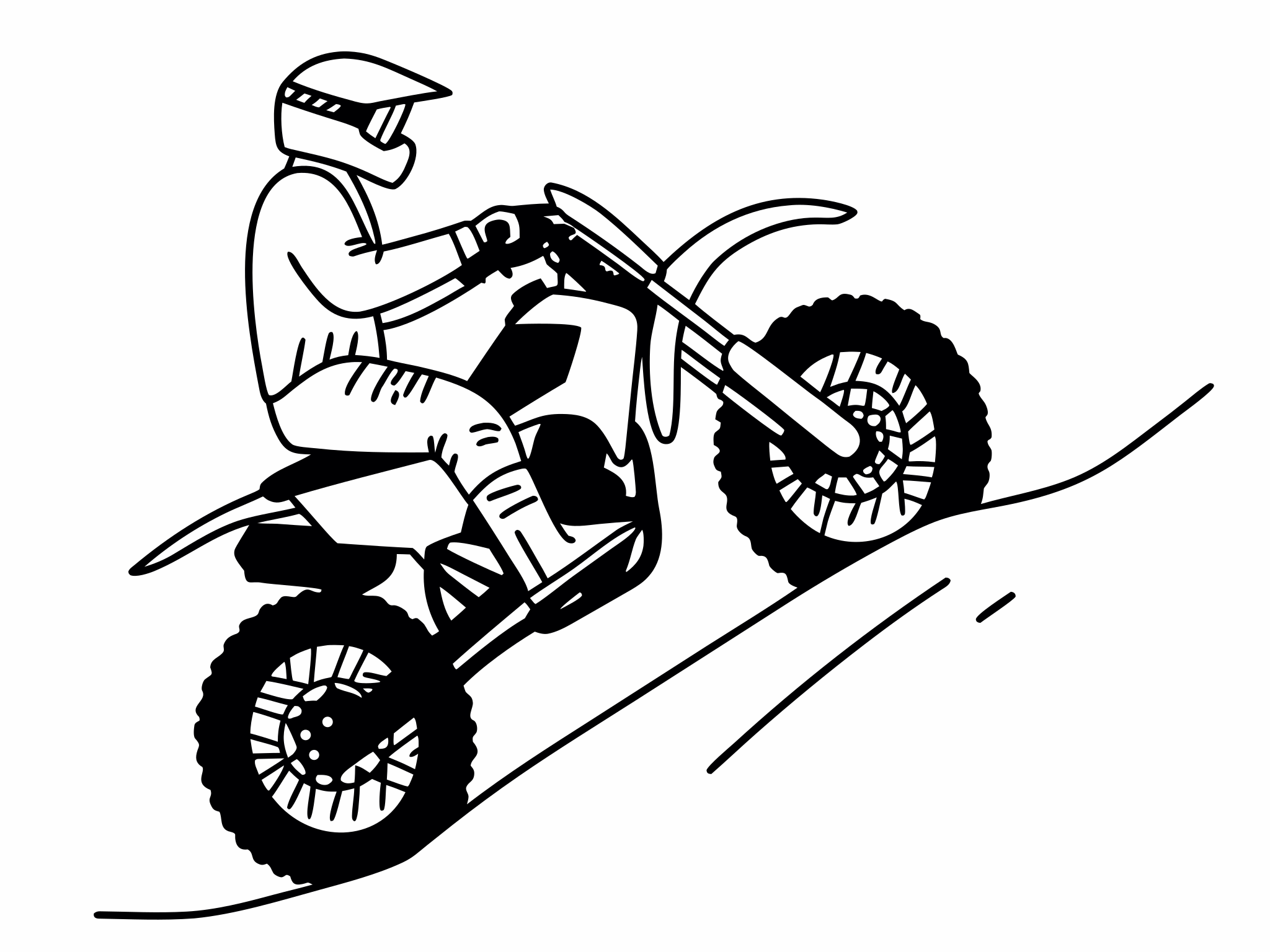
In hard enduro you will stall. On steep climbs, rock steps and switchbacks, the bike stops far more often than on normal trail, and it usually stops on a slope. What happens next decides whether you lose ten seconds or ten minutes, and whether the bike ends up at the bottom of the hill.
Riders who restart cleanly save energy, keep the clutch cool and stay calm. Riders who panic let the bike roll back, drop it, grab a handful of throttle on the restart and flip it. A fast, repeatable sequence is worth more than one heroic attempt at a climb.
The same goes for the stop button. When the bike is on the ground with the throttle stuck open, a wheel spinning or the engine screaming, stopping the engine immediately protects you, the bike and anyone helping you.
Know your controls
Positions are from KTM's owner's manual for the 2024 250 and 300 EXC; layouts vary by make and year. The last column is how you use each control when the bike stops on a hill. KTM's normal starting procedure is in neutral with the throttle closed; a hill restart is done in gear with the clutch pulled in, as below.
| Control | Where | What it does |
|---|---|---|
| Stop button (kill switch) | Right side of the handlebar | KTM: pressed, the ignition circuit is interrupted, "a running engine stops, and a non-running engine will not start". |
| Start button | Right side of the handlebar | Runs the electric starter while pressed. |
| Clutch lever | Left side of the handlebar | Pulled in, disconnects the engine from the rear wheel so you can start or hold the bike in gear. |
| Rear brake pedal | Right footrest | Holds the bike still on a slope while your hands work the clutch and starter. |
| Neutral | Between first and second gear | A half-click up from first. |
Swipe the table sideways to see every column.
Set up the switches
- Reach. You should be able to hit the stop button without letting go of the grip. Set it where your thumb falls naturally.
- Protection. Stock switch units can be large and exposed. Enduro21's how-to on fitting a push-button kill switch calls the stock unit on its test Husqvarna "pretty big and vulnerable". Replacing it can remove the lighting controls and make the bike road-illegal, so check before you swap.
- Which side. Enduro21 notes that some riders swap the starter and kill switch to opposite sides of the bars "because they find it easier". Pick a layout and keep it the same on every bike you ride, so your thumb goes to the right button under stress.
- Starter habits. KTM's manual limits each press of the start button to five seconds, with 30 seconds before another attempt, and warns that below 6 °C several attempts may be needed to warm the lithium-ion battery. A starter held down for a long time on a flooded engine flattens the battery, which is a long walk in hard enduro.
When you stall on a hill: hold first, think second
The moment the engine stops on a climb, you have one job: stop the bike rolling back.
- Left foot down, right foot on the rear brake. Cycle World's advice: "hold the bike up with your left foot, and use your right foot to apply the rear brake to stop the bike from rolling backward." The alternative is both feet down and the front brake lever held.
- Leave it in gear. With the clutch out, a stalled engine resists the rear wheel turning backwards. Cycle World: "forget about finding neutral." Australasian Dirt Bike Magazine's hill turn-around routine starts the same way: "stall the bike in first gear".
- If the slope also falls away to one side, keep yourself and the bike leaning towards the high side.
- Then decide. Restart where you are, or turn the bike round and try again from the bottom. If the slope is too steep to pull away on, turning round is the smarter choice.
The hill restart, step by step
Practise on a gentle, grippy slope with a clear run-out before you ever need it on a steep one. The core sequence comes from Cycle World's hill-restart tip; the body position and gear choice are what steep dirt slopes add.
1Hold the bike on the rear brake
Left foot down, firm pressure on the pedal with your right. Check it holds: the bike must not creep backwards while your hands are busy.
2Weight forward
Sit or stand with your chest over the bars. On a steep slope the front will want to lift the moment drive arrives.
3Clutch in, start in gear
Pull the clutch fully in and start the engine in first (or second on a gentle slope). Cycle World: "pull in the clutch and start the bike in gear." Don't hunt for neutral.
4Clutch to the bite before the brake
Add a little throttle and let the clutch out until you feel the bike pull against the brake. Cycle World: "Begin letting the clutch out before you release either brake." This is the step that stops the roll-back.
5Release the brake and drive
As the engine takes the load, ease off the rear brake and feed in the clutch. Cycle World, writing for all kinds of motorcycle, says to do this "while giving the bike plenty of gas". On a steep dirt climb, use enough throttle to stop the engine stalling and no more: a big handful with the clutch biting lifts the front. Get your feet on the pegs as soon as you can and keep your weight forward.
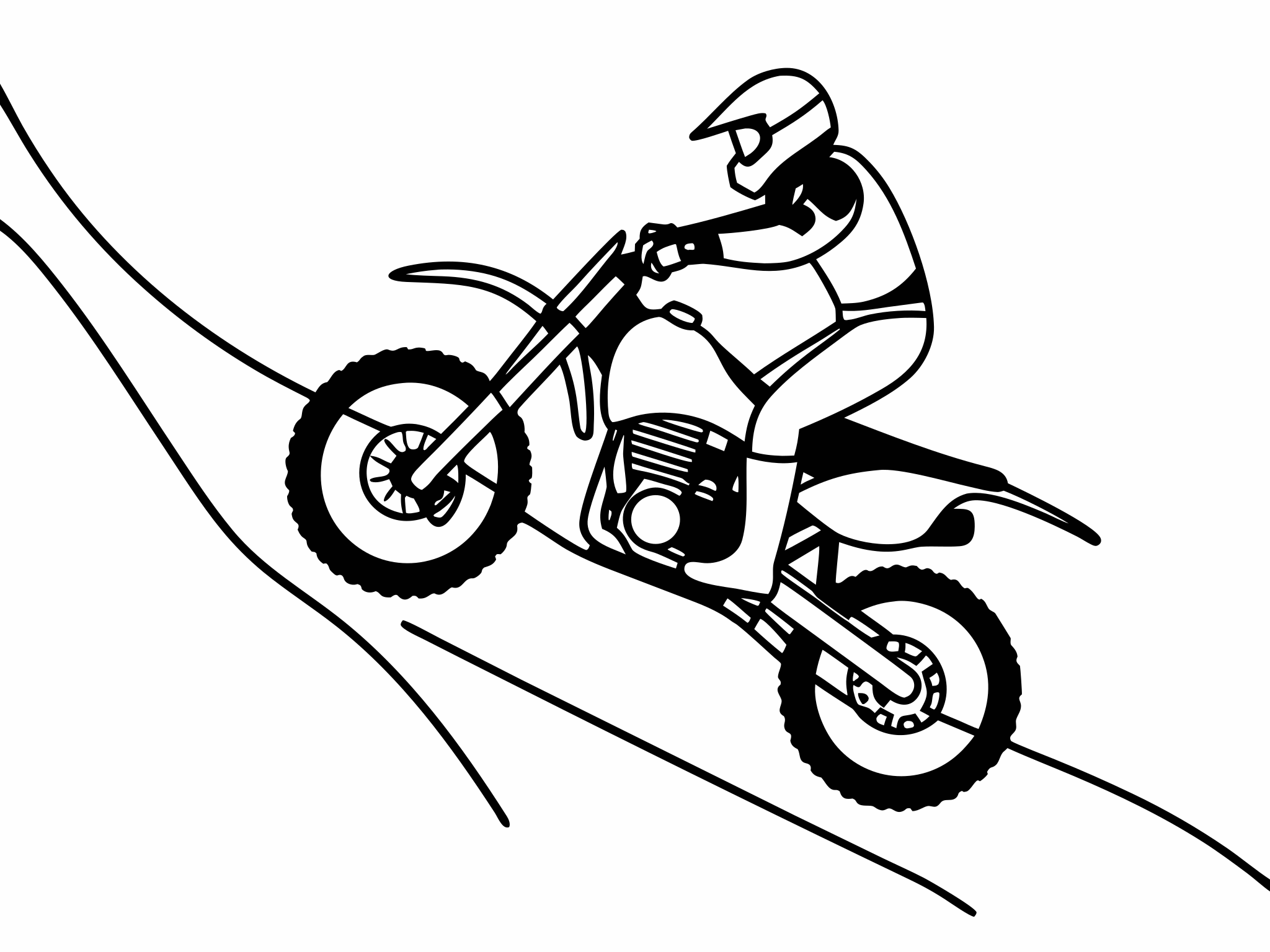
Weight forward, clutch feeding in, feet up as soon as the bike is moving.
Turning the bike around when a climb fails
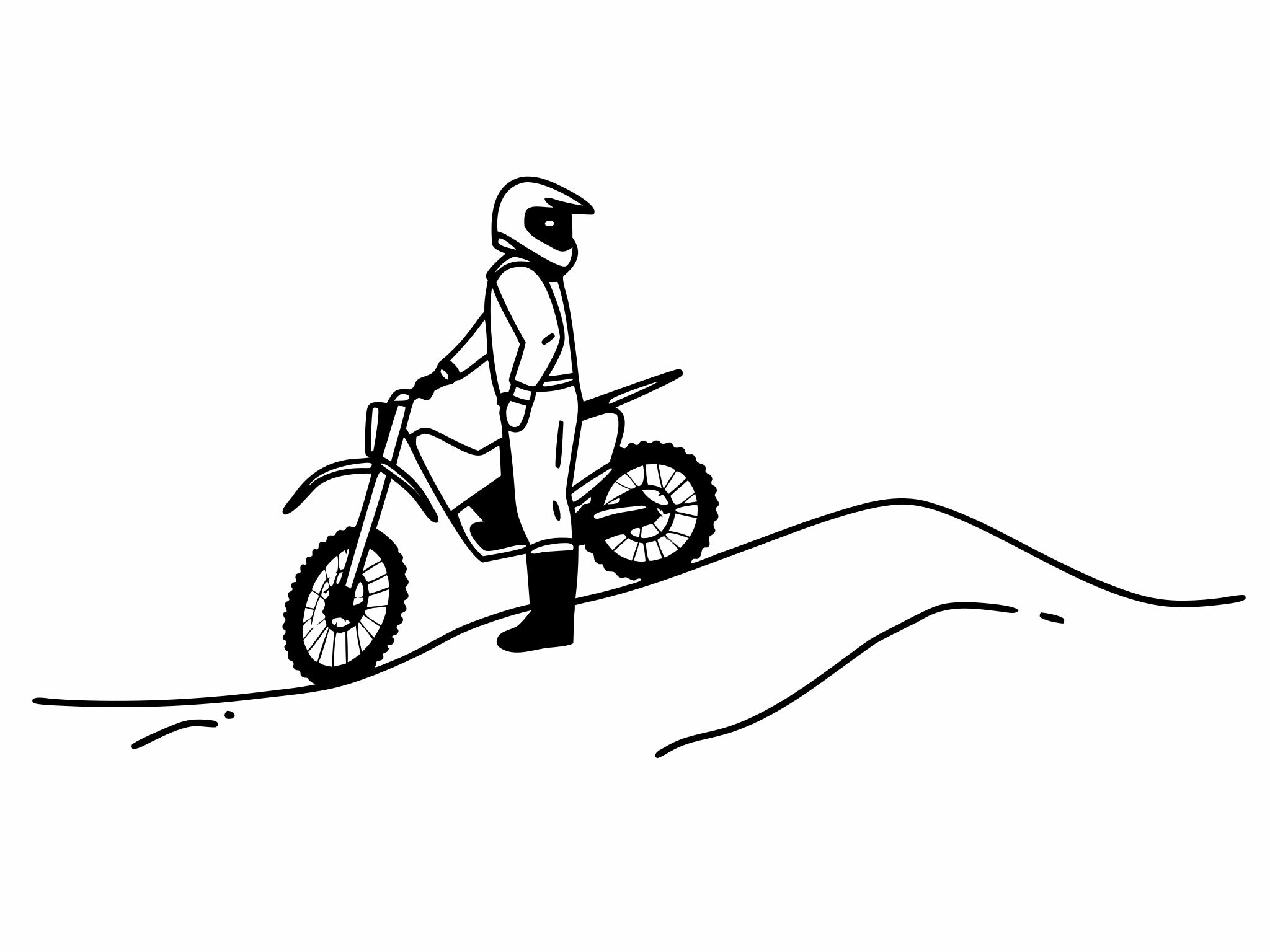
Sometimes the right answer is to go back down and try again. Australasian Dirt Bike Magazine's routine for turning a bike around on a steep hill:
- Stall it in first gear and get your feet down. Only step off once you're confident the bike will stay balanced resting in gear.
- Get off on the left side, holding the left grip, so your hand can work the clutch in the next steps.
- Grab the rear of the bike with your other hand, by the grab handle or rear guard.
- Engine off, pull the clutch in and let the bike roll back a little, pushing the bars so the rear swings towards you.
- Lean the bike into the hill throughout, so it can slide but not flip. When it's across the slope, hold the front brake.
- Get back on, still leaning into the hill, turn the bars until the front edges downhill, then ride down standing, on the brakes and clutch.
The magazine's warnings are worth repeating: always keep yourself and the bike leaning into the high side of the hill, and don't let it roll backwards too fast, or it can "knife and high side" when you turn the front wheel.
Kill/start drills
Build the routine on flat ground, then take it to a gentle slope.
1Flat-ground kill and restart
Ride at walking pace, stop, hit the stop button, then restart in gear with the clutch in and pull away. Repeat ten times until your thumb finds both buttons without looking.
2Deliberate stall, flat ground
At walking pace in first, let the clutch out and stall the bike on purpose. Rear brake on, foot down, bike upright. You're teaching your body the first half-second after a stall.
3Slope hold and restart
On a gentle slope, stop with the rear brake, hold for five seconds, then run the full restart sequence. Do five in a row without rolling back.
4Deliberate stall on a slope
Ride up the same gentle slope in first and stall it on purpose halfway. Hold with the rear brake and your left foot down, then restart. When that's reliable, practise the turn-around on the same slope.
Common kill/start mistakes and how to fix them
Releasing the brake before the clutch bites.
Fix: The bike rolls back and you lose the hill. Let the clutch out until you feel the pull, then release the brake.
Pulling the clutch in the moment you stall.
Fix: With the clutch in, nothing but your brakes holds the bike. Leave it in gear, clutch out, until your foot is firmly on the rear brake.
A handful of throttle on the restart.
Fix: The front lifts and the bike loops or spins. Weight forward, steady throttle, and let the clutch feed the drive.
Letting the bike lean downhill on a sideways slope.
Fix: Once it leans away from the hill it can fall or roll. Keep yourself and the bike leaning towards the high side, as Australasian Dirt Bike Magazine stresses.
Holding the starter down on a flooded engine.
Fix: Short presses, with rests in between. A flat battery on a hill is far worse than a slow start.
Hesitating over the stop button when the bike is down.
Fix: Practise hitting it until it's automatic. If the bike is on the ground with the engine revving, stop the engine first.
A 25-minute kill/start session
| Time | Drill | What to focus on |
|---|---|---|
| 0–5 min | Flat-ground kill and restart | Thumb finds both buttons without looking. |
| 5–10 min | Deliberate stall on flat ground | Left foot down, right foot on the rear brake, bike upright. |
| 10–18 min | Slope hold and restart | Clutch bites before the brake releases. |
| 18–25 min | Deliberate stall on a slope, then a turn-around | Held on the rear brake, then turned round from the left side, leaning into the hill. |
Swipe the table sideways to see every column.
You're ready to move on when…
- You can stall on a gentle slope and have the bike held still within a second.
- You can restart on that slope five times in a row without rolling back or lifting the front.
- You hit the stop button without looking, from a normal grip.
- You can turn the bike round on a slope, keeping it leaning into the hill.
- You can explain which step went wrong when a restart fails.
Kill/start questions
Can I start my bike in gear?
Many modern dirt bikes will start in gear with the clutch pulled in, and it's the standard way to restart on a hill. Check your owner's manual for how your bike behaves.
What if the hill is too steep to restart on?
Turn the bike round and restart facing downhill, or roll back to the bottom and try again with a better run-up. Cycle World notes that turning round and going "downhill nose first" can be the easiest way to do it on dirt.