Arm Pump in Hard Enduro: Prevention, Treatment & Complete Guide

Arm Pump in Hard Enduro: Prevention, Treatment & Complete Guide

Understand what causes arm pump (forearm compartment syndrome), learn proven prevention strategies, and discover the bike setup, training, and nutrition protocols used by pro riders to stay loose on technical terrain.

Arm pump is the silent performance killer in hard enduro. That creeping tightness, the loss of grip strength, the moment when your forearms betray you on a technical climb—every rider knows it. Medically termed Chronic Exertional Compartment Syndrome (CECS), arm pump isn't just fatigue; it's a hemodynamic failure where blood flows into your forearms but can't escape.

This guide breaks down exactly what's happening inside your arms, why hard enduro riders are uniquely vulnerable, and—most importantly—what you can do about it. We'll cover bike setup, training protocols, nutrition strategies, and riding techniques used by factory riders to stay loose through multi-hour events.


What Is Arm Pump? The Science Explained

The Anatomy Problem

Your forearm isn't one big muscle—it's divided into compartments wrapped in fascia, a tough, non-elastic connective tissue. The key compartments for riders are:

  • Volar (Anterior) Compartment: Contains your grip muscles—the flexors that pull the clutch and brake levers
  • Dorsal (Posterior) Compartment: Your extensors that stabilize the wrist and open the hand
  • Mobile Wad (Lateral): Controls wrist stability during throttle actuation

When you grip the handlebars, these muscles swell with blood—up to 20% volume increase during intense effort. In healthy tissue, the fascia stretches slightly to accommodate this. In riders with CECS, the fascia is too tight or thickened.

The Vicious Cycle

Here's where it gets dangerous:

  1. Arteries keep pumping in: They operate at high pressure (120+ mmHg) and push blood into the compartment even as pressure rises
  2. Veins collapse: They're low-pressure vessels. Once compartment pressure exceeds ~30 mmHg, veins flatten and blood can't drain
  3. Pressure builds: The compartment becomes a pressure vessel with no release valve
  4. Ischemia sets in: Starved of oxygen, muscles switch to anaerobic metabolism and begin to fail

The result? That burning sensation, loss of strength, and eventually the "claw hand" where you physically cannot extend your fingers.

Beyond the "Lactic Acid" Myth

For years, riders blamed lactic acid. Modern science tells a different story. Lactate is actually a fuel source—your slow-twitch fibers use it for energy. The real culprits are:

  • Hydrogen ion accumulation: ATP breakdown releases protons (H+) that drop intracellular pH, interfering with muscle contraction
  • Potassium buildup: K+ accumulates outside cells, disturbing the electrical gradient needed for muscle response
  • Oxygen debt: Without blood flow, aerobic metabolism stops and muscles fail rapidly

Why Hard Enduro Riders Suffer Most

Hard enduro creates a perfect storm for arm pump that other motorsports don't match.

The Isometric Trap

Unlike rowing or weightlifting where muscles contract and relax rhythmically (pumping blood through), riding demands sustained isometric contraction. You're constantly gripping, never releasing. There's no "pump phase" to help venous return.

The "death grip"—that reflexive over-squeezing on technical terrain—activates fast-twitch fibers unnecessarily, accelerating acidosis and pressure buildup.

The Tonic Vibration Reflex

Your single-cylinder enduro bike sends high-frequency vibration through the bars. This triggers an involuntary Tonic Vibration Reflex (TVR)—your muscles contract to stabilize against the vibration whether you want them to or not.

Even if you consciously try to relax, your nervous system is fighting you. It's a neurological tax on your forearms that silently contributes to pump.

Terrain Loading

Hard enduro terrain—steep descents, rock steps, off-cambers—places extreme loads on your upper body:

  • Downhill braking: Arms push against the bars to prevent going over the front while simultaneously modulating the front brake (flexors) and stabilizing the wrist (extensors). This co-contraction creates high-pressure environments in multiple compartments
  • Throttle control: The rotational motion requires extensors to stabilize while flexors grip—complex interplay that fatigues the lateral compartment. Smooth throttle technique reduces unnecessary tension

Bike Setup: Your First Line of Defense

Before considering surgery or supplements, optimize your mechanical interface. A poorly set-up bike will pump up even the fittest athlete.

Suspension Tuning

Harsh suspension transmits impact energy directly to your skeleton, triggering the grip reflex. For a deeper dive on rear suspension choice, see our PDS vs Linkage guide.

High-Speed Compression (HSC)

HSC controls reaction to sharp, fast impacts—square-edge rocks and roots.

The problem: If HSC is too stiff, the wheel can't retract fast enough. Energy deflects into the chassis and handlebars.

The fix: Soften (open) high-speed compression. Let the suspension absorb the spike, reducing the "kick" that makes you grip harder.

Rebound Damping

The problem: If rebound is too slow, the fork doesn't return to full extension between bumps. It "packs down" into the harsh part of the stroke.

The fix: Speed up rebound. Keep the suspension riding high in the plush zone. It may feel "busy" in the parking lot, but on a trail of stutter bumps, it prevents the harmonic stacking that destroys forearms.

Fork Oil Height

The air gap above fork oil acts as a progressive air spring. Lowering oil height (increasing air volume) makes the fork more linear in the final third of stroke, reducing the harsh wall feeling at bottom-out.

Vibration Management

Isolating yourself from vibration is one of the most effective interventions for arm pump.

Handlebar Mounts

  • Mako 360 / PHDS: Engineered polymer systems that suspend the handlebars with 360-degree damping. Unlike rubber cones that only damp in one plane, these absorb torsional and vertical forces
  • Flexx Bars: Feature a pivot point and elastomers, adding suspension travel to the handlebars—particularly effective for high-frequency chop

Grip Selection

Grip diameter is personal, but the principle matters:

  • Smaller hands on thick grips = must squeeze harder to maintain closure = more pump
  • Large hands on thin grips = cramping from excessive finger curl

Recommendation: Experiment with thinner grips if you have average/small hands. This allows "form closure" (bones locking) rather than "force closure" (muscle squeezing). Always choose soft or gummy compounds to aid mechanical traction.

Stegz Pegz

For hard enduro specifically, these are game-changers. Rubber pucks mounted behind the calf allow you to lock your boots in, taking acceleration and hill-climbing loads off your upper body.

By mechanically linking legs to chassis, riders report significant reductions in arm pump during endurance events.

Lever Position

Ergonomics dictate fascial tension.

  • Neutral wrist: Levers should be positioned so that in the attack position (standing), your wrist is straight
  • Too high: Forces wrist into flexion, stretching flexor fascia
  • Too low: Forces extension, stretching extensor fascia

Both deviations reduce volume available for muscle expansion. Rotate levers downward to match your arm angle when standing.


Training Protocols That Actually Work

"Ride more" is insufficient advice for CECS. Riding more with poor biomechanics simply accelerates the pathology.

Avoid the Hypertrophy Trap

Heavy wrist curls induce muscle growth. If fascia doesn't expand at the same rate, hypertrophy increases packing density and worsens the pressure problem.

Goal: Train for vascular density (capillarization) and strength-endurance, not mass.

The Rice Bucket Method

Used by baseball pitchers and climbers, the rice bucket strengthens the hand in 360 degrees, targeting stabilizers and extensors that are often neglected.

Protocol (30 seconds each movement, 3 sets):

  1. Digging: Drive fingers deep into rice and spread wide (extensor focus)
  2. Crushing: Grab handfuls and squeeze rhythmically (flexor focus)
  3. Mixing: Rotate wrist in deep circles, both directions (pronator/supinator focus)
  4. Levering: Move wrist up and down (ulnar/radial deviation)

Antagonist Training

Riding places massive load on flexors (closing the hand). If extensors (opening the hand) are weak, flexors must work harder to stabilize, decreasing efficiency.

Exercise: Use rubber bands around fingers and expand the hand against resistance. Strengthening extensors balances joint forces, allowing flexors to relax during the release phase.

Metabolic Conditioning

Mimic race stress by combining high heart rate with grip demand.

Kettlebell Clean & Jerk Ladder:

  1. Use moderate weight (16kg)
  2. Perform 1 Clean & Jerk left, 1 right
  3. Immediately do 2 left, 2 right
  4. Continue ascending (3, 4, 5...) without putting the bell down

This forces forearms to maintain tension while the cardiovascular system is maxed, training the lactate shuttle and buffering capacity under stress.

Periodization

  • Base Phase (Off-Season): Aerobic capacity (cycling/running). A larger aerobic base clears lactate faster
  • Build Phase (Pre-Season): High-intensity intervals plus specific grip endurance
  • Race Phase: Maintenance volume. Focus on recovery. Taper one week before major events

Nutrition and Supplementation

Chemistry offers potent tools to alter hemodynamics and manage acidosis.

Hydration

Dehydration accelerates arm pump. As water is lost, blood becomes viscous and flows poorly through compressed capillaries.

  • Start 24-48 hours before the event
  • Use electrolytes: Sodium is essential for fluid retention. Pure water passes through. Use balanced Na+/K+/Mg mixes (LMNT, Liquid IV)

The Nitric Oxide Pathway

Increasing NO levels causes vasodilation—widening blood vessels to improve flow.

Dietary Nitrates (Beetroot)

Nitrates from beets and spinach convert to NO through a pathway enhanced in low-oxygen, acidic conditions—exactly the environment of a pumped forearm.

  • Dosage: 300-500mg dietary nitrates (concentrated beet shot) 2-3 hours before riding
  • Evidence: Studies show improved time-to-exhaustion and reduced oxygen cost

Citrulline Malate

Aids ammonia removal and increases NO production with better bioavailability than arginine.

  • Dosage: 6-8 grams, 60 minutes before riding

Buffering Acidosis

Beta-Alanine

Combines with histidine to form carnosine, a potent intracellular buffer that neutralizes H+ ions.

  • Dosage: 3.2-6.4 grams daily
  • Important: Requires 4-8 weeks loading to saturate muscle carnosine. Taking it only on race day is ineffective

Sodium Bicarbonate

Acts as an extracellular buffer, pulling H+ out of muscle cells.

  • Dosage: 0.3g per kg body weight, 60-90 minutes before
  • Warning: High GI distress risk. Test in training first

Race Day Protocol

Time Action Why
-3 hours High carb meal + 16oz electrolytes Top off glycogen, hydrate
-2 hours Beetroot juice shot Load nitrates for NO
-60 mins 6-8g citrulline + bicarb (if tolerated) Vasodilation & buffering
-15 mins Carb gel + caffeine Acute energy & focus
During 16-24oz fluid/hour + 30-60g carbs Maintain blood volume & fuel

Riding Technique: Heavy Feet, Light Hands

The best physiological preparation cannot overcome poor technique.

Leg Engagement

Your quads and glutes are massive, fatigue-resistant muscle groups. Your forearms are small and fragile.

Technique: Grip the bike at the pivot point (ankles/calves/knees). Hands should only be for control input, not for holding on.

Drill: Practice riding moderate trails standing with your left hand off the bar. This forces legs to absorb acceleration and braking. If you fall backward when accelerating, you're pulling on the bars—that's the root cause of arm pump.

Breathing Techniques

Breath-holding (apnea) leads to rapid hypoxia and CO2 buildup.

  • Box Breathing (Start Line): Inhale 4s, hold 4s, exhale 4s, hold 4s. Activates parasympathetic nervous system, counteracts adrenaline
  • Rhythmic Breathing (On Track): Sync with terrain. Exhale on impacts or jump faces. Taddy Blazusiak advocates conscious, deep breathing—"almost yawning"—to keep the body loose
  • Nasal Breathing: Increases nitric oxide production in sinuses and improves oxygen uptake efficiency

The Mental Game

Fear triggers the "Startle Reflex"—generalized upper body tension and limb retraction.

  • Visual Cues: Place tape on your bar pad with a cue word: "BREATHE," "LOOSE," or "LEGS." It's a biofeedback loop to break the tension spiral
  • Look Ahead: Target fixation on immediate obstacles increases anxiety. Looking 20 meters ahead slows perceived speed, letting brain process and body relax

Recovery and Maintenance

Treat your forearms as high-maintenance equipment.

Gua Sha (Scraping)

Scraping the skin with a smooth tool induces micro-trauma and increases blood flow. It may break up fascial adhesions that restrict muscle sliding.

Protocol: Apply oil. Scrape along flexor muscles from elbow to wrist. Focus on "gritty" areas. Do this 2-3 days before an event, not day-of.

Voodoo Flossing

Wrapping the arm tightly with a latex band creates temporary ischemia. When removed after ~60 seconds, a massive surge of blood (reactive hyperemia) flushes the tissue.

Protocol: Wrap wrist to elbow at 50% tension. Perform active range of motion (flex/extend wrist) for 1-2 minutes. Remove immediately.


When to Consider Surgery

If conservative management fails after months of dedicated effort, fasciotomy may be the answer. The procedure incises the fascia to release constriction and allow muscle expansion.

Surgical Options

Technique Description Recovery
Open Fasciotomy Large incision, full visualization 4-6 weeks
Mini-Open Small incisions, limited view 3-4 weeks
Endoscopic Camera-guided, minimal invasion 3-4 weeks

Research on motocross racers shows high efficacy. In one study of 154 riders, pain scores dropped from 7.4 to 1.7 post-surgery, with 83-100% patient satisfaction.

Recurrence is possible if scar tissue bridges the fascial gap. Early mobilization is critical.

Differential Diagnosis

Not all forearm pain is CECS. Rule out:

  • Carpal Tunnel Syndrome: Numbness in thumb, index, middle fingers
  • Pronator Teres Syndrome: Median nerve compression near elbow
  • Cervical Radiculopathy: Neck nerve impingement referring pain to arm
  • Tendinopathy: Tennis/golfer's elbow

The gold standard diagnostic is intracompartmental pressure measurement. Criteria: resting pressure >15 mmHg, 1-minute post-exercise >30 mmHg, or 5-minute post-exercise >20 mmHg.


Action Checklist

Start addressing arm pump today with this priority list. Combine these strategies with structured skills training for the best results:

  1. Suspension: Soften high-speed compression, speed up rebound
  2. Ergonomics: Install bar damping system, fit appropriate grip thickness, set neutral lever position, consider Stegz Pegz
  3. Training: Switch to rice bucket and kettlebell intervals—stop heavy hypertrophy work
  4. Nutrition: Hydrate with electrolytes, load nitrates and citrulline pre-ride
  5. Technique: Practice "heavy feet, light hands," nasal breathe, use visual cues
  6. Recovery: Add voodoo flossing and Gua Sha to weekly routine

Arm pump is multifaceted, and no single fix solves it. But by systematically addressing mechanics, physiology, nutrition, and technique, you can dramatically raise the threshold at which pump occurs—and stay in control when the terrain gets serious.


Related Reading

You might be interested in


Hard Enduro Tire Systems: Tubliss vs Mousse vs Advanced Tubes

Hard Enduro Tire Systems: Tubliss vs Mousse vs Advanced Tubes

Actionable guide for hard enduro traction: choose between Tubliss, mousse, and 7mm advanced tubes (Lucioli), with setup tips, PSI ranges, costs, and rider‑profile recommendations.
Read More ->
What Is an Enduro Motorcycle? The Complete Beginner-to-Diehard Guide

What Is an Enduro Motorcycle? The Complete Beginner-to-Diehard Guide

Enduro motorcycles are purpose-built to conquer real terrain for hours on end—part dirt bike, part survival tool. Here’s what defines them, how they differ from motocross and dual‑sport, and how to choose, ride, and gear up like a hard enduro rider.
Read More ->
300cc Two‑Stroke Hard Enduro Buyer’s Guide

300cc Two‑Stroke Hard Enduro Buyer’s Guide

Your core decision framework for choosing a 300 two‑stroke hard enduro bike. Clear trade‑offs, selection matrix, and links to deep dives.

Read More ->
KTM 300 EXC vs 300 XC‑W (US vs Global): Hardware and Legal Differences

KTM 300 EXC vs 300 XC‑W (US vs Global): Hardware and Legal Differences

Understand the EXC vs XC‑W split: how hardware, suspension, and US EPA/DOT rules shape what you can buy and register.

Read More ->
PDS vs Linkage Suspension for Hard Enduro: Which Is Better?

PDS vs Linkage Suspension for Hard Enduro: Which Is Better?

A practical guide to choosing PDS or linkage for hard enduro — clearance, traction, bottoming, setup, and terrain.

Read More ->
Fueling for Hard Enduro: TBI vs TPI vs Carb on 2‑Strokes

Fueling for Hard Enduro: TBI vs TPI vs Carb on 2‑Strokes

TBI, TPI, and Carb compared for hard enduro: power feel, altitude, range, reliability, tuning, and who should choose what.

Read More ->
Enduro Gearing Guide: Dial In Your 300 2‑Stroke and 350 4‑Stroke

Enduro Gearing Guide: Dial In Your 300 2‑Stroke and 350 4‑Stroke

A practical hard enduro gearing guide from 15+ years of riding. Learn ratios, chain length, and proven setups for 300 2T and 350 4T, with step‑by‑step selection for your terrain.

Read More ->
Why Motocross Riders Should Move to Hard Enduro

Why Motocross Riders Should Move to Hard Enduro

Discover why motocross riders should be switching to hard enduro! Explore the thrill of untamed trails, the camaraderie of team riding, and how this adventurous sport boosts your skills. Explore Enduro Wow to unlock the soul of hard enduro and elevate your riding passion!

Read More ->
Mastering Throttle Control for Faster Enduro Riding

Mastering Throttle Control for Faster Enduro Riding

Unlock the secrets of throttle control to improve traction, speed, and smoothness in enduro riding. Learn expert techniques from top riders.

Read More ->
Mastering Braking Technique for Dirt Bikes: A Complete Guide

Mastering Braking Technique for Dirt Bikes: A Complete Guide

Improve your dirt bike riding skills with expert braking techniques. Learn how to balance front and rear brakes, optimize bike setup, and enhance your control on different terrains.

Read More ->
Enduro vs Motocross: Understanding the Differences

Enduro vs Motocross: Understanding the Differences

In the world of off-road motorcycle sports, two disciplines often come to mind: Enduro and Motocross. While both share the thrill of riding on rugged terrains and the adrenaline rush of competition, they are distinct in their approaches, challenges, and cultures. This article aims to clarify the differences between Enduro and Motocross, helping enthusiasts and newcomers alike understand what sets these sports apart.

Read More ->
What is Enduro? A Deep Dive into the World of Hard Enduro

What is Enduro? A Deep Dive into the World of Hard Enduro

Enduro. The mere mention of the word conjures images of rugged landscapes, fearless riders, and machines pushed to their limits. For those who’ve experienced it, Enduro is more than just a sport, it’s a way of life. But for the uninitiated, the question remains: What is Enduro?

Read More ->
Hard Enduro - Introduction, Techniques, Gear, and Legendary Races

Hard Enduro - Introduction, Techniques, Gear, and Legendary Races

Explore Hard Enduro: Discover the extreme sport, essential gear, and legendary races like Erzberg Rodeo and Romaniacs. Learn how to master tough terrains with tips on bikes, training, and the legends who've conquered it all.

Read More ->
Enduro Tires - Choosing the Best for Your Ride

Enduro Tires - Choosing the Best for Your Ride

Discover the ultimate guide to Enduro tires: compare Michelin vs. Mitas, understand soft vs. hard rubber compounds, and explore setups like tubes, tubeless, and mousses to boost your performance on any terrain. Choose the best tires for your Enduro bike now!

Read More ->

Hand picked collection of the most dominant machines in the Hard Enduro Universe


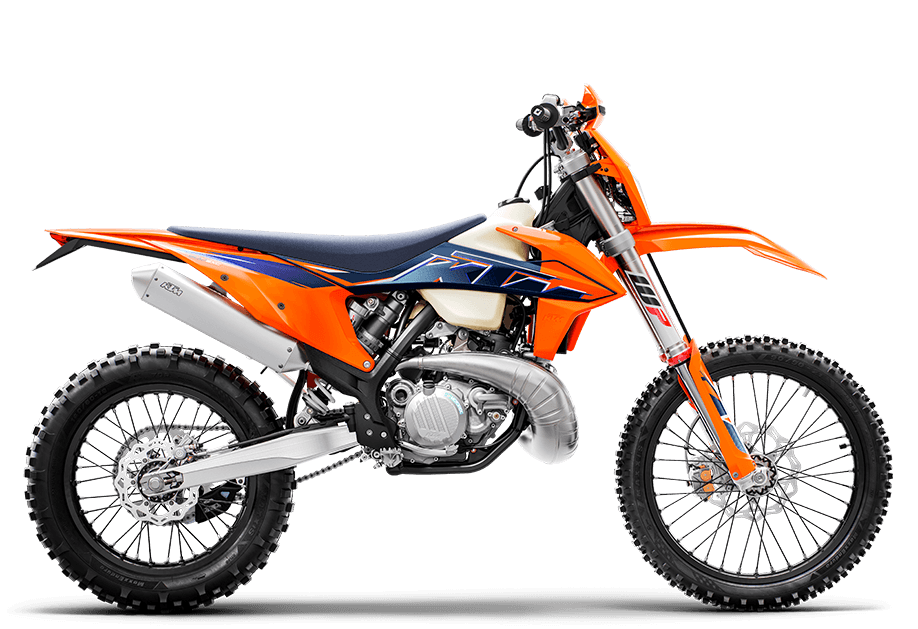
KTM 300 EXC

KTM 300 EXC

  • 49 HP
  • 104.6 kg
  • 2 stroke

The KTM EXC 300 is a legendary Hard Enduro machine. Boasting a cutting edge 2 stroke 300 cc endgine and state of the art suspension for exceptional handling on challenging terrains, making it ideal for both racing and recreational riding.

Learn More ->
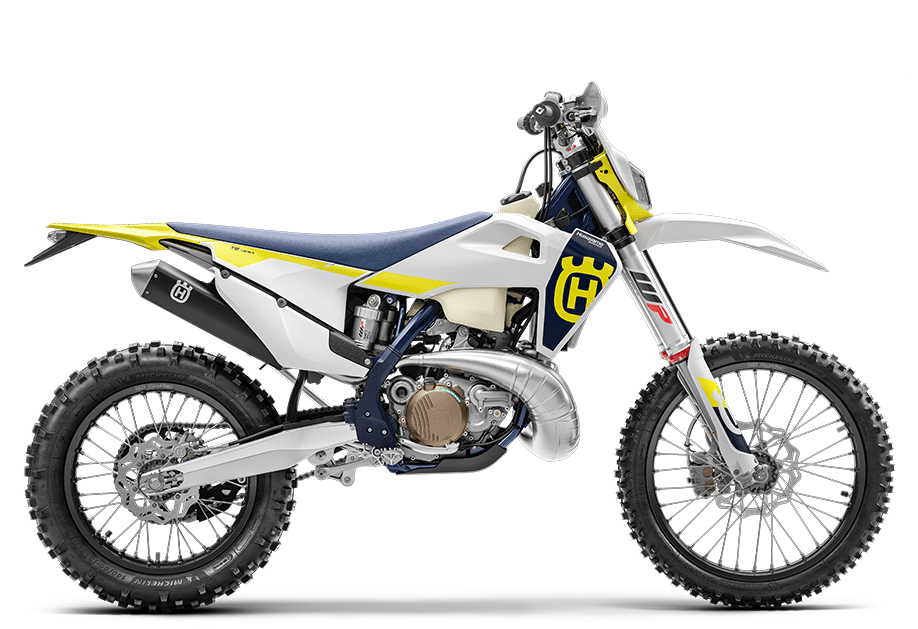
Husqvarna TE 300

Husqvarna TE 300

  • 49 HP
  • 107.0 kg
  • 2 stroke

The Husqvarna TE 300 is a high-performance enduro motorcycle, renowned for its powerful 2-stroke engine and exceptional off-road capabilities.

Learn More ->
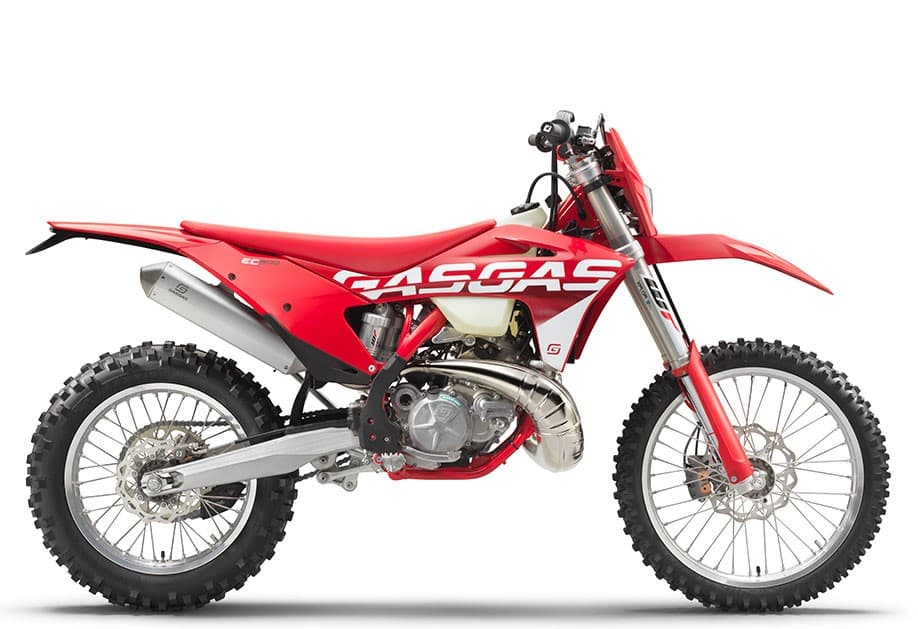
GASGAS EC 300

GASGAS EC 300

  • 49 HP
  • 107.6 kg
  • 2 stroke

The GASGAS EC 300 is a high-performance enduro motorcycle, renowned for its powerful 2-stroke engine and exceptional off-road capabilities.

Learn More ->
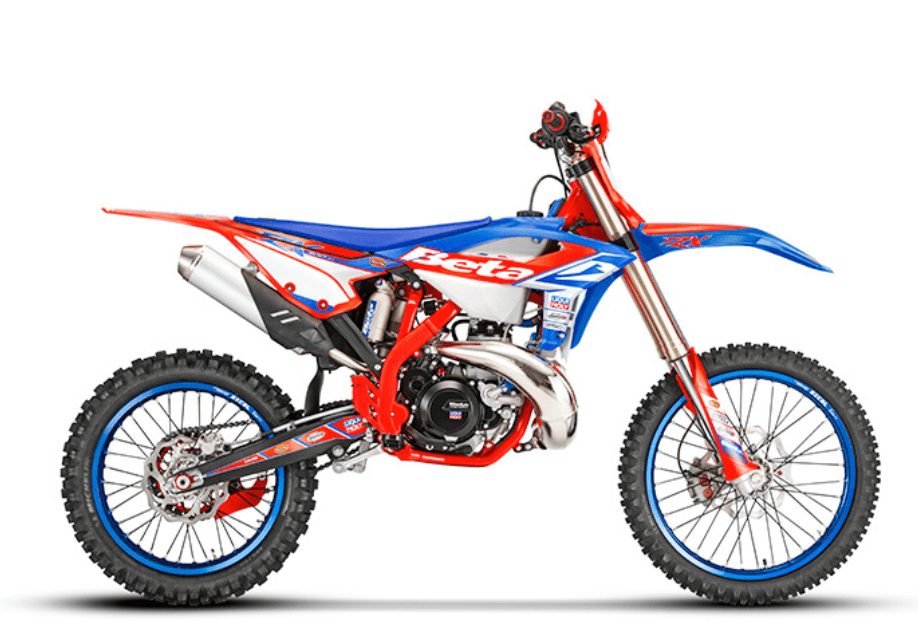
Beta RR 300

Beta RR 300

  • 41.1 HP
  • 111.1 kg
  • 2 stroke

The Beta RR 300 is a high-performance enduro motorcycle, renowned for its powerful 2-stroke engine and exceptional off-road capabilities.

Learn More ->
Sherco 300 SE Factory

Sherco 300 SE Factory

  • 105.0 kg
  • 2 stroke

The Sherco 300 SE Factory is a high-performance 2-stroke enduro motorcycle, engineered for exceptional off-road capabilities and agility.

Learn More ->
KTM 450 SX-F

KTM 450 SX-F

  • 102.6 kg
  • 4 stroke

The KTM 450 SX-F is a championship-winning motocross machine, delivering immense power and precise handling for those who demand the pinnacle of performance.

Learn More ->
Ducati Desmo450 MX

Ducati Desmo450 MX

  • 60 HP
  • 104.0 kg
  • 4 stroke

Ducati’s debut motocross bike, the Desmo450 MX, brings Italian engineering and racing pedigree to the 450cc motocross class, offering cutting-edge technology, light weight, and championship-winning potential.

Learn More ->
KTM 350 SX-F

KTM 350 SX-F

  • 101.9 kg
  • 4 stroke

The KTM 350 SX-F is the perfect blend of 250-like agility and 450-style power, making it a dominant force in motocross and a favorite for competitive riders.

Learn More ->
Husqvarna FC 350

Husqvarna FC 350

  • 58 HP
  • 102.0 kg
  • 4 stroke

The Husqvarna FC 350 offers a perfect balance of powerful performance and agile handling, making it a versatile and competitive motocross bike.

Learn More ->
Husqvarna FC 450

Husqvarna FC 450

  • 102.8 kg
  • 4 stroke

The Husqvarna FC 450 is a premier motocross motorcycle, engineered with a powerful engine and a lightweight chassis for unrivaled on-track performance.

Learn More ->
GASGAS MC 350F

GASGAS MC 350F

  • 102.2 kg
  • 4 stroke

The GASGAS MC 350F is a high-performance motocross bike that delivers a fun and energetic ride, blending usable power with playful handling.

Learn More ->
GASGAS MC 450F

GASGAS MC 450F

  • 57.4 HP
  • 102.6 kg
  • 4 stroke

The GASGAS MC 450F is a serious motocross contender, packing immense power into a lightweight and easy-to-handle chassis for a thrilling ride.

Learn More ->
Beta 450 RX

Beta 450 RX

  • 103.9 kg
  • 4 stroke

Beta's first full-size motocross bike, the 450 RX, is engineered for performance with a focus on rideability, making it a strong contender in the MXGP class.

Learn More ->
Beta 350 RR Race Edition

Beta 350 RR Race Edition

  • 107.5 kg
  • 4 stroke

The Beta 350 RR Race Edition is a competition-ready enduro bike, packed with high-performance components for riders who demand the best.

Learn More ->
Sherco 300 SEF Factory

Sherco 300 SEF Factory

  • 102.0 kg
  • 4 stroke

The Sherco 300 SEF Factory is a championship-winning enduro motorcycle, renowned for its agile handling and a versatile, potent 4-stroke engine.

Learn More ->
Sherco 450 SEF Factory

Sherco 450 SEF Factory

  • 109.0 kg
  • 4 stroke

The Sherco 450 SEF Factory combines potent 4-stroke power with exceptional handling, making it a versatile and high-performance enduro motorcycle.

Learn More ->

The most dedicated athletes in Hard Enduro, making a name for themselves


Graham Jarvis

Graham Jarvis

  • United Kingdom
  • Husqvarna TE 300
  • Jarvis Magpul Racing

Graham Jarvis (born April 21, 1975) is a British motorcycle legend, revered as the 'King of Hard Enduro.' With a background in trials, where he won multiple British and international titles, Jarvis transitioned to extreme enduro and redefined the sport with his technical mastery, steely determination, and iconic calm. He has claimed more major hard enduro victories than any other rider in history, and continues to compete at the highest level at age 50, inspiring a new generation both as a racer and team owner.

Manuel Lettenbichler

Manuel Lettenbichler

  • Germany
  • KTM 300 EXC
  • KTM Factory Racing

Manuel "Mani" Lettenbichler is a world-renowned German hard enduro rider who has dominated in various prestigious events, including the Red Bull Erzbergrodeo and Red Bull Romaniacs. Born into a family with a rich motorsport heritage, his father, Andreas Lettenbichler, also a notable enduro rider, heavily influenced his career. With a career marked by consistent victories, Lettenbichler has cemented his place in the top tier of hard enduro athletes, winning multiple FIM Hard Enduro World Championship titles and World Enduro Super Series (WESS) championships.

Billy Bolt

Billy Bolt

  • United Kingdom
  • Husqvarna TE 300
  • Husqvarna Factory Racing

William 'Billy' Bolt, from Wallsend, England, is a dominant force in the world of both Hard Enduro and SuperEnduro. Originally a trials rider, his background in precision and balance has shaped his extraordinary bike control. Known for his fearless, all-or-nothing style and charismatic personality, he has amassed a huge global fanbase. Bolt is celebrated not only for his numerous world titles but also for his incredible resilience, having overcome significant injuries to return to the pinnacle of the sport time and again.

Tadeusz 'Taddy' Błażusiak

Tadeusz 'Taddy' Błażusiak

  • Poland
  • KTM 300 EXC
  • KTM (Brand Ambassador)

Taddy Błażusiak is a multi‑discipline off‑road legend. After dominating trials in Poland, he exploded onto the extreme enduro scene by winning the Erzbergrodeo Red Bull Hare Scramble on his first attempt (2007) and went on to become the most decorated rider in SuperEnduro/EnduroCross history. In March 2025, he returned to KTM as a brand ambassador and participated in select events like Erzbergrodeo 2025, marking a new chapter in his illustrious career.

Jonny Walker

Jonny Walker

  • United Kingdom
  • Triumph TF 250-E
  • Triumph Racing Enduro Team

Jonny Walker was a dominant figure of the mid-2010s, winning Erzberg three times and Red Bull Romaniacs twice. In a major career move in late 2024, Jonny signed with the new Triumph Racing Enduro Team to spearhead their factory effort in the 2025 FIM SuperEnduro World Championship (where he finished 2nd overall) and select hard enduro events, piloting the Triumph TF 250-E.

David Knight

David Knight

  • United Kingdom
  • Various
  • Various / Privateer

David Knight 'Knighter' MBE is a legend of the sport, bridging classic enduro and early extreme enduro. He is a multiple-time FIM Enduro World Champion and GNCC Champion, and has won major extreme events including Erzberg and Hells Gate. He has raced for various factory teams including Husqvarna, Suzuki, and Gas Gas. Knight retired from full-time professional racing, with his last major international event being the 2021 Dakar Rally.

Cody Webb

Cody Webb

  • United States
  • Yamaha YZ250X (Hard Enduro) / YZ250F (EnduroCross)
  • Rocky Mountain Yamaha Team

American EnduroCross king and TKO specialist with six consecutive Tennessee Knockout titles (2013–2018). In 2025, Cody launched his own factory-supported team, Rocky Mountain Yamaha, serving as owner, manager, and rider. He competes in US Hard Enduro on the YZ250X and EnduroCross on the YZ250F.

Alfredo Gómez

Alfredo Gómez

  • Spain
  • Beta RR 300
  • Beta Factory Racing

Alfredo Gómez, born on February 6, 1989, in Madrid, Spain, is a professional hard enduro rider known for his exceptional skills and numerous victories in the sport. Starting his career in trials, Gómez transitioned to enduro in 2012 and quickly made a name for himself with podium finishes in various championships. In 2023, he joined the Rieju Factory Team to compete in the Hard Enduro World Championship and SuperEnduro World Championship. Later, he formed a new Hard Enduro Team with Beta Factory Racing to participate in major championships.

Wade Young

Wade Young

  • South Africa
  • GASGAS EC 300
  • GASGAS Factory Racing

Wade Young, born in KwaZulu-Natal, South Africa, is a professional hard enduro rider who gained international recognition by becoming the youngest winner of the Roof of Africa at age 16. Known for his exceptional skill and determination, he has secured multiple victories in prestigious enduro events worldwide, solidifying his status as one of the top competitors in the sport.

Mario Román

Mario Román

  • Spain
  • Sherco 300 SE Factory
  • Sherco Factory Racing

Mario Román, born on January 16, 1990, in Spain, is a professional Hard Enduro rider known for his exceptional skills and numerous victories in the extreme enduro scene. As a key member of the Sherco Factory Racing team, Mario has consistently demonstrated his prowess across various challenging competitions worldwide.

Trystan Hart

Trystan Hart

  • Canada
  • KTM 300 EXC
  • FMF KTM Factory Racing

North American frontrunner and main challenger to the European elite. Multiple TKO winner and consistent Erzbergrodeo podium finisher, nicknamed 'The Robot' for his consistency.

Andreas Lettenbichler

Andreas Lettenbichler

  • Germany
  • Various (KTM, BMW)
  • Privateer / Former Factory KTM

Pioneer of European extreme enduro; Romaniacs winner (2009) and shared Erzberg winner (2015). Andreas 'Letti' Lettenbichler is a former factory KTM rider and a legend of the sport, instrumental in bridging the gap to the modern era. He is now retired from full-time racing and serves as a mentor to his son, Manuel Lettenbichler, the current world champion.

Christian Pfeiffer

Christian Pfeiffer

  • Germany
  • BMW (various)
  • BMW (former)

Early Erzberg specialist and global promoter of the event; winner in 1996, 1997, 2000, and 2004. Pfeiffer was also a world-renowned stunt rider for BMW. He passed away in 2022.

Cyril Despres

Cyril Despres

  • France
  • KTM (Rally)
  • KTM (former)

Five-time Dakar Rally champion and three-time Red Bull Romaniacs winner (2004, 2005, 2007). Despres is an icon of rally-raid who also dominated early extreme enduro.

Alfie Cox

Alfie Cox

  • South Africa
  • KTM (various)
  • KTM (former)

South African off-road legend with a record nine-time Roof of Africa wins. He was also the inaugural Erzberg (1995) champion and a multiple-time Dakar Rally podium finisher.

Teodor Kabakchiev

Teodor Kabakchiev

  • Bulgaria
  • Sherco 300 SE XTREM
  • Sherco Factory Racing

Eastern Europe's top contender and a consistent FIM Hard Enduro World Championship podium threat. Signed with Sherco Factory Racing in 2024.

Mitch Brightmore

Mitch Brightmore

  • United Kingdom
  • GASGAS EC 300
  • X-GRIP Racing Team

A rapidly rising star from the UK, Mitch is a back-to-back FIM Hard Enduro Junior World Champion (2023, 2024). He has progressed into the top 10 of the Pro class at events like Red Bull Romaniacs.

Matthew Green

Matthew Green

  • South Africa
  • KTM 300 EXC
  • Rigo Racing

Matthew Green, born in 2001 in Pietermaritzburg, KwaZulu-Natal, South Africa, is a professional hard enduro rider who has rapidly ascended the ranks of the sport. Starting his career in his home country, Green has showcased remarkable talent and determination, leading to significant achievements on the international stage. In 2022, he made history by becoming the first FIM Hard Enduro Junior World Cup winner, solidifying his status as a rising star in the hard enduro community. As of 2025, he is recognized as a podium contender in the world's toughest hard enduro events and is frequently compared to the sport's elite.

Pol Tarrés

Pol Tarrés

  • Spain
  • Yamaha Ténéré 700
  • Yamaha

Twin-cylinder specialist pushing adventure bikes into hard enduro events like Romaniacs. He is known for piloting the Yamaha Ténéré 700 in extreme conditions where only lightweight enduro bikes are thought to be competitive.

Chris Birch

Chris Birch

  • New Zealand
  • KTM 300 EXC / KTM 1290 Super Adventure R
  • KTM Ambassador / Chris Birch Coaching

Oceanic rally-style master and Red Bull Romaniacs winner (2010). He is now a globally renowned KTM Ambassador and coach, running his 'Chris Birch Coaching' and 'Say No To Slow' programs, specializing in both hard enduro and adventure bike skills.

Michael Walkner

Michael Walkner

  • Austria
  • GASGAS EC 300
  • GASGAS Factory Racing

Michael Walkner, born in 1997 in Austria, is a professional hard enduro rider who has been a prominent figure in the sport. Known for his technical prowess and determination, Walkner has achieved significant milestones in his career, including a career-best stage result at the Xross Hard Enduro Rally and a strong 4th place finish at Red Bull Romaniacs 2025.

Paul Bolton

Paul Bolton

  • United Kingdom
  • KTM
  • Privateer

Respected privateer legend, known as 'Paul Fast Eddy' Bolton. He achieved numerous top-10s at Erzbergrodeo and Romaniacs over a decade. He is now a popular event commentator for Red Bull TV and a media personality.

Giovanni Sala

Giovanni Sala

  • Italy
  • KTM
  • KTM Farioli

Six-time WEC World Enduro Champion and Italian legend; Erzberg Rodeo winner in 1998.

Sandra Gómez

Sandra Gómez

  • Spain
  • Various
  • Privateer

Female hard enduro and trials pioneer, and the first woman to finish Red Bull Romaniacs Gold Class. She is a multiple-time FIM Women's Trials World Champion and FIM SuperEnduro Women's World Champion. She competed in the 2025 Dakar Rally with the Fantic team as the only female bike competitor and finished 2nd overall at the 2025 Abestone Hard Enduro (Silver).

Eddie Karlsson

Eddie Karlsson

  • Sweden
  • Stark Varg (Electric)
  • Stark Future

Technological pioneer: first ever to win the overall Red Bull Romaniacs Silver Class (2025) on an electric bike (Stark Varg). Former top trials rider.

Didier Goirand

Didier Goirand

  • Mexico
  • Sherco 300 SE
  • Sherco 4D

Didier Goirand is a professional enduro and hard enduro rider from Mexico, known for his exceptional skills and contributions to the sport. He has made history as the first Mexican to compete in the FIM Hard Enduro World Championship, showcasing his talent on an international platform.