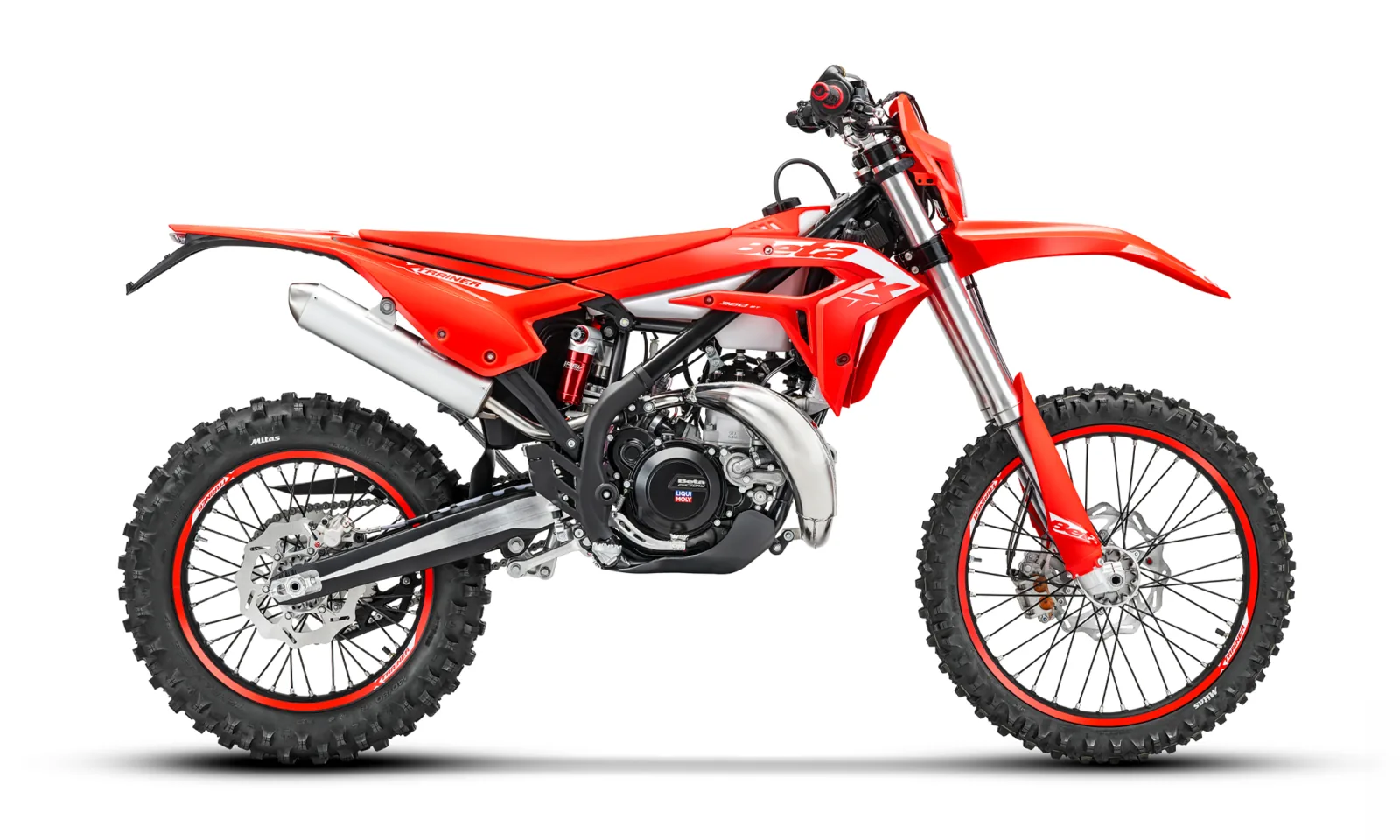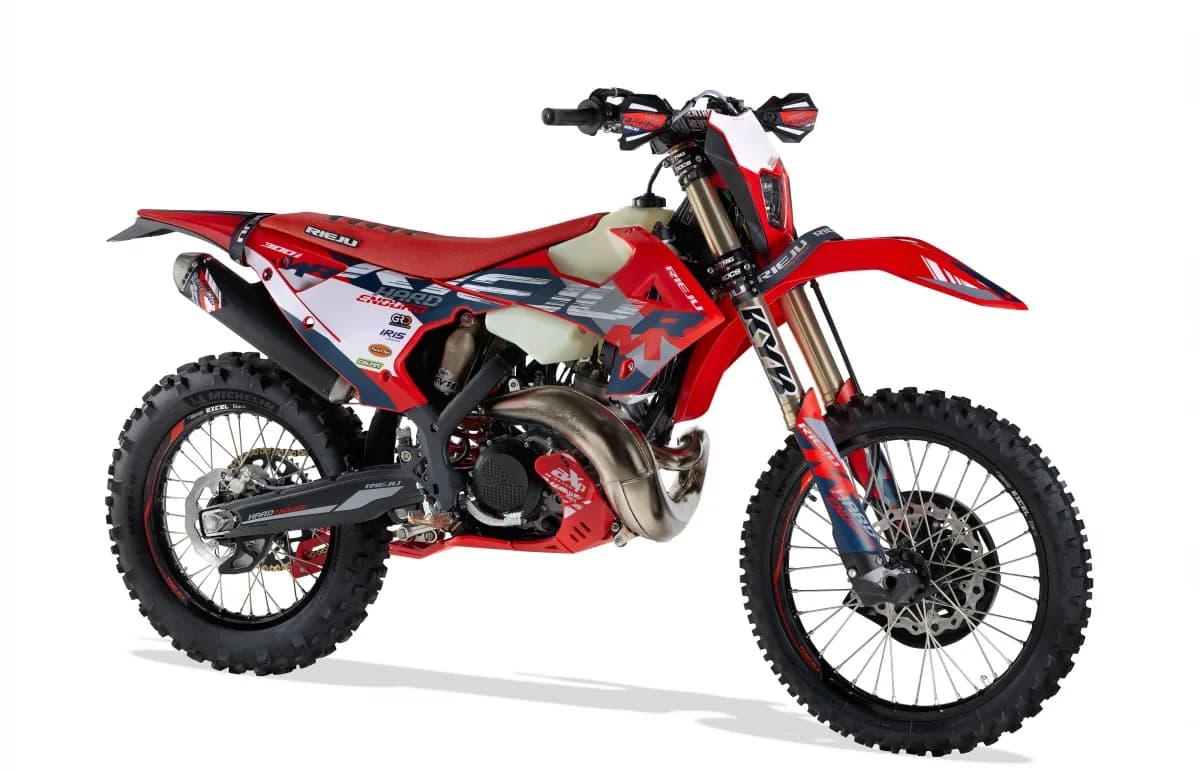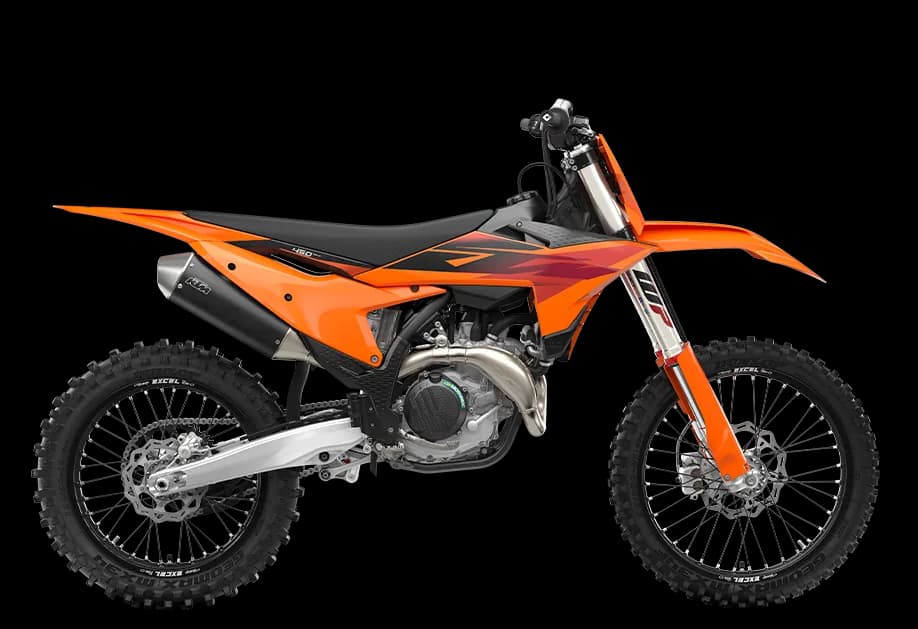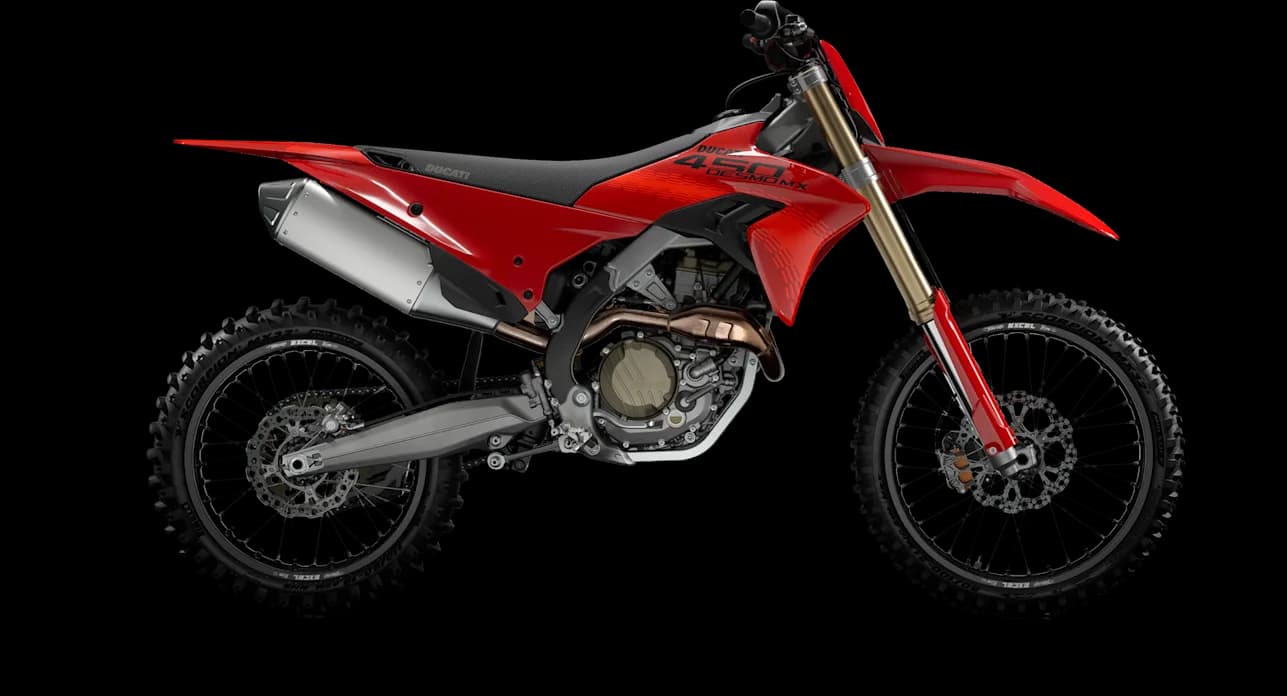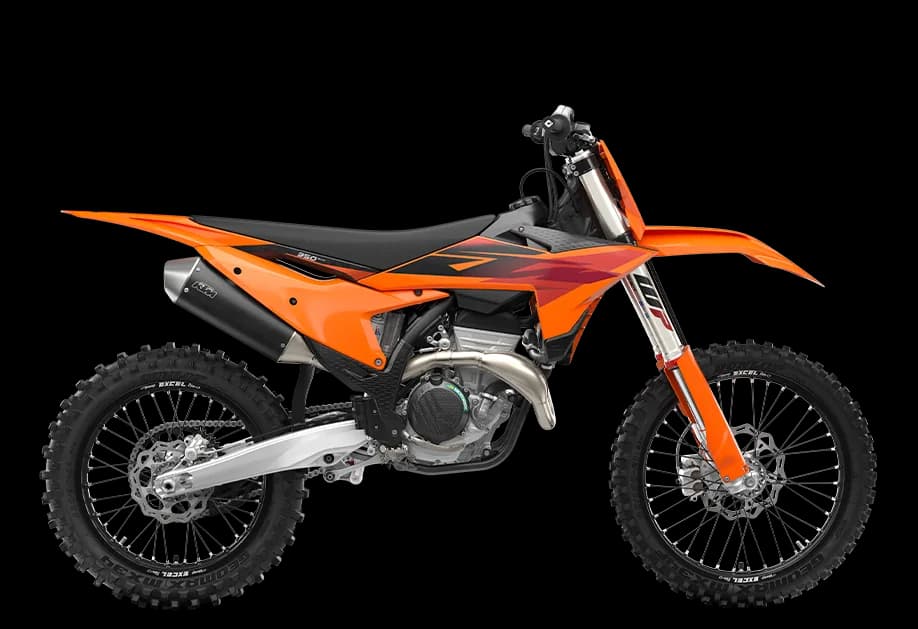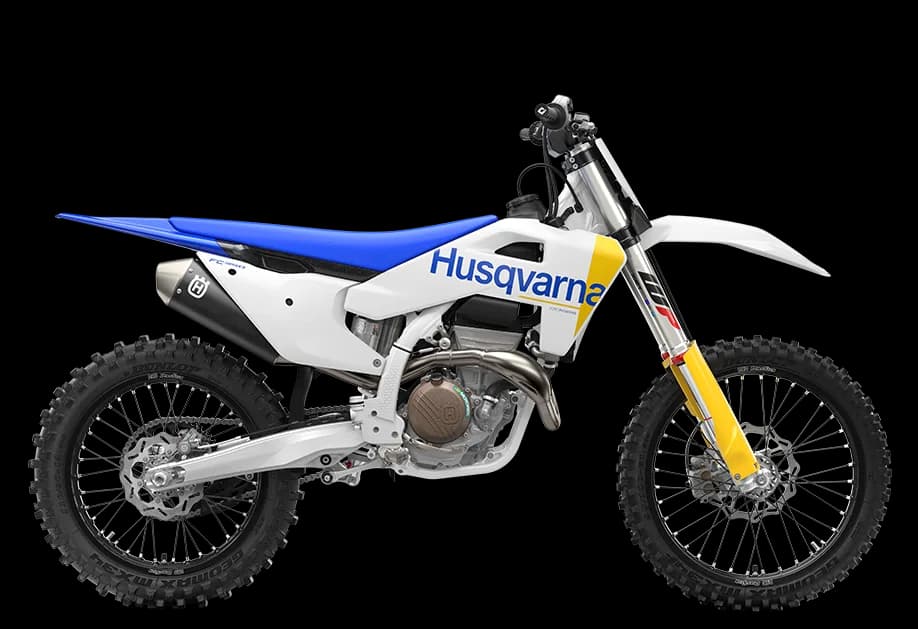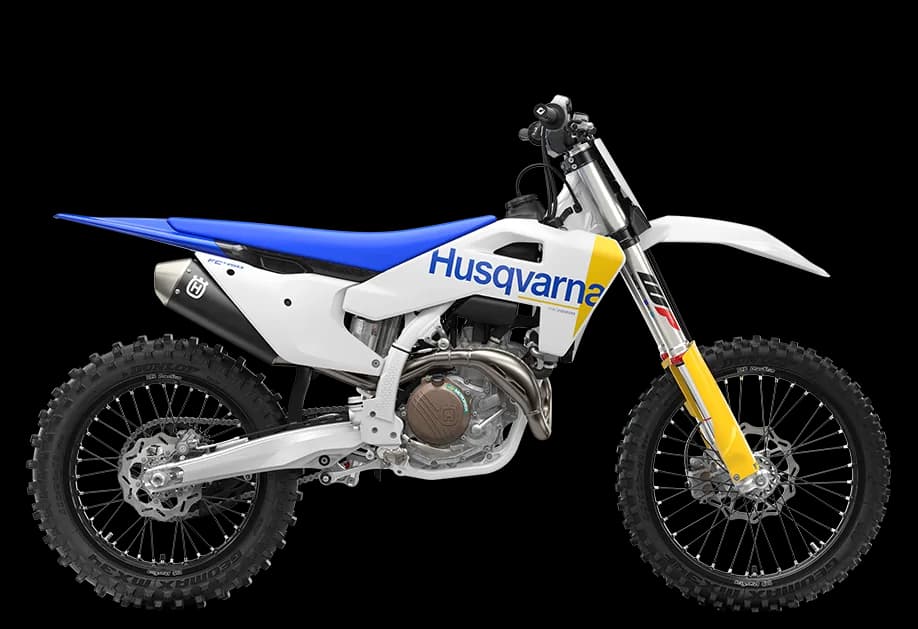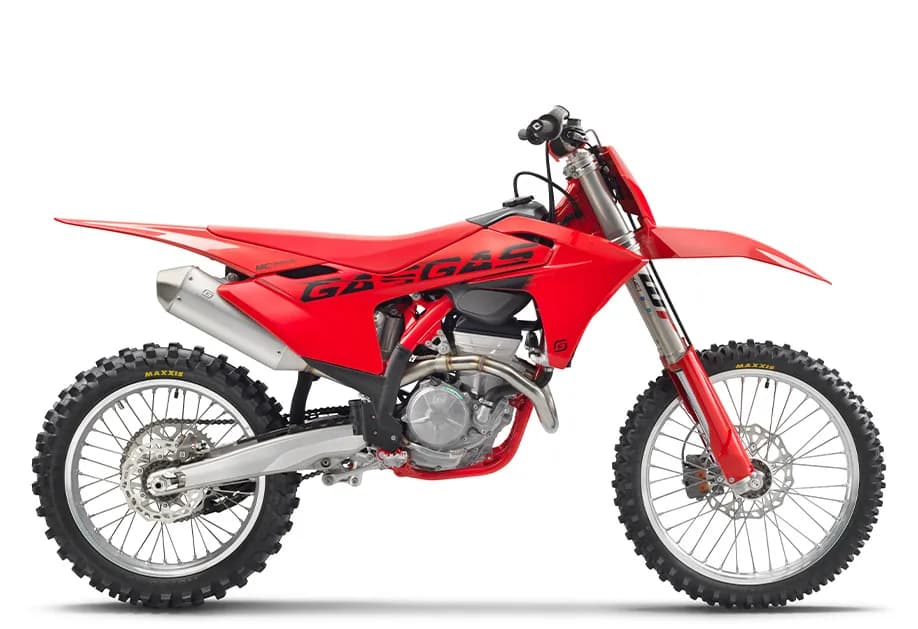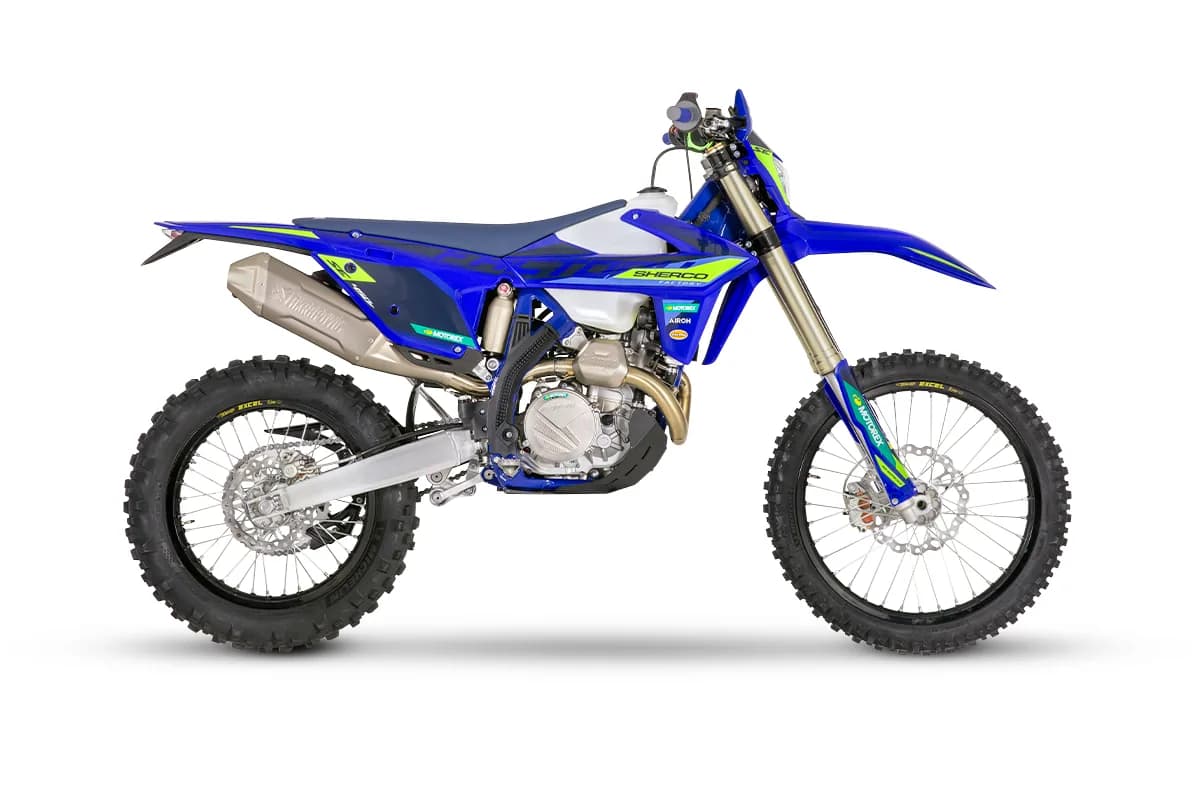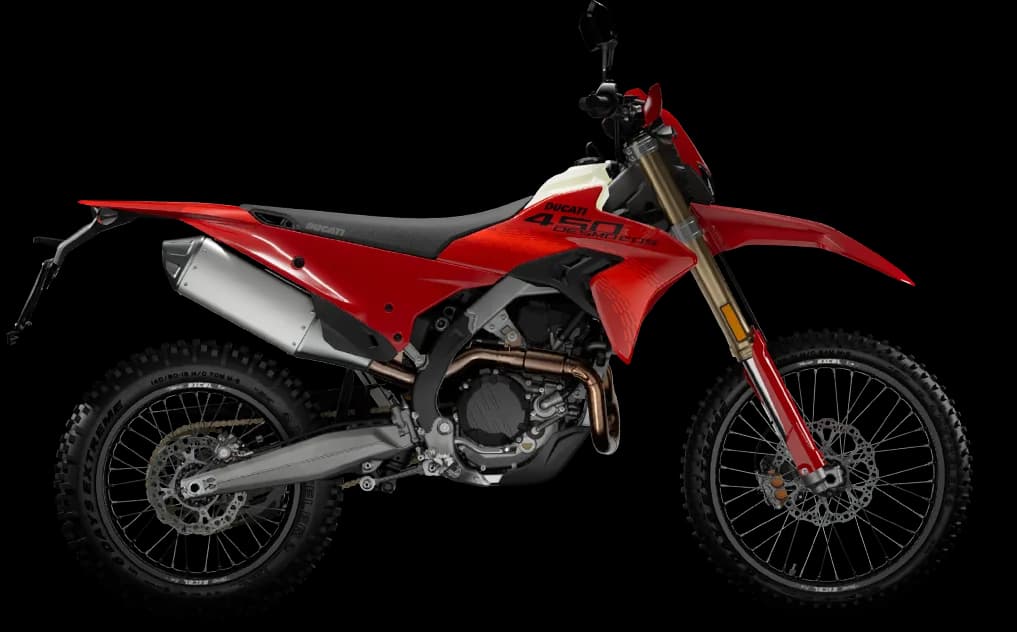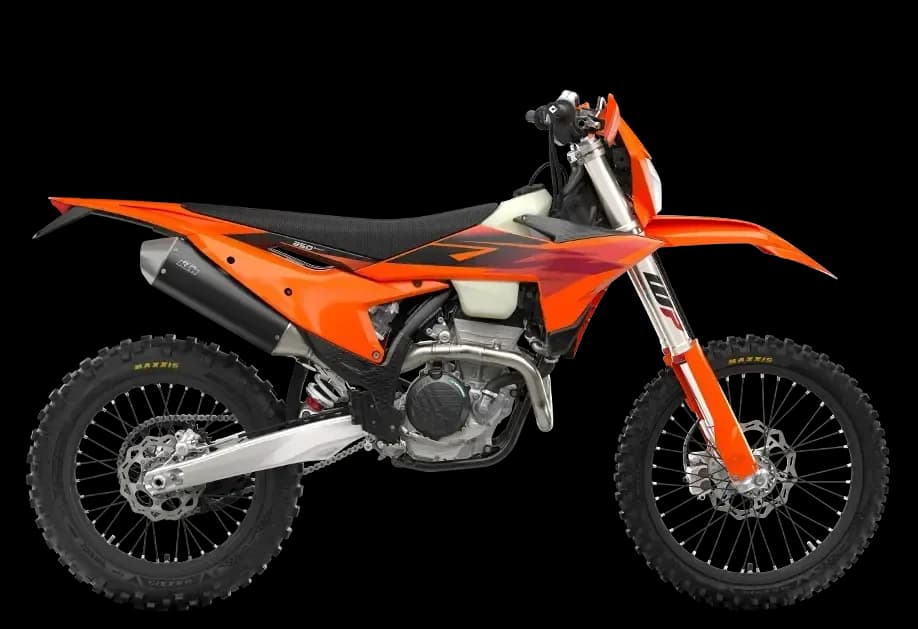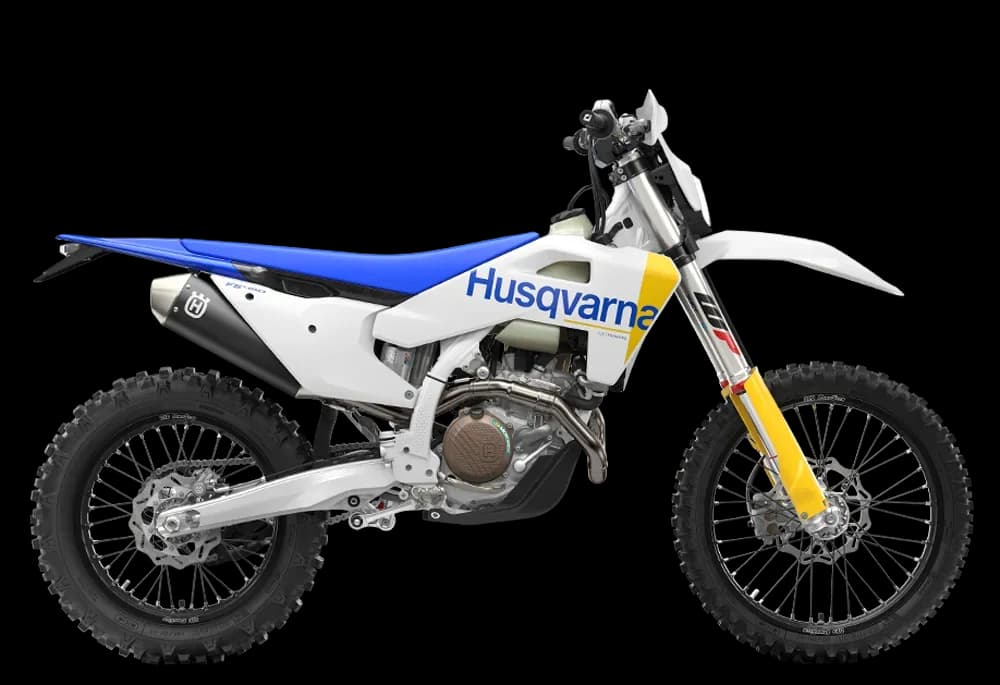
Which should you ride? In our view: for hard enduro, a 300 two-stroke. For fast, open enduro, a 350 four-stroke. For most adult beginners, either works: a 250 or 300 two-stroke, or a 250 or 350 four-stroke. The reasons are below.
First, a map. Each maker builds some engine sizes as two-strokes and others as four-strokes, and the sizes rarely overlap. There is no KTM 350 two-stroke and no Husqvarna 300 four-stroke. This page shows which is which, then explains how the two engine types differ on the trail and in the workshop. Every model comes from the maker's own website or press release, checked on 16 October 2026. The sources are listed at the end. Where it's our own view, we say so.
The short answer
- 125, 150, 200 and 300: mostly two-strokes.
- 250: sold both ways. KTM, Husqvarna, Sherco, TM and Yamaha each sell a 250 two-stroke and a 250 four-stroke.
- 350, 390, 430, 450, 480, 500 and 501: always four-strokes. No maker in the table below sells a two-stroke above 300 cc.
- 300-class four-strokes exist, but only at Sherco, TM and Fantic. KTM, Husqvarna, GASGAS, Beta and Rieju don't make one.
- A letter usually tells you. In the ranges below, an "F" in the name means four-stroke: KTM EXC-F, Husqvarna FE, GASGAS EC 350F, Sherco SEF, Fantic XEF, Yamaha WR250F. Beta and TM write "2T" or "4T". TM's "Fi" means fuel injection, not four-stroke.
- Our view for most adult beginners: a 250 or 300 two-stroke, or a 250 or 350 four-stroke. A 450 is more than a beginner needs.
Which engine sizes each maker sells
This table lists each maker's current enduro and cross-country range, as shown on its own site. KTM, Husqvarna and GASGAS sell different ranges in different countries. The table uses their UK ranges, with KTM's US range added because it differs most.
| Maker (range shown) | Two-strokes | Four-strokes |
|---|---|---|
| KTM (UK, 2027) | 125 XC-W, 250 XC-W, 300 EXC (also 300 EXC Hardenduro and 6Days) | 250, 350, 450 and 500 EXC-F (also 6Days versions) |
| KTM (US, 2027) | 150, 250 and 300 XC-W (also 300 XC-W Hardenduro); 125, 250 and 300 XC | 450 XCF-W; 250, 350 and 450 XC-F |
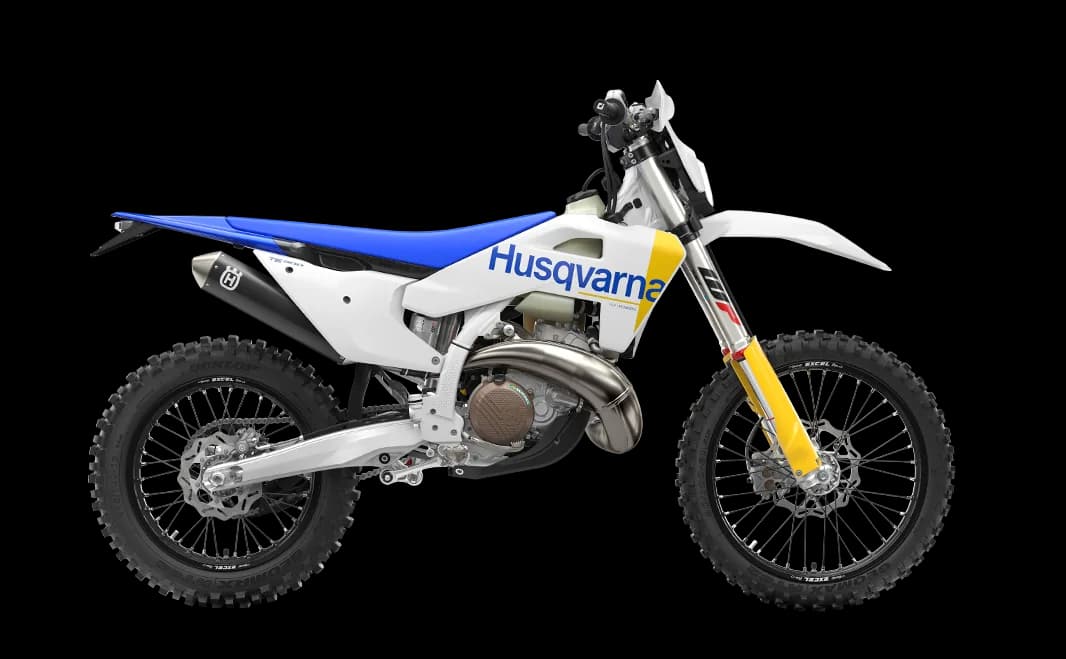
| Husqvarna (UK, 2027) | TE 125, TE 250, TE 300, TE 300 Pro | FE 250, FE 350, FE 350 Pro, FE 450, FE 501 |
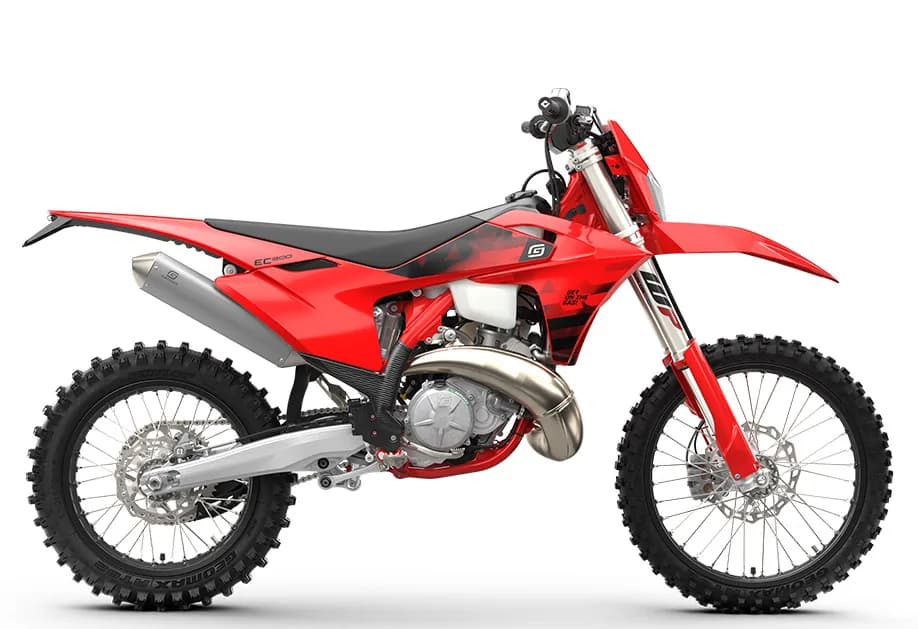
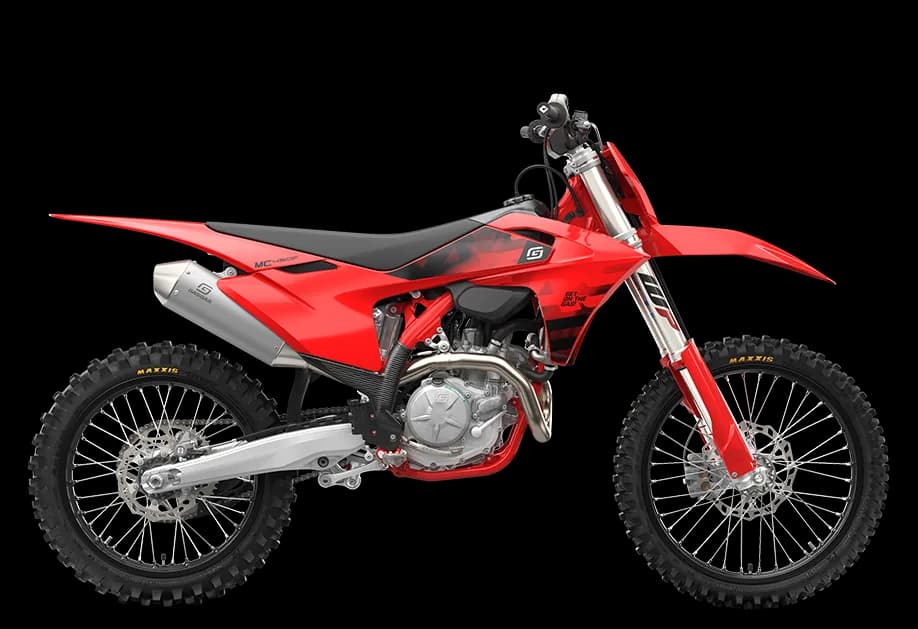
| GASGAS (UK, 2027) | EC 300 | EC 350F |
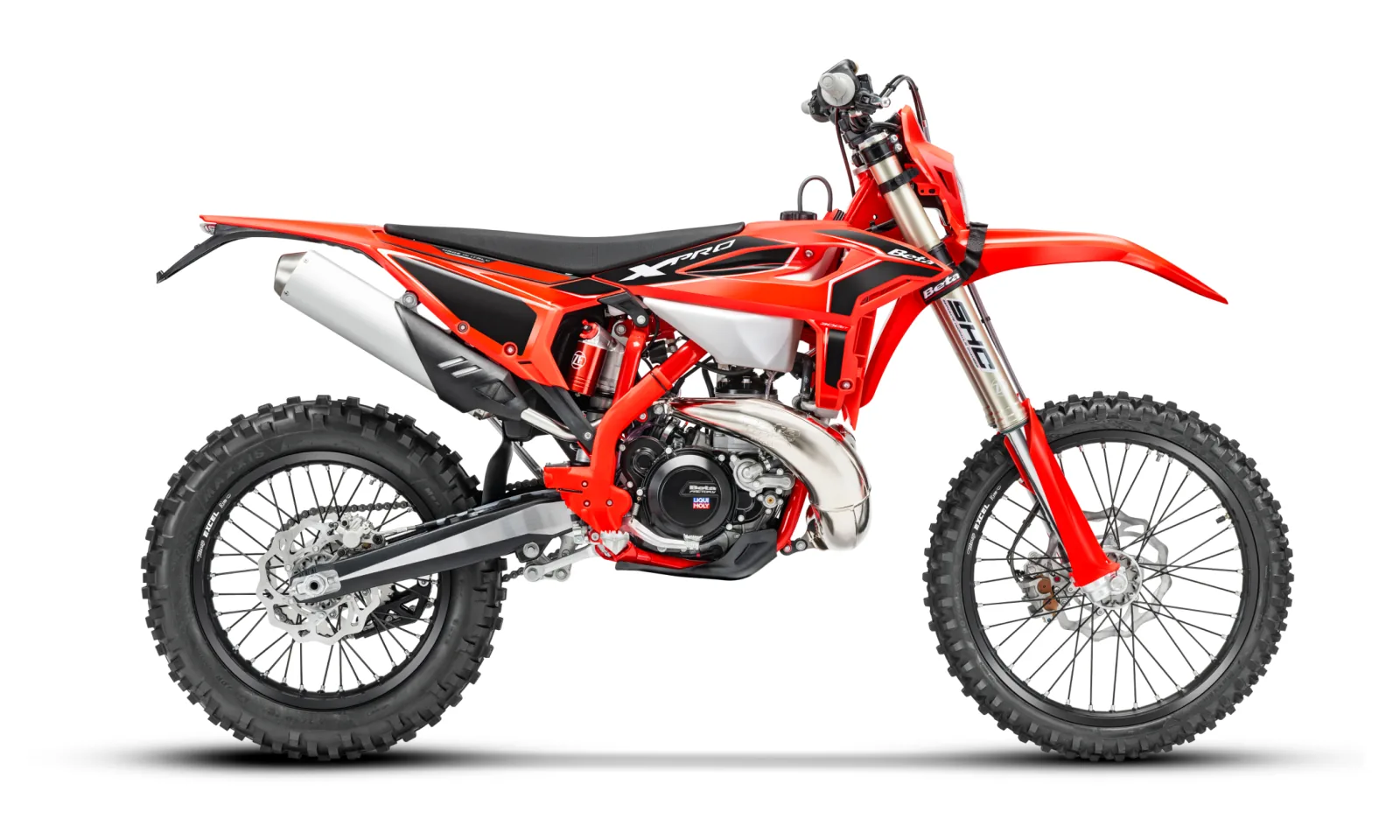
| Beta (2027, RR Race and RR X-Pro) | RR 2T 125, 200, 250, 300; Xtrainer 200 and 300 | RR 4T 350, 390, 430, 480 |
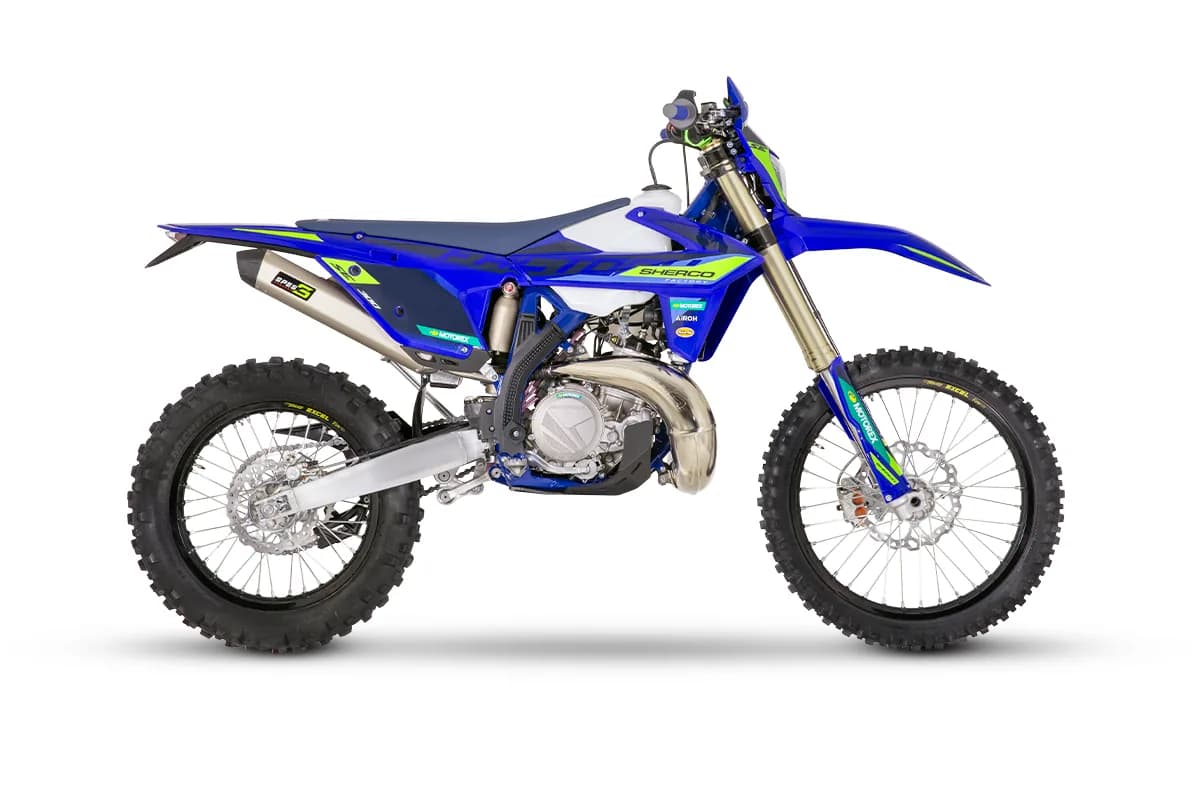
| Sherco (2027; Xtrem 2026) | 125, 250, 300 SE Factory; 250 and 300 SE Xtrem | 250, 300, 450, 500 SEF Factory |
| TM (2026) | EN 125, EN 250, EN 300 ES Fi 2T (also Corse versions) | EN 250, EN 300, EN 450 ES Fi 4T (also Corse versions) |
| Fantic | XE 125, XE 300 | XEF 250, XEF 310, XEF 450 |
| Rieju (2027) | MR 300i Racing, MR 300i Pro, MR 300i Hard Enduro (298 cc) | None at 250 cc or above |
| Yamaha (US cross-country) | YZ125X, YZ250X | YZ250FX, YZ450FX, WR250F, WR450F |
| Honda (US, 2027) | None | CRF250RX, CRF450RX, CRF450X |
| Triumph (spec sheet, MY25) | None | TF 250-E, TF 450-E |
Two things stand out. Beta's four-strokes come in sizes no other maker in the table uses: 390, 430 and 480. And the 300-class four-strokes are a little bigger than 300: Sherco's 300 SEF is 303.68 cc, and Fantic's XEF 310 is 304 cc.
To compare specs, see our two-stroke and four-stroke lists.
The searched combinations, answered
KTM 350 two-stroke. There isn't one. The 350 is a four-stroke: the 350 EXC-F in the UK, and the 350 XC-F in KTM's US cross-country range. The KTM 350 SX-F is the motocross four-stroke. KTM's largest two-stroke is the 300 EXC.
KTM 450 two-stroke. There isn't one. KTM's 450s are four-strokes: the 450 EXC-F, the US 450 XCF-W and 450 XC-F, and the 450 SX-F for motocross.
KTM 300 four-stroke. There isn't one. The 300 EXC, 300 XC-W and 300 XC are two-strokes. KTM's nearest four-strokes are the 250 and 350 EXC-F.
Husqvarna 350 two-stroke. There isn't one. The FE 350 and FE 350 Pro are four-strokes. The FC 350 is the motocross four-stroke.
Husqvarna 450 two-stroke. There isn't one. The FE 450 is a four-stroke, and so is the FC 450 motocross bike.
Husqvarna 300 four-stroke. There isn't one. The TE 300 and TE 300 Pro are two-strokes. The nearest four-strokes are the FE 250 and FE 350.
GASGAS 350 two-stroke. There isn't one. The EC 350F is a four-stroke. GASGAS's enduro two-stroke is the EC 300.
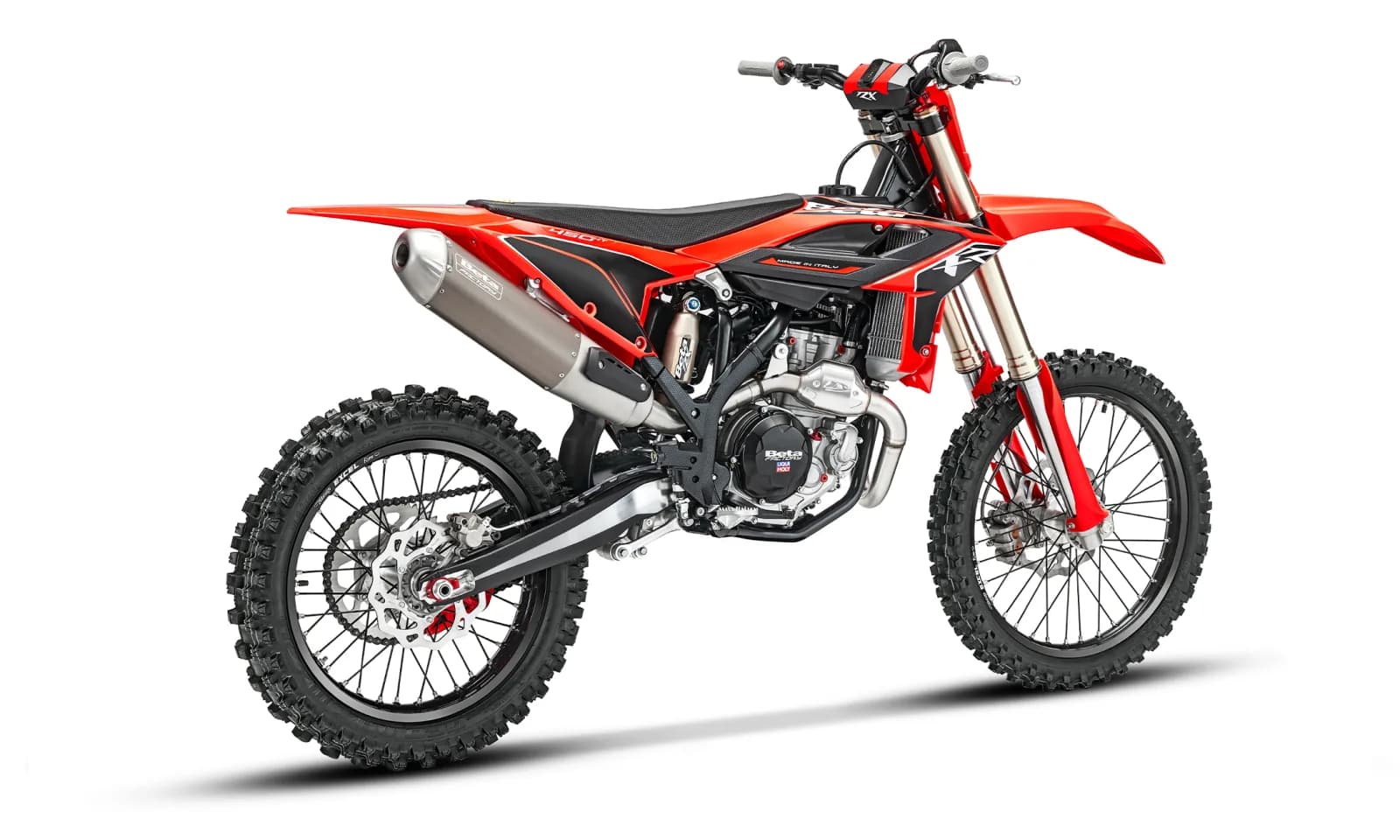
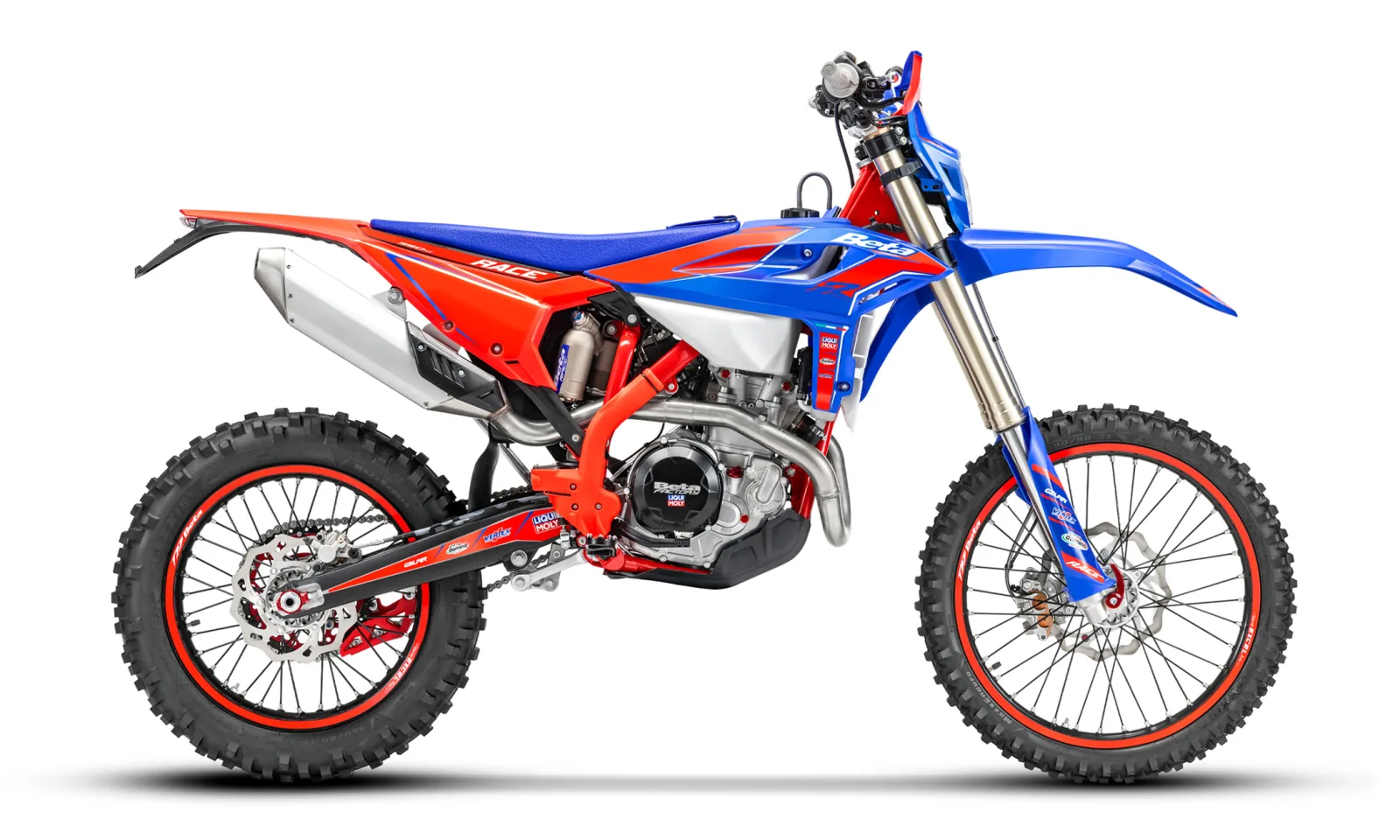
Beta 350 two-stroke. There isn't one. Beta's two-strokes stop at 300. The RR 4T 350 is a four-stroke; see the Beta 350 RR Race Edition.
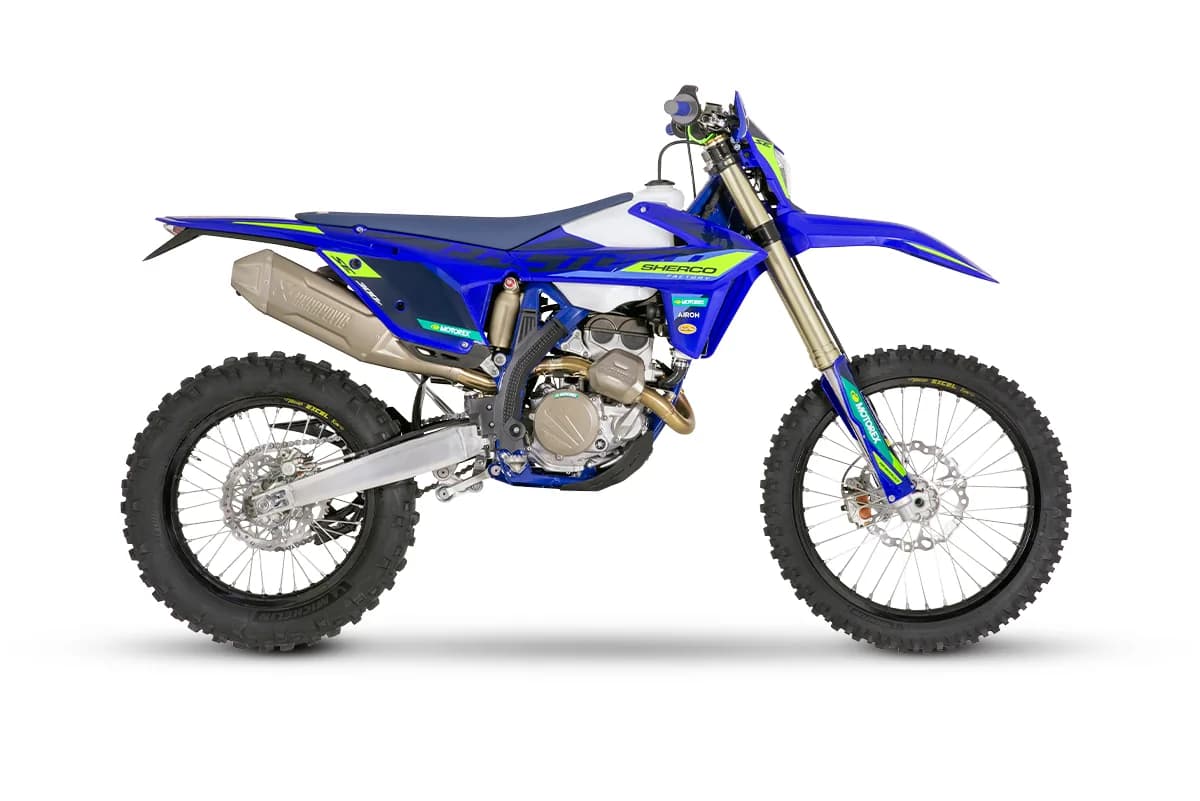
Sherco 300 four-stroke. Yes. Sherco makes both. The 300 SEF Factory is a 303.68 cc four-stroke with DOHC, four valves and Vitesco fuel injection. The 300 SE Factory is a 293.2 cc two-stroke with a Keihin PWK 36 carburettor. Same number, different engines.
TM and Fantic 300s. Both also make a 300 each way. TM sells the EN 300 ES Fi as a 2T and as a 4T. Fantic's XE 300 is a 293 cc two-stroke, and its XEF 310 is a 304 cc four-stroke.
How they differ
Power delivery
This part is our view, from riding both. In our experience:
- A two-stroke feels light and eager. When you roll off the throttle it keeps rolling, with little engine braking. At very low revs it can stall or bog unless you keep it on the clutch.
- A four-stroke pulls more evenly from low revs and slows the bike when you roll off. That engine braking helps on long, steep descents. It can also make the rear wheel lock or skip if you shut off abruptly.
- On slippery climbs, both work. A soft two-stroke map and a four-stroke both find grip. The difference is in how you ride them: the two-stroke on the clutch, the four-stroke on a steady throttle.
The throttle lesson covers both styles. For a two-stroke, injection versus carburettor also changes the feel; see TBI vs carb for hard enduro two-strokes.
Weight
On paper, the gap is small. Makers measure weight in different ways, so compare only within one maker. These figures come from each maker's spec sheet:
| Maker | Two-stroke | Four-stroke | Gap | Weight basis |
|---|---|---|---|---|
| KTM (2027) | 300 EXC: 104.4 kg | 350 EXC-F: 106.8 kg | 2.4 kg | Without fuel |
| Beta (MY27) | RR Race 2T 300: 103.5 kg | RR Race 4T 350: 107.5 kg | 4.0 kg | Dry |
| Fantic | XE 300: 107 kg | XEF 310: 109 kg | 2 kg | Without fuel, with liquids |
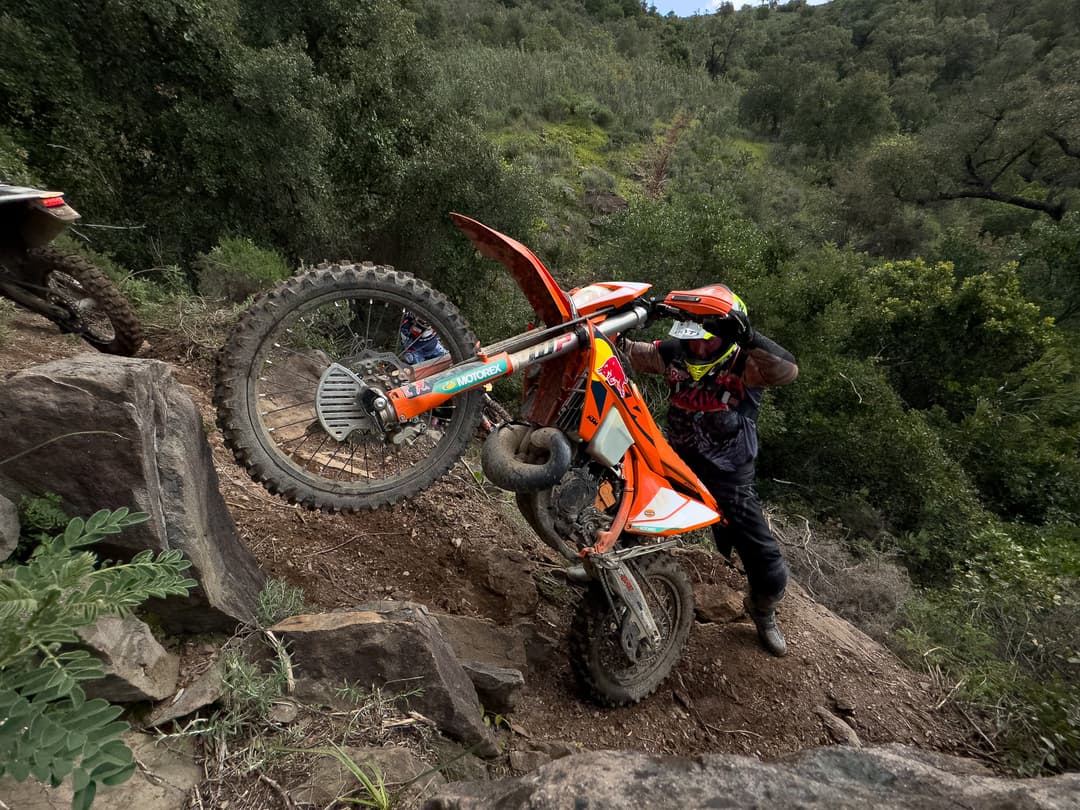
So a 300 two-stroke is 2 to 4 kg lighter than the same maker's 350 four-stroke (at Fantic, its 310). In our experience, the two-stroke also feels lighter than that gap suggests. It changes direction more easily and is easier to pick up. That last part matters more than you'd think. In hard terrain, you lift the bike often.
Servicing
The two engine types need different work, at different times. KTM's 2027 owner's manuals set these intervals:
- KTM 300 EXC (two-stroke). Gear oil every 45 hours. A minor engine service every 45 hours, which includes a new piston. A major engine service at 90 hours, with the engine removed, which includes a new connecting rod. The manual says to change the piston every 10 hours when riding on dry or wet sand.
- KTM 350 EXC-F (four-stroke). Engine oil and filter every 15 hours. Valve clearance checked every 45 hours. A full engine service at 90 hours, with the engine removed. That service replaces the piston, valves, valve springs, connecting rod and timing chain.
Put simply: both get an engine-out service at 90 hours. Before that, the two-stroke needs a new piston at 45 hours, but it has no valves to check. The four-stroke needs oil and a filter every 15 hours and a valve check every 45.
Our enduro for beginners guide shows the same schedule for the matching Husqvarna and GASGAS models. The bike setup lesson has the schedules for Beta, Sherco and Yamaha too.
Fuel: premix or oil injection
A four-stroke runs on plain petrol. Its engine oil sits in the engine and gets changed at the service.
A two-stroke burns its oil with the fuel. The oil gets there in one of two ways:
- Oil injection. A separate tank feeds an oil pump, and you fill the fuel tank with plain petrol. KTM's 2027 manual for the 300 EXC gives a 2-stroke oil tank of about 0.8 l, and says: "Do not refuel using pre-mixed fuel." It warns the engine "will not be lubricated unless there is 2-stroke oil in the oil tank." Fantic lists a "separate mixer" for the XE 300. Beta lists "Mixing with electrical pump" for the RR X-Pro 2T 300.
- Premix. You mix two-stroke oil into the fuel yourself. Sherco's 300 SE Factory page gives a "2% mixture". Beta lists the RR Race 2T 300 simply as "Mixing", with no pump.
Know which system your bike has before you fill it. On an oil-injected bike, an empty oil tank can wreck the engine. The bike setup lesson has a table of which bikes use which system, and the mix ratios.
Emissions and road use
The engine type doesn't decide whether a bike is road legal. The model and the market do.
- KTM sells different ranges by market. The UK range is built around the EXC; the US enduro range is the XC-W. Our KTM EXC vs XC-W guide explains the split.
- Beta's page for the RR Race 2T 300 says its pictures "show the competition version of the motorbike and not the road-legal version". The same model name can cover both.
If you need to ride on the road, check that the exact model is registrable in your country before you buy. The enduro for beginners guide covers the US and Portuguese rules we've sourced.
Hard enduro or fast enduro
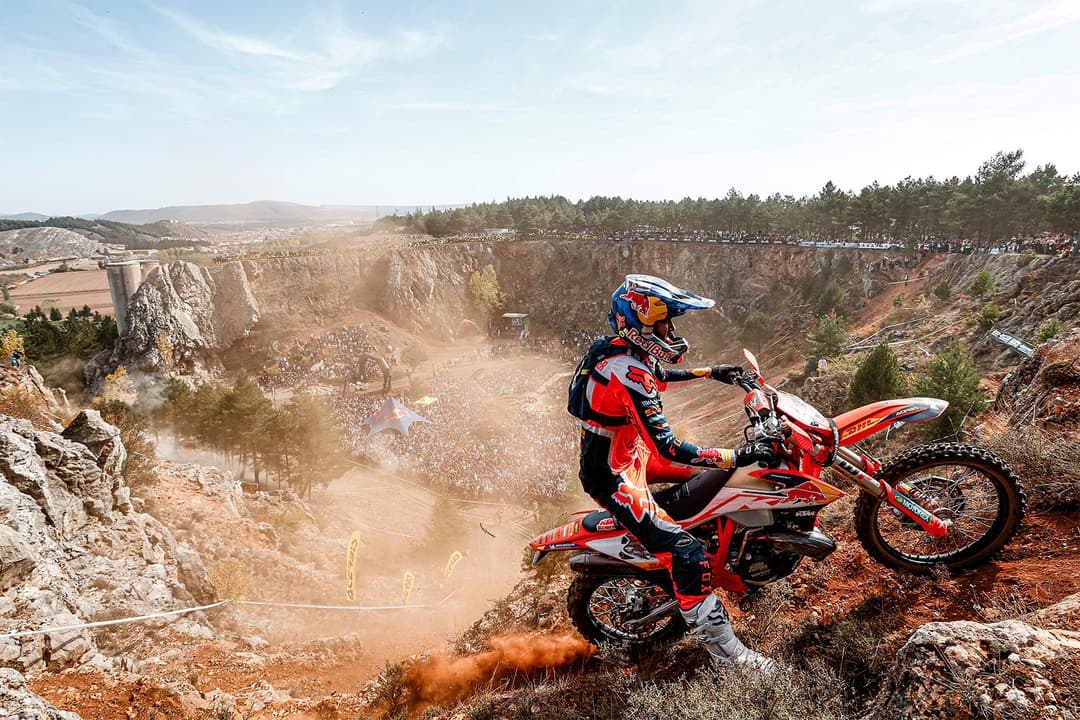
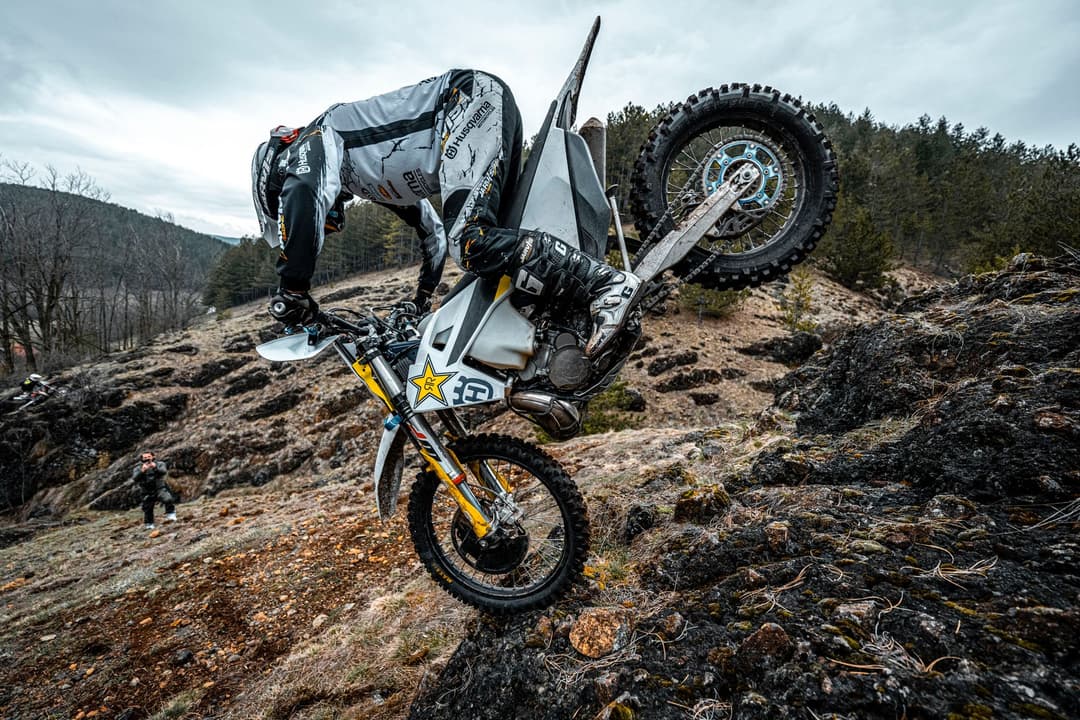
Hard enduro: mostly 300 two-strokes
The results show it. At the 2026 Red Bull Erzbergrodeo, 15 riders reached the finish of the Hare Scramble. The official classification lists their bikes:
- 11 rode 300 two-strokes: KTM 300 EXC and 300 XC, GASGAS EC 300 (four riders), Sherco 300 SE (two), Beta RR 300 and Husqvarna TE 300 (two). The classification lists third-placed Mario Román's bike as an "MR74 300", after his own team. It is a Husqvarna TE 300.
- One rode a four-stroke: Cody Webb, 13th, on a Yamaha WR 250 F.
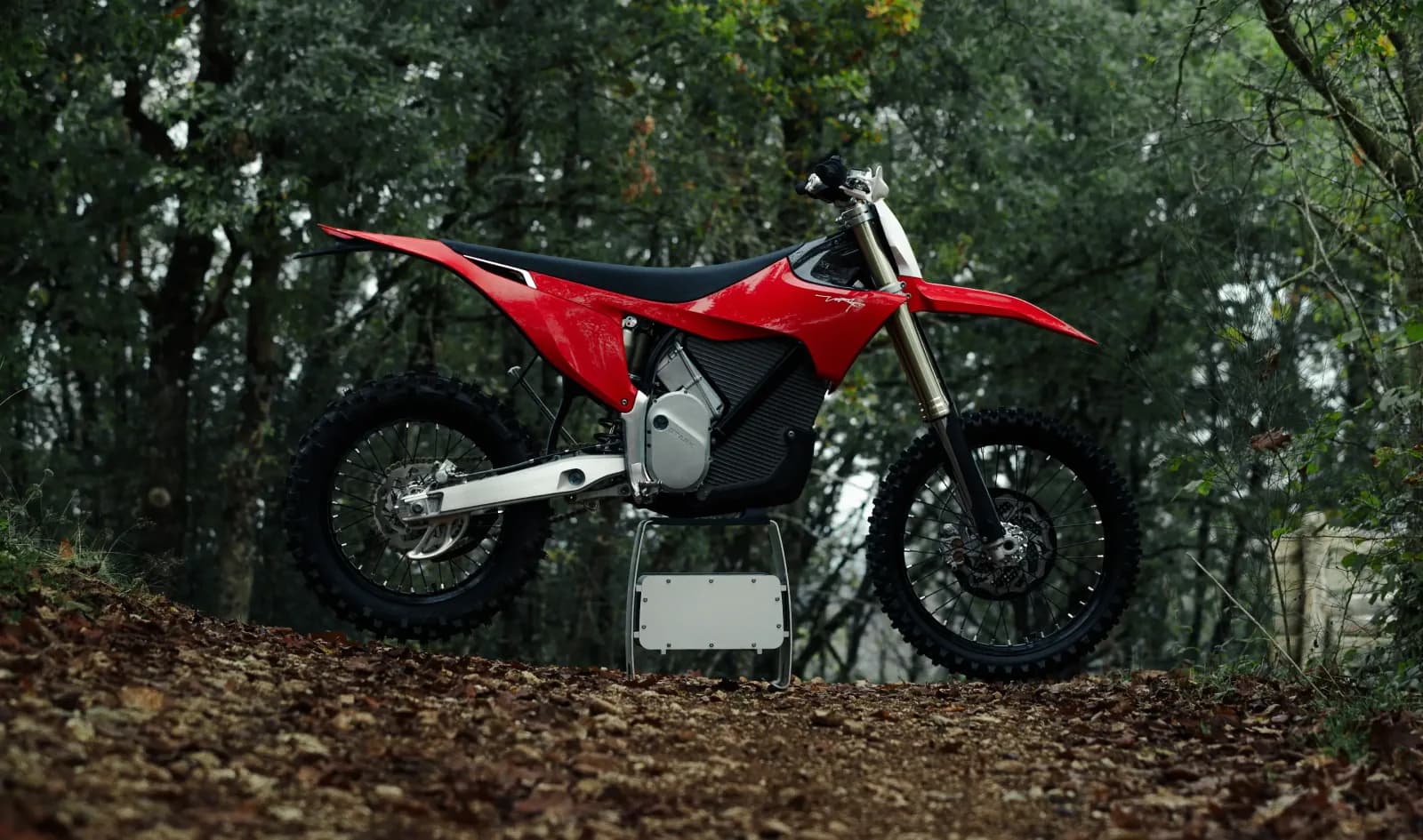
- Three rode electric bikes: two Stark Vargs, and Graham Jarvis's Jarv-E.
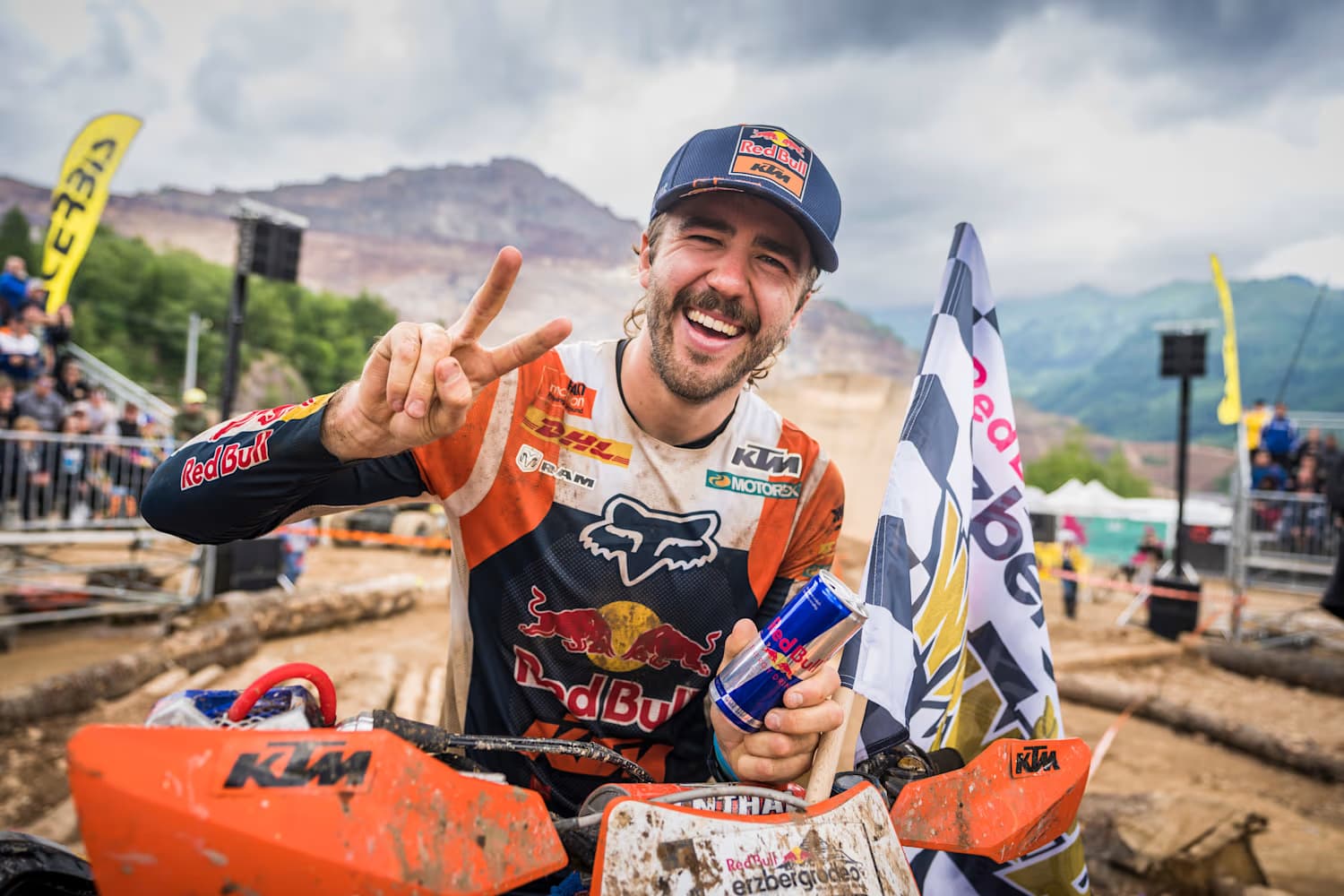
Manuel Lettenbichler won on a KTM 300 EXC. Our Erzbergrodeo page has more on the race.
In our view, the reasons are the ones above. A 300 two-stroke is light, easy to pick up, and hits hard from low revs when you feed it with the clutch. In hard terrain, you need all three. Our 300 two-stroke buyer's guide compares the KTM 300 EXC, Husqvarna TE 300, GASGAS EC 300, Beta RR 300 and Sherco 300 SE Factory. Rieju's MR 300i Hard Enduro is another fuel-injected 300. The Beta Xtrainer 300 is a lower, softer option.
Faster, open enduro: four-strokes come into their own
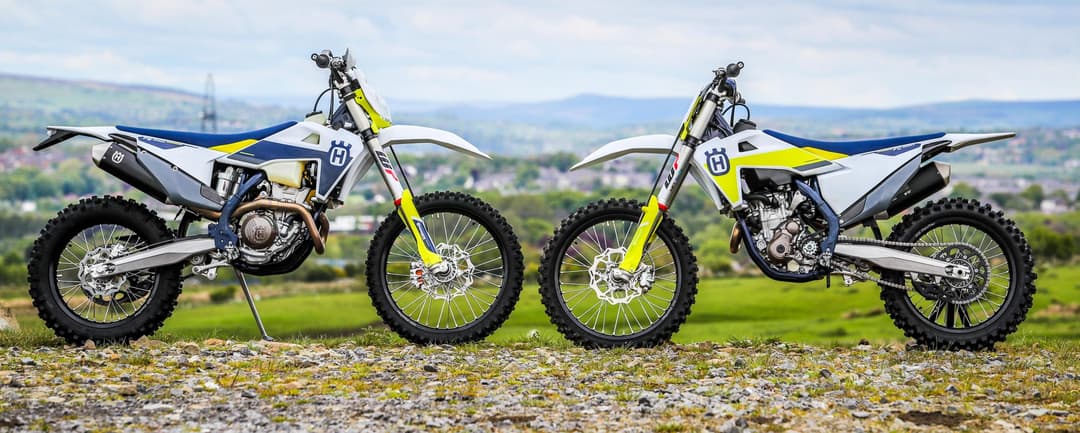
On fast tracks, fire roads and open special tests, a four-stroke's smooth, even pull and engine braking help. In our view, a 350 four-stroke is the sweet spot for this kind of riding. The KTM 350 EXC-F, Husqvarna FE 350, GASGAS EC 350F and Beta RR 4T 350 are the 350s. Sherco's 300 SEF Factory is a slightly smaller option.
In our view, a 450 or 500 makes sense for an experienced rider on fast, open ground, or for a heavier rider. On tight trails, it is more bike than most riders can use.
Which should you ride?
This is our recommendation. It is our view, and its basis follows.
- Most adult beginners: a 250 or 300 two-stroke, or a 250 or 350 four-stroke. A 125 two-stroke is lighter and gentler for smaller or younger riders.
- A 450 is more than a beginner needs.
- Hard and extreme enduro: a 250 or 300 two-stroke. In our experience, that's what most hard enduro riders ride. 300 two-strokes are what the front of Erzberg rides.
- Fast, open enduro and long trail days: a 350 four-stroke suits most riders. A 250 two-stroke or four-stroke suits lighter riders.
Our basis:
- What makes slow riding easy. Beginners spend their first year riding slowly. A bike that pulls cleanly at low revs and is light to pick up is easier to learn on. On a two-stroke you keep it pulling with the clutch; a four-stroke does more of it on the throttle alone.
- The makers' weights. On the spec sheets above, a 300 two-stroke and the same maker's 350 four-stroke (at Fantic, its 310) are within 2 to 4 kg of each other. Weight alone doesn't decide it.
- The makers' service schedules. The two-stroke needs a piston more often. The four-stroke needs oil more often and valve checks. Choose the work you'd rather do.
- Hard enduro results. At Erzberg in 2026, 11 of 15 finishers rode 300 two-strokes and one rode a four-stroke.
Pick the engine type whose feel you like, and the maker with a dealer near you. Then set up the suspension for your weight before you ride. The bike setup lesson explains sag, and enduro for beginners covers the kit and costs. For the bikes themselves, start with what is an enduro motorcycle?, then compare bikes side by side.