Lesson 4 of 5 in Safety & Setup
Bike Setup & Maintenance
A good hard enduro setup is soft, grippy and easy to control while standing. Set the rear sag to the figure in your owner's manual (on 2027 KTM, Husqvarna and GasGas 300s that's 110 mm rider sag), and fit the right spring for your weight. Run tyre pressure around 1.0 bar off-road, a little softer in rocks and roots, or a mousse. Fit lower gearing so you slip the clutch less. Put the bars and levers where your wrists are straight when you stand. Then run a short pre-ride check every time: tyres, spokes, chain, brakes, controls, air filter, bolts and leaks. Do the bigger jobs by the hours in your owner's manual. The makers' intervals differ a lot, so check yours in the tables below.
Updated October 2026. Sources are listed below. How we work
On this page
- Traction-first setup
- Sag figures from current owner's manuals
- How to set rear sag
- Tyres, pressure and inserts
- Gearing and heat
- Controls and ergonomics
- Pre-ride checklist: maintenance that prevents DNFs
- Service intervals by maker
- Oil and air filter intervals
- Piston, crank and valve intervals
- Coolant, brake fluid and suspension intervals
- Chain and sprocket wear limits
- Two-stroke oil: injection or premix
- What these intervals rest on
- Common setup mistakes
- Bike setup questions
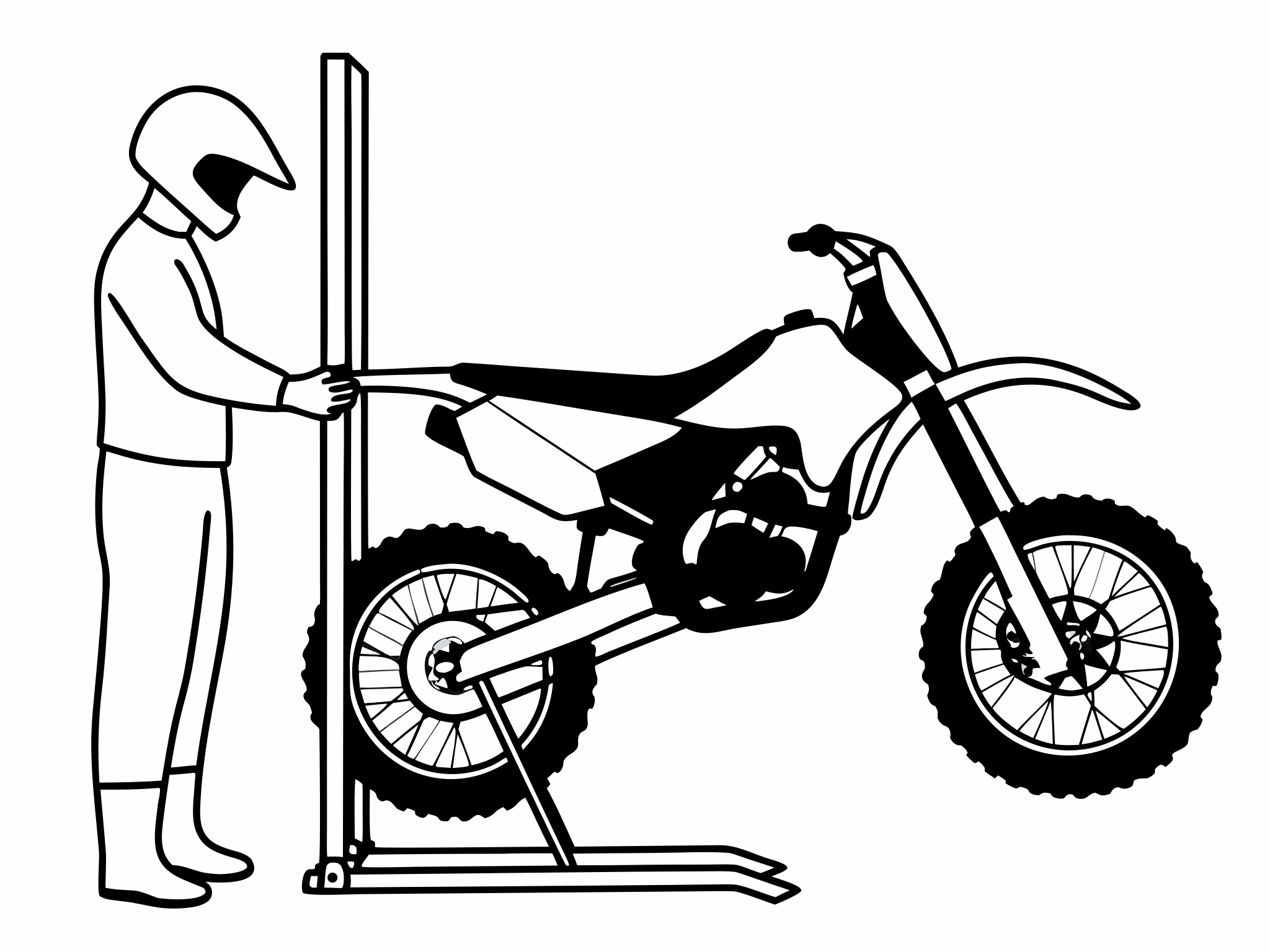
Traction-first setup
Hard enduro is ridden slowly, over roots, rocks and steps, often standing and often with the rear tyre close to spinning. A setup that works for fast enduro can feel harsh and nervous there. The aim is a bike that follows the ground, grips at walking pace and doesn't wear you out.
Soft setups work here. Graham Jarvis's mechanic, Damien Butler, told Enduro21 in 2018 that Jarvis "runs the softest setting of all riders", with a shock spring "two rates lower than anybody". Enduro21's own Erzberg test bike was lowered "to be comfortably flat footed (with more sag also)". You don't need factory parts to get the benefit. You need the basics done right: the correct spring and sag for your weight, sensible tyre pressure, low gearing, and controls that suit a standing rider.
Sag figures from current owner's manuals
Sag is how far the rear suspension settles. Static sag is under the bike's own weight. Rider sag (also "race sag") is with you on board in full kit. Use the figure for your own bike. These are the manufacturers' own numbers.
| Bike (manual year) | Static sag | Rider sag |
|---|---|---|
| KTM 250 XC-W, 300 EXC and 300 XC-W range (2027) | 38 mm | 110 mm |
| Husqvarna TE 250, TE 300, TE 300 Pro (2027) | 40 mm | 110 mm |
| GASGAS EC 300 (2027) | 40 mm | 110 mm |
| Beta RR X-Pro 250 and 300 2T (2026) | 35 mm | Not given in the manual |
| Sherco 250 and 300 SE (2024) | 35–40 mm | 95–100 mm |
Swipe the table sideways to see every column.
How to set rear sag
This follows the procedure in KTM's 2027 manual, which Husqvarna and GASGAS repeat word for word. You need a helper, a stand and a tape or sag scale.
1Measure with the wheel off the ground (A)
Put the bike on a stand so the rear wheel hangs free. Measure from the centre of the rear axle straight up to a fixed mark on the rear fender. KTM marks this point "SAG" on the fender. Write the number down as A.
2Measure static sag (B) and set preload
Take the bike off the stand. KTM says: "Hold the motorcycle upright with aid of an assistant." Measure again to the same point. Static sag is A minus B. KTM's instruction: "If the static sag is more or less than the specified value", adjust the shock's spring preload. More preload means less sag.
3Measure rider sag (C)
Now get on in full riding kit. KTM's instruction is to sit "in a normal sitting position (feet on footrests) and bounce up and down a few times", then have your helper measure again. Rider sag is A minus C.
4If rider sag is out, change the spring
With static sag set, rider sag shows whether the spring suits your weight. KTM's procedure for adjusting rider sag is to "select and mount a suitable spring", and Sherco's manual says the same: "If the sag is not correct, change the spring". KTM sets its 2027 EXC range up for a rider of "75 kg … 85 kg" in full kit. It says "small weight differences can be compensated for by adjusting the preload, but in the case of large weight differences, the springs must be replaced". Its manual lists shock springs from 66 N/mm for 65–75 kg riders to 72 N/mm for 85–95 kg riders.
5Leave the fork to feel
KTM says: "For various reasons, no exact rider sag can be determined for the fork." Set fork spring and clickers from the manual's baseline for your weight, then adjust by feel in small steps, one change at a time. The PDS vs linkage article explains how rear suspension type affects the feel.
Tyres, pressure and inserts
Pressure from the manual. For off-road riding, KTM, Husqvarna and GASGAS all specify 1.0 bar front and rear on their 2027 two-strokes. Beta's 2026 RR X-Pro manual also gives 1 bar off-road. Sherco's 2024 SE manual gives 0.9 bar. KTM says to "check the tire pressure when the tires are cold", and warns that "low tire pressure leads to abnormal wear and the tire overheating".
Softer for technical terrain. In our experience, the more technical the terrain (rocks, roots, steps), the softer you can run your tyres, for grip. Never go under the tyre maker's minimum (see the next paragraph). On fast, smooth trails, stay near the manual figure.
Going lower with tubes. Tyre makers publish minimums. Michelin, for example, recommends 1.0 bar (14.5 psi) front and rear for its Enduro Medium tyre, with a minimum of 0.8 bar front and 0.6 bar rear. Below the minimum, a tube is easier to pinch on a rock. Drop pressure in small steps and check it cold.
Mousses. Foam mousses are common in hard enduro because they can't go flat: Wade Young's GasGas EC300 and Enduro21's Erzberg test bike both ran them. Michelin says its Bib Mousse gives a "pressure equivalence" of 0.8–1.0 bar, and Metzeler says its mousses simulate "0.7bar +/-0.1". Both are marked NHS (not for highway service), and Michelin sets a 130 km/h limit. Mousses wear out: Michelin says its mousse "can be used for a maximum of 6 months after fitting", and should not be stored long term above 30°C. Metzeler adds that "particular attention must be then paid to suspension settings when racing with mousses". On his race bike, Chris Birch runs two rim locks in the rear, fitted opposite each other. With a soft mousse, he says, not much is holding the tyre on the rim. The tyre systems comparison weighs mousses against tubes and tubeless systems, and the enduro tyres guide covers tread choice.
Gearing and heat
Slow riding makes heat. The clutch slips more, the engine works hard at low speed and there's little airflow. KTM's manual covers this directly. For "rides at high temperature or slow speed" it says to adjust the gearing, because "the engine oil quickly gets hot if the clutch has to be operated very often due to an excessively high secondary transmission". It also says to "avoid frequent and lengthy slipping of the clutch".
Lower gearing is the fix. Hard enduro is slow: in our experience, average speeds in technical terrain are often around 10 km/h, so most hard and extreme enduro riders gear down. Graham Jarvis's TE 300i ran 13/50 sprockets, according to his mechanic, and Enduro21's Erzberg bike ran "12-52 for all the low gear riding". Chris Birch geared the KTM 300 he set up for New Zealand's hard enduro championship, races he says are less extreme than the hardest events and quick at times, at 12/48. His reasons: second gear becomes usable on climbs, the ratios sit closer together, and first is low enough for long climbs without overworking the clutch, which keeps engine temperature down. Race gearing also follows the course. Jonny Walker ran 12/49 on his Beta for the TKO race and said he might switch to a 48, because the track wasn't very technical and carrying more speed suited it. A bigger rear sprocket or a smaller front one lets you ride slow sections with the clutch out more. The gearing guide explains the maths. Keep the radiator fins straight and clean. KTM lists "straighten the bent radiator fins carefully" when preparing for hard conditions. Chris Birch and Jonny Walker also protect the coolant hoses on their race bikes. Birch double-wraps his with extra lengths of hose against branches and spikes. Walker fits an extra cover over a hose, because one hard hit that breaks it puts you out of the race.
Controls and ergonomics
Set every control while standing in your riding position, not sitting in the garage.
- Bar position. Most enduro bikes let you move the bar forward or back. KTM's 2027 manual says the bar mount "can be mounted in two different positions", with the holes offset 3.5 mm from centre. If you feel cramped when you stand, move the bar forward or try a taller bend. Enduro21 reports Cody Webb runs "a little bit taller bar bend than the standard ODI bars".
- Bar roll. Dirt Action's rule of thumb: with the bike on flat ground, "your grips should be pretty much level". Roll the bars too far forward and the grips point up. Too far back and they slope down.
- Lever angle. Australasian Dirt Bike says to set the levers so "you can draw a straight line from your elbow right through your wrist to your fingers on the levers while you stand in the attack position". Dirt Action warns that levers set too high give "a horrible kink in your wrist" when you stand. It adds that "a slight downward angle works best".
- Lever position and reach. Slide the perch so the lever's dog-leg lines up with your first finger, then set reach so the lever sits "directly under the first knuckle of your first finger" (Australasian Dirt Bike). Leave free play: KTM specifies at least 3 mm at the front brake lever, because with none "pressure builds up in the brake system". Chris Birch sets his own race bike up differently: levers well inboard, so his fingers sit right out at the end, and pretty flat. He says that gives more leverage and front-brake power, and an easier feel at the clutch.
- Rear brake and gear lever. Dirt Action suggests the rear brake "one or two millimetres lower than footpeg" and the gear lever "as level as you can get with the footpeg". KTM specifies 3–5 mm of free travel at the brake pedal. Don't set the pedal high: Dirt Bike Magazine warns, "Too high and you'll tend to ride the brake, which heats things up".
- Crash-friendly controls. Let the perches turn in a fall instead of snapping. Australasian Dirt Bike suggests wrapping tape round the bar under the perch so "when you crash the lever will move on the handlebar instead of snapping". Graham Jarvis's bike uses Teflon perch clamps for the same reason. Never straighten a bent bar: KTM warns that a bent or straightened bar becomes fatigued and "may break".
The Controls 101 lesson has a full standing-position checklist, and the clutch control lesson covers clutch lever reach and free play.
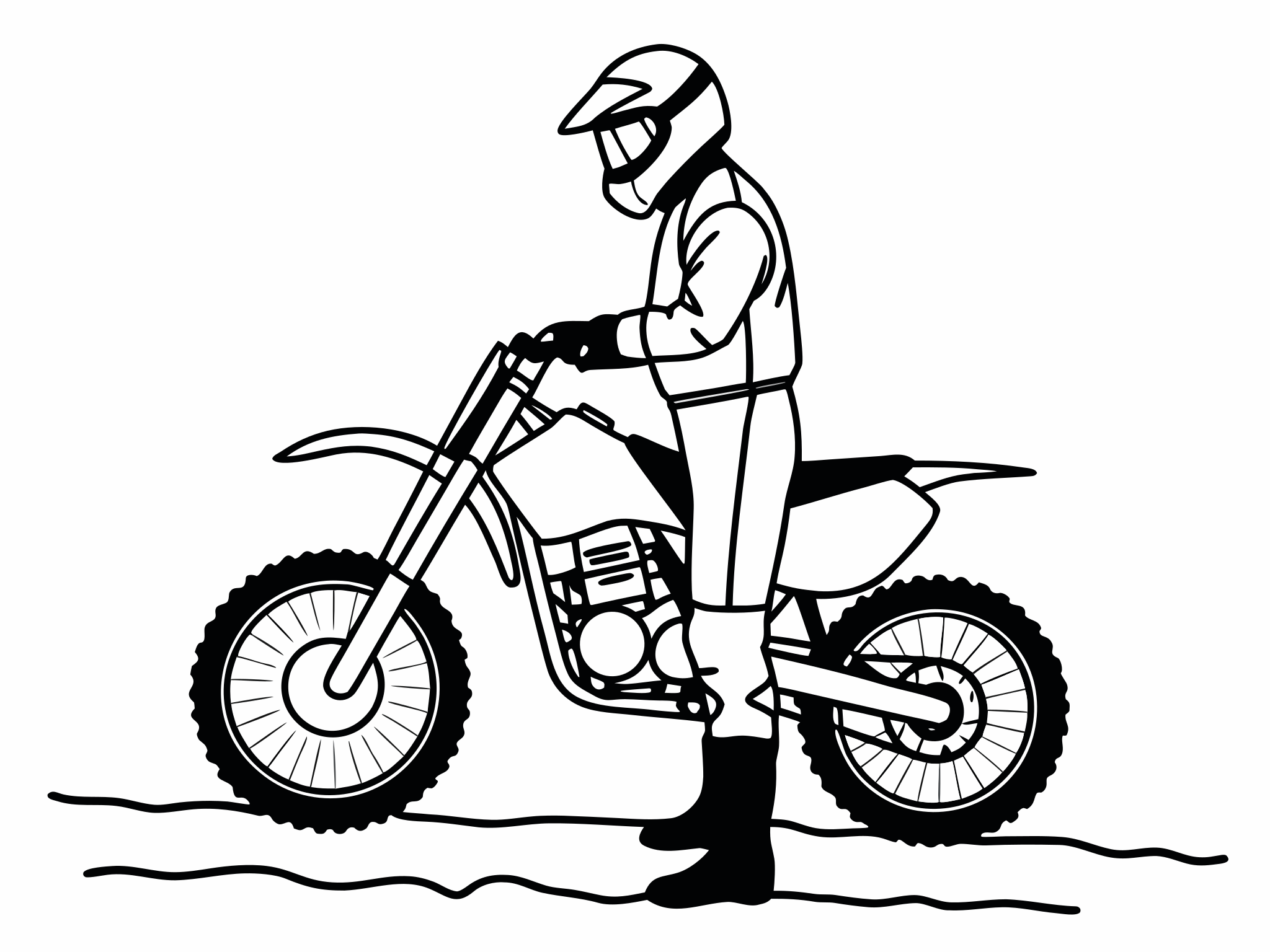
Pre-ride checklist: maintenance that prevents DNFs
KTM's manual opens its pre-ride section with: "Before every trip, check the condition of the vehicle and ensure that it is safe to operate." This list is built from that section. It takes five minutes.
- Tyres: pressure checked cold, no cuts or damage.
- Spokes: tap each one with a screwdriver. KTM says "you should hear a high-pitched sound", and a different note on matching spokes means the tension differs. Check new wheels after the first half-hour.
- Chain: clean, lubricated and at the right tension. KTM's 2027 figure is 58–61 mm, measured on the stand by pulling the chain up at the end of the chain slider. Sprockets and chain guide not worn.
- Brakes: fluid level, pads present and secured, lever and pedal firm with the right free travel.
- Clutch: bites in the usual place, no slip. Check fluid or cable free play.
- Coolant level, and radiator fins straight and clean.
- Air filter clean and correctly seated. In sand, mud or wet, KTM says to check it "approx. every 30 minutes".
- Controls: bars, levers and pedals tight in their clamps, throttle snaps shut.
- Bolts and leaks: a quick look for loose fasteners and any oil, fuel or coolant leaks. Fuel, and two-stroke oil if your bike has an oil tank.
Service intervals by maker
Every maker prints a service schedule in the owner's manual. The intervals are in engine hours, and they differ a lot between makers. The tables below give each maker's figures, with the manual year in brackets. Use the manual for your own bike. If it differs from this page, your manual wins.
Three things change how you read them:
- Hours or time, whichever comes first. KTM's 2027 manuals say "the relevant mileage or time interval is whichever occurs first". A bike that rides little still needs its coolant and brake fluid changed on time.
- Hard use means sooner. KTM, Husqvarna and GASGAS warn that riding "on sand or on wet, dusty and muddy surfaces, can result in significantly increased wear", and that parts may need attention "before the next scheduled service interval". The 2027 KTM 300 EXC and Husqvarna TE 300 manuals go further for sand. Their dry and wet sand sections (8.5 and 8.6) all say: "Change the piston every 10 operating hours." Sherco's manuals say: "In competition you have to perform the 20 hour maintenance schedule after each race!" Yamaha counts its competition schedule in races of "about 2.5 hours".
- Warranty. KTM's manuals say scheduled work must be "carried out by an authorized contractual partner and confirmed in the electronic proof of service, as otherwise all warranty claims will be void". Beta's say it must be done "exclusively at an authorised Betamotor workshop and must be registered on the Betanet portal". If your bike is under warranty, read that section before you do the work yourself.
KTM, Husqvarna and GASGAS print the same intervals on each shared platform, so each platform gets one row.
Oil and air filter intervals
"Then every" means the job repeats. Two-strokes have no engine oil filter, so their oil column is the gearbox oil.
| Bike (manual year) | Oil | Air filter |
|---|---|---|
| KTM 300 EXC, Husqvarna TE 300, GASGAS EC 300 (2027) | Gear oil after 1 h, then every 45 h or 24 months | Clean every 15 h |
| KTM 350 and 450 SX-F, Husqvarna FC 350 and 450, GASGAS MC 450F (2027); GASGAS MC 350F (2025) | Engine oil and filter after 1 h, then every 15 h or 24 months | Clean every 15 h |
| KTM 350 EXC-F, Husqvarna FE 350, GASGAS EC 350F (2027) | Engine oil and filter after 1 h, then every 15 h or 24 months | Clean every 15 h |
| Beta RR X-Pro 250 and 300 2T (2027) | Gear oil after 3 h, then every 30 h | Check after every ride; clean at each 30 h service |
| Beta RR 350 Race (2026) | Engine oil, gear oil and paper filter after 3 h, then every 30 h | Check after every ride; clean at each 30 h service |
| Beta RX 450 (2027) | Engine and gear oil after 3 h, then every 10 h; paper filter every 20 h | Clean after every ride |
| Sherco 250 and 300 SE (2027 file) | Gearbox oil after 5 h, then every 20 h | Clean after each use |
| Sherco 250, 300, 450 and 500 SEF (2027 files) | Engine oil and filter after 5 h, then every 20 h | Clean after each use |
| Yamaha YZ250 (2027) | Gearbox oil after break-in, then every fifth race (about 12.5 h) | Clean after break-in, then every race (about 2.5 h) |
| Yamaha YZ450F and YZ250FX (2027) | Engine oil after break-in, then every third race (about 7.5 h); filter every fifth race (about 12.5 h) | Clean and oil every race |
| Yamaha WR450F (2027), competition chart | Engine oil and filter after break-in, then every fifth race or 1,000 km | Clean and oil every race |
Swipe the table sideways to see every column.
Piston, crank and valve intervals
These are replacement intervals for the piston and the bottom end, and check intervals for the valves. Sherco gives two schedules: one for competition and one for recreational riding.
| Bike (manual year) | Piston | Conrod and crank bearings | Valve clearance check |
|---|---|---|---|
| KTM 300 EXC, Husqvarna TE 300, GASGAS EC 300 (2027) | Every 45 h (minor engine service). KTM and Husqvarna manuals: every 10 h on dry or wet sand | Every 90 h (major engine service) | Two-stroke: no valves |
| KTM 350 and 450 SX-F, Husqvarna FC 350 and 450, GASGAS MC 450F (2027); GASGAS MC 350F (2025) | Every 45 h (minor engine service) | Every 90 h (major engine service) | After 1 h, then every 45 h |
| KTM 350 EXC-F, Husqvarna FE 350, GASGAS EC 350F (2027) | Every 90 h, in a single full engine service | Every 90 h, in the same service | After 1 h, then every 45 h |
| Beta RR X-Pro 250 and 300 2T (2027) | Every 60 h (125 and 200: every 40 h) | Every 90 h | Two-stroke: no valves |
| Beta RR 350 Race (2026) | Every 90 h | Every 90 h | After 3 h, then every 30 h |
| Beta RX 450 (2027) | At 40 h and 80 h | At 80 h | Every 20 h |
| Sherco 250 and 300 SE (2027 file) | Competition: at 40 h and 80 h. Recreational: at 80 h | Same as the piston | Two-stroke: no valves |
| Sherco 250 and 300 SEF (2027 file) | Competition: at 40 h and 80 h. Recreational: at 80 h | Bearings with the piston; conrod kit at 80 h (competition) or 120 h (recreational) | After 5 h, then every 20 h |
| Sherco 450 and 500 SEF (2027 file) | Competition: at 50 h and 100 h. Recreational: at 100 h | Crank bearings with the piston; no conrod interval given | After 5 h, then every 20 h |
| Yamaha YZ250 (2027) | Every fifth race (about 12.5 h); rings every third race (about 7.5 h) | Not given in the manual | Two-stroke: no valves |
| Yamaha YZ450F and YZ250FX (2027) | Piston, pin, clip and rings as a set every fifth race (about 12.5 h) | Not given in the manual | After break-in, then every third race (about 7.5 h) |
| Yamaha WR450F (2027), competition chart | As required; rings every fifth race or 1,000 km | Not given in the manual | After break-in, then every third race or 500 km |
Swipe the table sideways to see every column.
Coolant, brake fluid and suspension intervals
KTM, Husqvarna and GASGAS give coolant a time limit only, with no hours figure. Beta's manuals tell you to check coolant and brake fluid levels at every service, but give no change interval.
| Bike (manual year) | Coolant change | Brake fluid change | Fork and shock service |
|---|---|---|---|
| KTM, Husqvarna and GASGAS: all models above | Every 24 months | Every 90 h or 24 months | Every 45 h |
| Beta RR X-Pro 2T (2027), RR 350 Race (2026) | Not given in the manual | Not given in the manual | Not given; the manuals refer fork work to an authorised Beta service centre |
| Beta RX 450 (2027) | Not given in the manual | Not given in the manual | Fork and shock oil at 40 h and 80 h |
| Sherco SE and SEF (2027 files) | Not given in the manual | At least once a year, by the dealer | Fork and shock by the dealer at least once a year; bleed air from the fork every 5–10 h |
| Yamaha YZ250, YZ450F and YZ250FX (2027) | Every two years | Every year | Fork oil after break-in, then every fifth race; no shock oil interval given |
| Yamaha WR450F (2027), competition chart | Every two years (the general chart in the same manual says every year) | Every year | Fork oil after break-in, then every fifth race or 1,000 km; no shock oil interval given |
Swipe the table sideways to see every column.
Chain and sprocket wear limits
Makers measure chain wear as the length of a set number of links, pulled tight. KTM's manuals say: "Always replace the front sprocket, rear sprocket, and chain together."
| Bike (manual year) | Check | Replace when |
|---|---|---|
| KTM, Husqvarna and GASGAS: all models above | After 1 h, then every 15 h | 272 mm or more over 18 rollers, with a 10–15 kg weight hung on the chain |
| Beta RR X-Pro 2T, RX 450 (2027); RR 350 Race (2026) | At every service | 272 mm or more over 18 links |
| Sherco SE and SEF (2027 files) | After 5 h, then every 20 h; clean and lube after each use | Not given in the manual |
| Yamaha YZ250 and YZ450F (2027) | Every race | 242.9 mm or more over 15 links |
| Yamaha YZ250FX and WR450F (2027) | Every race | 239.3 mm or more over 15 links |
Swipe the table sideways to see every column.
Two-stroke oil: injection or premix
Check this before you fill up. Premix in an oil-injected bike, or straight fuel in a premix bike, are both mistakes.
| Bike (manual year) | System | Mix |
|---|---|---|
| KTM 300 EXC, Husqvarna TE 300, GASGAS EC 300 (2027) | Oil injection, tank about 0.8 l | None. The manual says: "Do not refuel using pre-mixed fuel." |
| Beta RR X-Pro 250 and 300 2T (2027) | Oil injection, 650 ml tank | 1% premix in the first tank only, for running-in |
| Sherco 250 and 300 SE (2027 file) | Premix | 2% two-stroke oil (50:1) |
| Yamaha YZ250 (2027) | Premix, YAMALUBE 2R | "Premix ratio 30" (30:1); 15 (15:1) for the break-in tank |
Swipe the table sideways to see every column.
What these intervals rest on
Every figure in this section comes from the maker's own owner's manual, read on 14 October 2026. Each manual is listed in the sources below with its page numbers. We did not use dealer, forum or magazine figures. Where a manual gives no interval, the table says so.
These are the makers' intervals for the bike as sold, not our own recommendation. Manuals change: KTM's say "individual service intervals and scopes may change in the course of technical developments", and that "different service intervals may apply in your country". Sherco's manuals print no model year, so we used the files sherco.com lists for 2027. Yamaha's hour figures are its own estimates per race.
Common setup mistakes
Riding on the delivery settings when you're well outside the design weight.
Fix: Measure sag. If you can't get both static and rider sag right with preload, fit the correct spring.
Setting levers while sitting.
Fix: Stand on the pegs in your riding position and set levers so your wrists are straight.
Too little free play at the brake lever or pedal.
Fix: Pressure builds up and the brake drags, overheats and fades. Set at least the manual's free travel.
Running pressure too low with tubes.
Fix: Stay above the tyre maker's minimum, or switch to a mousse for rocky terrain.
Standard gearing for slow technical riding.
Fix: Gear down so you can ride with the clutch out more. The clutch and oil stay cooler.
Skipping the checks on a short ride.
Fix: Loose spokes, slack chains and loose bolts don't care how far you planned to ride. Five minutes, every ride.
Bike setup questions
What sag should I run for hard enduro?
Start with the rider sag in your owner's manual: 110 mm on current KTM, Husqvarna and GASGAS 300s, 95–100 mm on Sherco's SE. Some riders add a little more sag to lower the bike, but get the manual figure right first.
What tyre pressure should I use off-road?
Start at your manual's off-road figure, usually 1.0 bar (about 14.5 psi), checked cold. Go lower only in small steps and not below the tyre maker's minimum with tubes.
Should I run a mousse?
For hard enduro, many riders do, because a mousse can't go flat. It's heavier, harder to fit and wears out, so budget for replacement. See the tyre systems comparison.
How often should I clean the air filter?
Your manual sets it. KTM, Husqvarna and GASGAS say every 15 hours on their 2027 bikes. Beta and Sherco say to check or clean it after every ride, and Yamaha's YZ manuals say every race. In sand, mud or wet, KTM says to check it about every 30 minutes of riding.
How many hours before a two-stroke top end?
It depends on the maker. The 2027 KTM 300 EXC, Husqvarna TE 300 and GASGAS EC 300 manuals say a new piston every 45 hours. On dry or wet sand, the KTM and Husqvarna manuals say every 10 hours. Beta's 2027 RR 250 and 300 manual says every 60 hours. Sherco's SE manual says 40 hours for competition and 80 for recreational riding. Yamaha's 2027 YZ250 manual says every fifth race, about 12.5 hours.
All lessons in Safety & Setup
Related lessons and guides
- Controls 101Setting every control up for a standing rider.
- Tubliss vs mousse vs tubesWhich tyre system suits hard enduro.
- Enduro gearing guideSprocket choices for slow technical riding.
- PDS vs linkage suspensionHow rear suspension type changes the feel.
- Beginner bike and gear guideChoosing the bike and protecting it.
- KTM 300 EXCSpecs for the most common hard enduro bike.