Lesson 3 of 5 in Advanced Techniques
Hill Climbs & Descents
Climbing: pick a line with grip and a place to stop, choose your gear at the bottom, carry momentum before the slope starts, and move your chest forward as it steepens. When the rear spins, feed the clutch rather than adding throttle, and decide early if it's time to bail. Descending: stand with your hips back, set your speed at the top, and on steep, loose ground use more rear brake than front, with light, steady pressure that keeps both wheels rolling. Stay in gear and keep a finger on the clutch so the engine doesn't stall and lock the rear.
Updated September 2026. Sources are listed below. How we work
On this page
- Why hill climbs and descents matter
- Read the hill before you ride it
- Momentum climb or technical crawl?
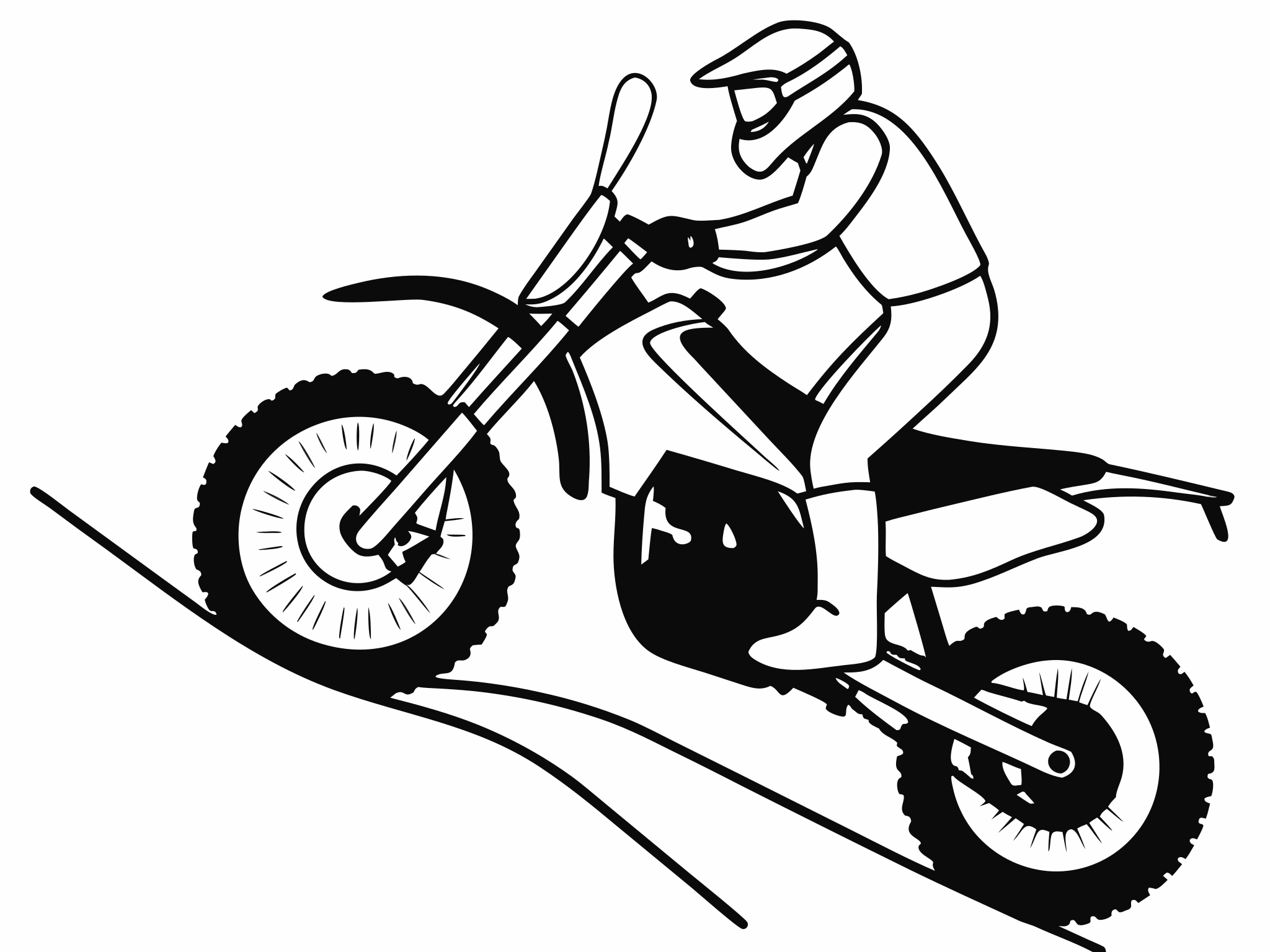
- How to climb a steep hill
- The technical crawl
- When the climb fails: bail out early
- How to ride a steep descent
- Braking by descent type
- Engine and gear on the way down
- Safety: spotters and bail-outs
- How to train hills
- Hill mistakes and how to fix them
- A 40-minute hill session
- You're ready to move on when…
- Hill climb and descent questions
Why hill climbs and descents matter
Hills magnify mistakes. On flat ground, a spinning tyre or a grabbed brake costs a second. On a steep climb it costs the hill, and on a steep descent it can cost a crash. Most hard enduro races are decided on hills, from long rocky climbs to the steep, rutted singletrack pinches you meet on every club ride.
The skills are the ones you already have: traction management with the clutch, gear selection, both brakes and a calm restart. What changes is the price of getting them wrong. That's why this lesson leans so hard on line choice, commitment and knowing when to stop.
Read the hill before you ride it
Stop at the bottom. Look all the way to the top. If you can't see it, walk up.
- Grip. Look for dry, packed dirt, bedded rock and roots running across the line you can use as steps. Avoid loose rubble, wet roots running along the line and polished rock.
- Ruts. A rut can hold the bike straight, or it can swallow the bars when it gets deep. Know where each one goes before you commit to it.
- Steps and ledges. Note every place the front will need lifting.
- Flat spots. Pick where you'll stop if it goes wrong. A stall on a flat shelf is a restart. A stall on the steepest part is a turn-around.
- The top. David Knight's advice to Transmoto: "Chop the gas before the very top, as you never know what might be there once you arrive." Know where you'll land.
- The run-out. On a descent, look for the bottom. A flat, clear run-out makes a steep descent a lot less serious.
Momentum climb or technical crawl?
There are two ways up a hill. Neither is "right": they suit different hills.
| Momentum climb | Technical crawl | |
|---|---|---|
| Best for | Long, straight, open climbs | Steep, stepped, rooty or rocky singletrack |
| Speed | Built before the slope starts | Walking pace |
| Gear | 2nd or 3rd | 1st, sometimes 2nd |
| Throttle | Strong but not wide open | Low, steady, just above stalling |
| Clutch | Covered; slip it when the rear spins | Working constantly at the bite point |
| In the riders' words | Evan Smith, on his gearing: "third is what you're going to use probably 70 percent of the time" | ADB: "You should be going walking speed and in first gear." |
Swipe the table sideways to see every column.
How to climb a steep hill
This is the momentum climb, the one most riders need first. The technical crawl uses the same body position with the clutch doing more of the work.
1Build speed before the slope
Sam King's rule for RidersWest: "gather the majority of your momentum at the bottom of the hill, preferably before the earth starts to incline." Speed is much easier to carry up a hill than to build on one.
2Choose the gear at the bottom
Shifting on the face cuts drive and usually ends the climb. Pick a gear that will pull all the way up without revving out. For short, steep pinches that's usually second; for long, fast climbs, third.
3Chest forward as it steepens
Stand, knees bent, and bring your shoulders forward as the hill tilts. King: "As you start to incline, your shoulders should start to come forward on the bike." Knight: "if the front-end starts getting light, it's time to move your body weight forward." Keep your elbows up and your eyes on the top.
4Manage traction with the clutch
When the rear starts to spin, more throttle digs it in. Evan Smith told Dirt Rider: "If you're revved out all the way, your rear tire is going to be spinning or sliding," and "I'll pull the clutch in rather than let off the throttle." A quick slip of the clutch lets the tyre hook up without the engine bogging.
5Ease off at the top
Roll off before the crest so the bike doesn't launch over it. Then look for what comes next.
The technical crawl
Steep, stepped singletrack is climbed slowly, not attacked. Australasian Dirt Bike Magazine's hill series calls attacking such a hill with a big handful "the worst way to approach a steep, snotty hill". The crawl is first gear, walking pace and the clutch working at the bite point. The engine note should "sound like it's low, almost stalling and not spiking."
For steps on the way up, use small lifts, not one big one. ADB: "Doing several small front-end pops is much better than doing one big one and going too far or looping out." Keep your foot over the rear brake for every lift, as the rear brake lesson explains. When you need to change direction between steps, the rear-wheel pivot in the pivot turns lesson is how you do it.
When the climb fails: bail out early
Every rider fails climbs. The skill is failing safely.
- Decide early. Steve Hatch told Dirt Rider that "the biggest key, when you're not going to make it, is to try to give up a little earlier than most people." Knight: "If you have doubts about getting to the top of a climb then knock it on the head early and try again."
- Stop it in gear. Hatch: "It's safest if you kill the engine at this point and leave it in gear." Hold the bike on the rear brake with your left foot down.
- Step off and keep it leaning into the hill. Get off on the left, holding the left grip so your hand stays on the clutch, as the kill/start lesson shows. Keep yourself and the bike leaning towards the high side of the hill so if it goes, it slides rather than rolls.
- Get back on carefully. Once the bike is turned, remount slowly. Hatch describes riders on steep hills who rush it, "catch their boot on the inside of the fender, then high-side or cartwheel down the hill".
- Turn round and go again. The full turn-around routine is in the kill/start lesson. Try again from the bottom with a better line or more speed rather than restarting on the steepest part.
Never let anyone stand below you on a climb. If a bike gets away, it comes straight down the line.
How to ride a steep descent
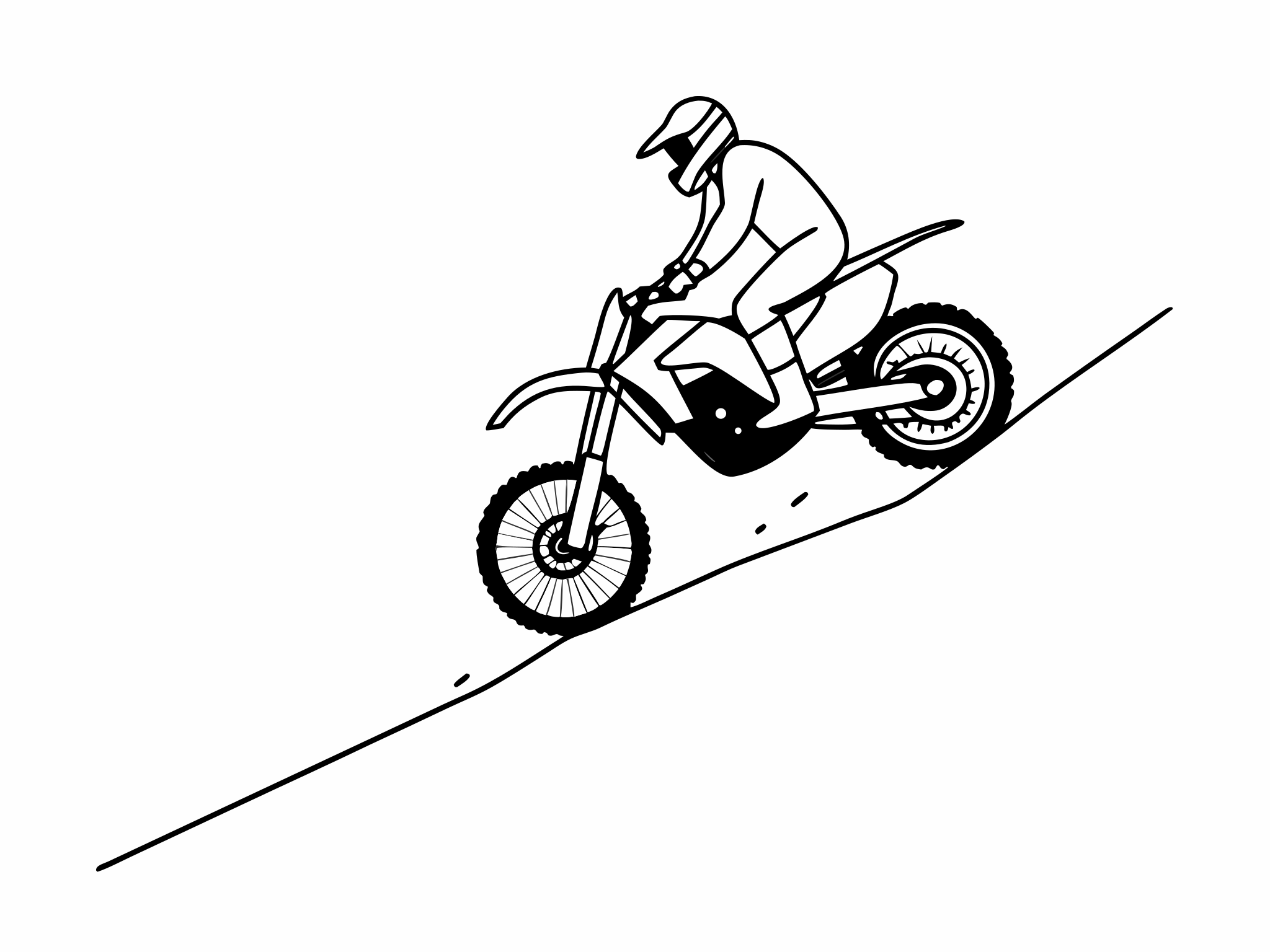
Body. Stand, with your hips back and your knees bent, so your legs take the forward pitch and your arms stay free to steer. Dirt Bike Magazine's advice for big drops: "Stand up, body back, arms and torso relaxed." Grip the bike with your knees. Look down the hill to where you want to go, not at the front wheel.
Speed. Set it at the top. Dirt Bike Magazine's drop-off feature with Michael Lafferty: "It's critical to moderate your speed at the top of the obstacle-Not Later!" Once a steep descent is running away, braking harder only locks the wheels.
Brakes. On steep, loose ground the front tyre can take only so much before it slides, so the rear does more of the work. Lafferty's split on drop-offs is "30% front, 70% rear force"; Ty Davis uses "more rear brake than front brake" on steep, soft downhills because "if you use a lot of front brake, the front end's going to dive and throw your weight over the bar." On grippy descents the front can do more, as the front brake lesson explains. Either way, squeeze the front progressively and keep both wheels rolling.
Don't lock the rear. Use light, steady rear brake pressure with the wheel still turning, as in the rear brake lesson. Knight: "Don't lock your rear wheel on the way down – you'll gain speed if you do." If the rear steps sideways, "take your foot off the brake then gently reapply." On very steep, loose ground, or when the rear keeps locking, Knight pulses the brakes, "applying them for no more than a second or two at a time". On long descents, short firm applications instead of constant drag keep the rear brake cooler and help prevent fade.
Over rocks and ledges, let go. Dirt Bike Magazine: "Release your stranglehold on the brakes so the tires will roll over the obstacle." A braked wheel hitting a rock stops; a rolling one climbs over it.
Braking by descent type
A starting point. Read the ground on the day and set the balance before you need it.
| Descent | Brake balance | Gear and clutch | Watch for |
|---|---|---|---|
| Grippy, moderate | Progressive front does most, rear supports | 2nd, clutch out | Grabbing the front. |
| Steep and loose | More rear than front; pulse if the rear keeps locking | 1st or 2nd, finger on the clutch | A locked rear that slides sideways. |
| Drop-off or ledge | Speed set at the top; less front than rear | 1st or 2nd | Braking on the edge instead of before it. |
| Loose rocks | As little as possible; let the wheels roll | 2nd | A braked front that stops against a rock. |
| Long descent | Short, firm applications on both | Lowest gear that doesn't lock the rear | A soft pedal: the rear brake is fading. |
Swipe the table sideways to see every column.
Engine and gear on the way down
Stay in gear. Engine braking holds the speed down and keeps the brakes cooler. The usual choice is first or second. If first gear's engine braking makes the rear skid, go up one: Johnny Campbell told Dirt Rider he rolls long, steep downhills "in second or third gear--first would tend to yield too much engine- or compression braking and possibly skid the rear tire".
Keep a finger on the clutch. If the engine stalls on a descent, the rear wheel locks. Campbell: "If you kill your engine, then you're fighting a rear tire that's locked up, which you don't want to do on a loose downhill." Pull the clutch the moment the engine note drops.
On a two-stroke, long descents on a closed throttle can foul the plug. Knight's fix: "pull in your clutch every once in a while and rev out your bike."
Safety: spotters and bail-outs
Use a spotter when the consequence is high. A spotter stands to the side of the line near the top of a climb or the bottom of a descent, never in the bike's path, and can grab the bike if you stall.
Practise your bail-outs before you need them: the stop button, the rear-brake hold, stepping off with the bike leaning into the hill, and turning it round. A bail-out you've practised on a small hill is one you'll use calmly on a big one. The STOP/GO criteria help you decide whether to ride the hill at all.
How to train hills
Use short, known hills with clear run-outs. Alternate climbs and descents so you practise both while fresh.
1Short climb, same line, five times
Pick a short, grippy hill. Climb it five times on the same line in the same gear. Change one thing at a time: speed, then gear, then body position. Note which run felt calm.
2Planned stall and bail-out
Halfway up the same hill, stop on purpose. Hold on the rear brake, kill the engine in gear, step off on the left with the bike leaning into the hill, and turn it round. Ride down. Repeat until it's routine.
3Descents with a braking target
Ride down the same hill with a marker two-thirds of the way down. Set your speed at the top and arrive at the marker at walking pace without locking either wheel. Then try it with less front brake and more rear.
4The technical crawl
Find a short, stepped climb. Crawl it in first gear at walking pace, using small front-end pops for each step. Stop halfway, hold, and restart as in the kill/start lesson.
5Add switchbacks and looser hills
Once climbs and descents are calm, add a switchback at the top or bottom, then a looser hill. Change one variable per session.
Hill mistakes and how to fix them
Pinning it when the rear spins.
Fix: More revs just spin the tyre faster. Slip the clutch to let it hook up, and shift your weight forward.
Shifting halfway up.
Fix: Choose the gear at the bottom and stay in it.
Looping out at the top.
Fix: Chest forward, and roll off before the crest. Cover the rear brake.
Carrying on up a climb you know you won't make.
Fix: Give up early, on a flatter spot, and stop in gear. Try again from the bottom.
Sitting and grabbing the front on a steep descent.
Fix: Stand, hips back, and let the rear brake do more. Squeeze the front progressively.
A locked rear sliding sideways.
Fix: Release the pedal, let the wheel roll, then reapply gently. Ease on rather than stamp.
Stalling on a descent.
Fix: Keep a finger on the clutch and pull it as soon as the engine starts to die.
A 40-minute hill session
Use one hill with a flat run-out. Rest at the bottom between runs and let the clutch and brakes cool.
| Time | Drill | What to focus on |
|---|---|---|
| 0–10 min | Five climbs on the same line | Speed built before the slope, no shifts. |
| 10–18 min | Planned stall, hold and turn-around | Rear brake first, bike leaning into the hill. |
| 18–28 min | Descents with a braking marker | Speed set at the top, both wheels rolling. |
| 28–36 min | Technical crawl on a short stepped climb | First gear, small pops, foot over the brake. |
| 36–40 min | One calm climb and descent | Everything above, no rushing. |
Swipe the table sideways to see every column.
You're ready to move on when…
- You can climb a short, steep hill five times on the same line without a shift or a spin-out.
- You can stop halfway up, hold the bike and turn it round safely.
- You can descend a steep, loose hill standing, with no locked wheel.
- You set your descent speed at the top without thinking about it.
- You can crawl a stepped climb in first gear without stalling.
- You bail out early when a climb is going wrong, not at the last second.
Hill climb and descent questions
Should I sit or stand on a hill climb?
Stand by default, with your chest forward, so the bike can move and you can shift weight quickly. Some riders sit on long, smooth climbs and stand when the rear starts to spin. On a technical crawl you may sit briefly to paddle with your feet.
Which brake should I use going downhill?
Both. On steep, loose descents use more rear than front, with steady pressure that keeps the wheels turning. On grippy descents the front can do more. Always squeeze the front progressively and keep the wheels rolling.
Should I pull the clutch in on a descent?
Leave it out for engine braking, but keep a finger on it. Pull it in if the engine is about to stall or if engine braking is locking the rear.
What gear is best for hill climbs?
Second or third for momentum climbs, first for slow technical ones. Choose before the hill; the gear selection lesson explains the trade-off.