Lesson 7 of 7 in Advanced Techniques
Picking Up and Unsticking Your Bike
To pick up a downed bike, stop the engine, leave it in gear, and lift with your legs, not your back. Back up to the seat, hold the low grip and a solid part of the rear, and walk the bike up with small steps. On a slope, swing the front round so the bike points downhill before you lift. When the bike is hung up or dug in, don't add throttle. Pull it back so the rear tyre has ground to drive on, start with your weight back, then drive forward with a quick, controlled release of the clutch.
Updated October 2026. Sources are listed below. How we work
On this page
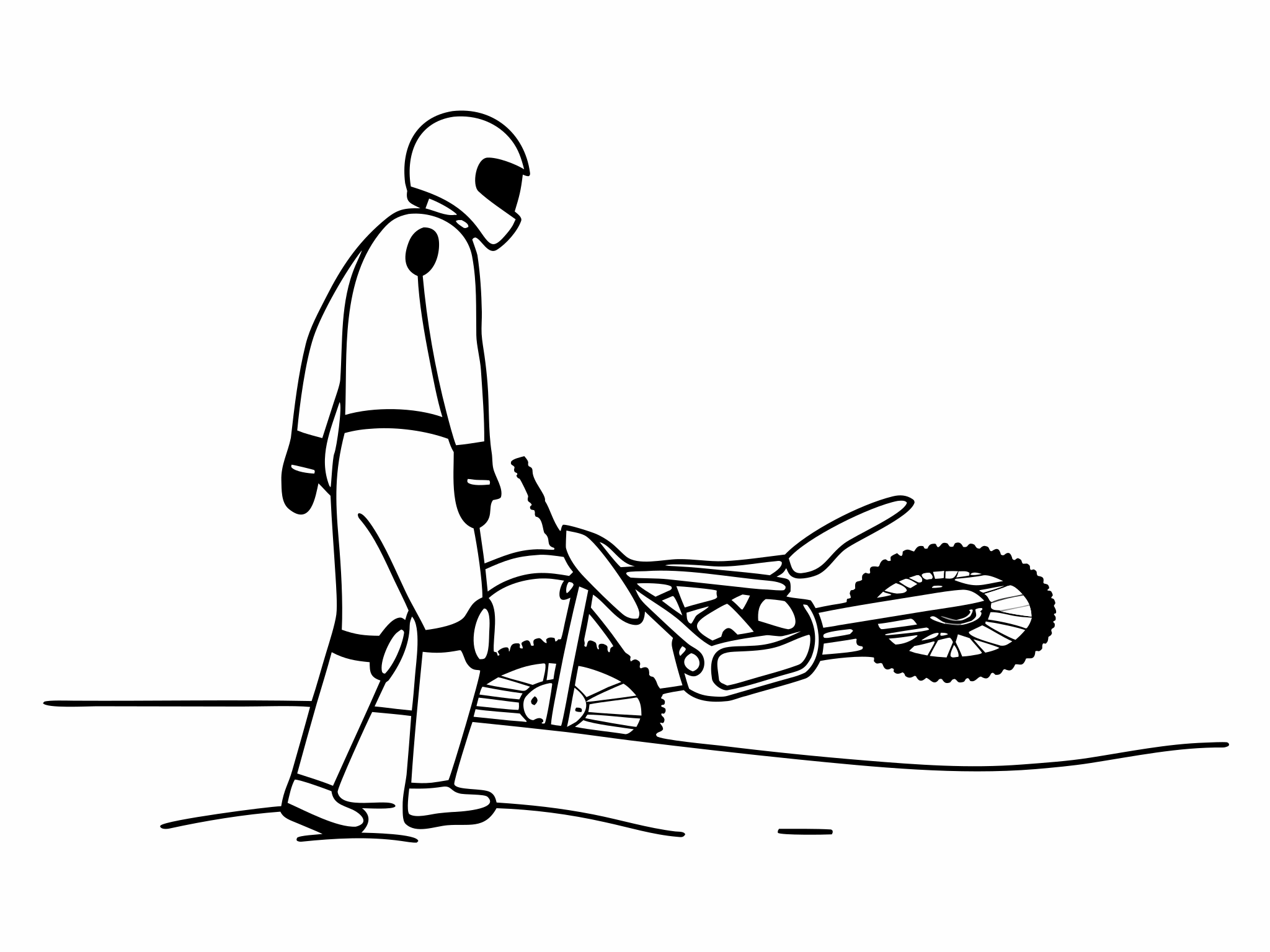
Stop and think before you lift
In hard enduro the bike goes down and gets stuck often. The drop is rarely the problem. The struggle after it is. Rich Larsen calls fighting the bike over an obstacle the worst possible technique. Cross Training Enduro warns you can use up all your energy manhandling the bike instead of taking a moment to think.
Kurt Caselli, in a Dirt Rider pro tip, names the common mistake: people get frantic and try to pick the bike up straight away. So before you touch it:
- Check yourself. Cycle World's lifting guide starts there: "First, make sure you're okay."
- Stop the engine. The kill/start lesson covers the stop button.
- Leave it in gear. Cycle World: "make sure the bike is in gear." The rear wheel then can't roll.
- Read the ground. Where will your feet go? Which way does the slope fall? Where will you get back on?
How to lift a downed bike on flat ground
This is Cycle World's five-step method, with notes from GNCC racer Jordon Milbauer in Dirt Rider. Both lift with the legs, back to the bike. Cycle World suggests you "practice on a small dirtbike first". If anyone can help, ask.
1Turn the bars, set the stand
Cycle World: "Turn the handlebar in the direction of the fall—if the bike's on its left side, turn the bar to the left. If it's on its right side, lower the sidestand."
2Back up to the seat
Stand on the seat side. Milbauer: "come to the topside of the bike, grab the handlebar, turn your back to the bike, bend down with your knees and then grab the rear fender or a seat hole." Cycle World puts your "butt in the middle of the seat".
3Grip low
Hold the low grip. Cycle World: if the bike is on its left side, "take hold of the left grip with your right hand". The other hand holds "the frame or other sturdy part of the machine under or behind the seat, as low as you can get it".
4Lift with your legs
Cycle World: feet close together, then "Lift your chin and look up (this will help straighten your back to prevent injury). Now, push with your legs and your butt. Slowly take tiny steps back and walk the bike up." Milbauer: "The bike will feel heaviest right at the start, and your strength is in your legs, so use them." Arms stay straight, using "almost zero arm strength". As the bike rises, Milbauer puts one foot back, and on slippery ground that matters even more, "so the bike doesn't slide away from you".
5Slow down at the top
Milbauer: "Just slow down the lift so you don't tip it back over the opposite way." Then find a good place to get on: "The last thing you want to do now is rush it on a bad spot and fall back over."
Lifting on a slope: turn the bike first
On a hill the bike often lands with its wheels above you. Daniel Sedlak of SoCal Off-Road School says it's really hard to push it up against the hill. Caselli explains why: you're trying to push the bike above your head. Even if you get it up, you're "three feet under your bike" and can't get on.
So turn it, then lift:
- Swing the front round. Caselli grabs the clutch and pulls the bars around and swings them down to the low side. Sedlak grabs the bottom end of the bars, lifts a little and lets the front come down. The bike now points downhill.
- Let gravity help. Sedlak: "Let the weight of the bike do the work. Don't do all the lifting." One good push stands it up. Caselli says it's then as easy as lifting it off level ground.
- Gear holds it. Sedlak's bike is still in gear, so it doesn't roll down the hill.
- Ride down and go again. See the restart section below. To turn round a bike that is still upright, use the routine in the kill/start lesson.
As the hill climbs lesson says, never let anyone stand below you on a climb. If a bike gets away, it comes straight down the line.
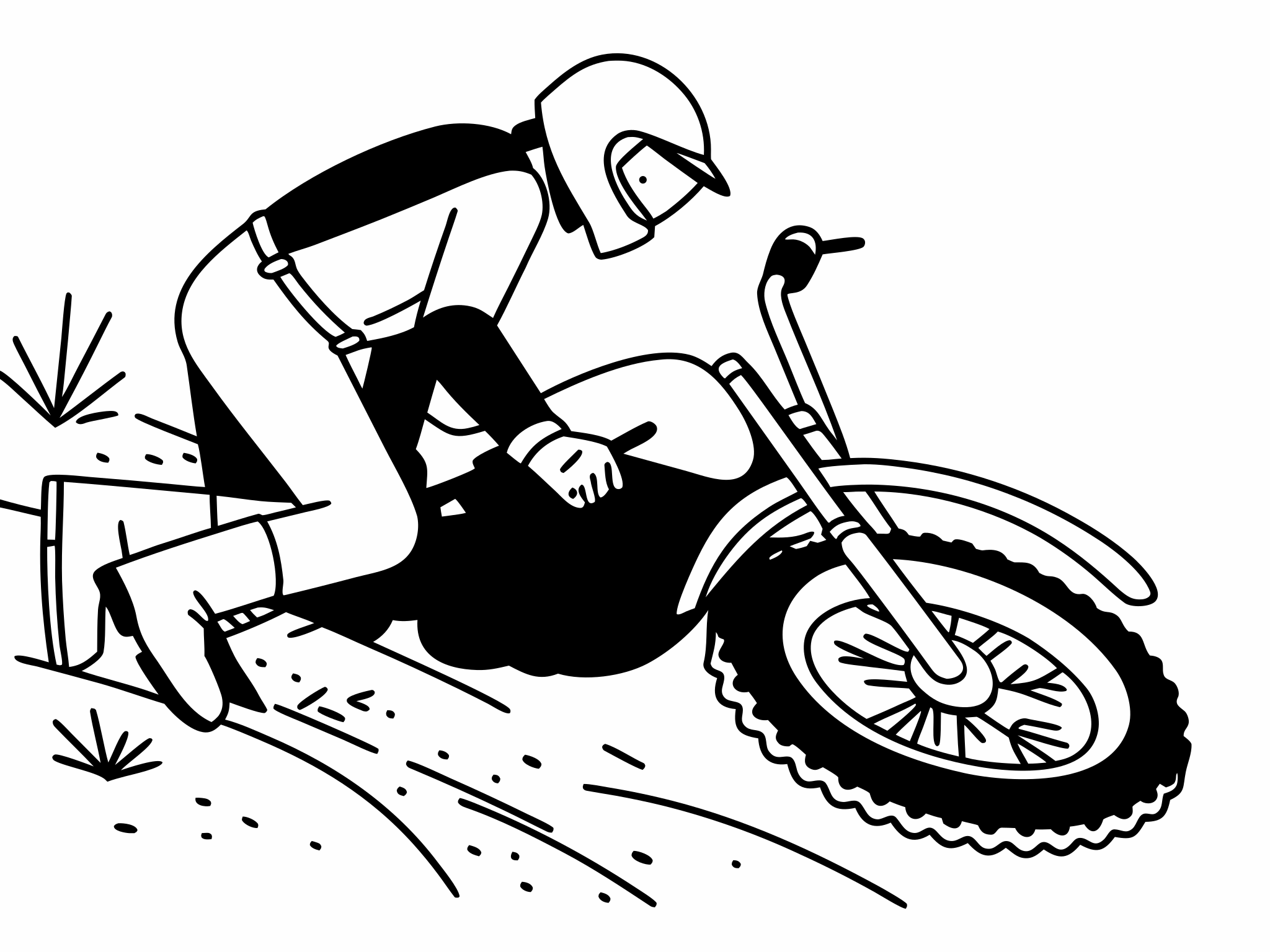
Hung up on a log or rock
Larsen defines stuck as the rear tyre driven into the face of an obstacle. Sometimes the bike sits on its skid plate instead. Either way, throttle alone fails. Pat Smage sees people give it some gas and rock the bike back and forth, "but it doesn't really do much." The coaches agree on three things.
Make room. A rear tyre against the face just spins, so Larsen pulls the bike back as far as it will go. Even five inches helps. In the IRC video, Larsen uses the suspension: weight forward with the brakes on to compress it, then hips back on the rebound as the brakes come off. Brake again before the front rolls off the obstacle. Smage rolls back until the front rests just over the log and the rear has solid ground.
Start with your weight back. Larsen sets the hips back over the rear fender, arms nearly straight. That leaves room to drive forward and counter the wheelie when drive arrives.
Drive, then clutch. Larsen's three steps: feet on the pegs, weight forward, clutch out with power. The body moves first. The clutch release must be quick. As it goes, weight back and throttle nearly off. From the skid plate, Smage is gentler: push the bars forward and slip the clutch with a little gas, weight back for traction.
Keep at least one foot on a peg. Larsen: "If your feet are off the pegs, you can't move." On a big log after a failed try, Smage would roll all the way back and try again. The logs and rocks lesson covers avoiding the bash plate in the first place.
A buried rear wheel
A rear tyre dug into a hole on a loose climb has nothing to climb. Cross Training Enduro sees riders trying to wheelspin their way out, "usually just digging a deeper hole for themselves".
- Roll back for a run-up. Cross Training Enduro: "often the easiest solution is roll back a little bit" and use that run-up.
- Ratchet it back. Larsen uses the same brake-and-rebound pull-back to ratchet a tyre out of a hole on a loose incline.
- Rock it. If you can't roll back, Cross Training Enduro rocks the bike out with little bits of throttle and clutch. Look down first for a rock the tyre could spin on.
- Get off and help it. Dirt Bike Magazine: "the best and quickest method to get out of your situation is to get off the machine and help it." Engine running, first or second gear, pressure on the bars and "delicate throttle". A gentle push gets it moving. "Smooth, slow and smart will get you up and out."
Pulling with a strap or helpers
Fit straps. Transmoto's hill guide: a strap across the rear of the seat "allows you to easily tug and lift the rear of the bike. And a strap fitted around your fork – fitted around the top of the front fender – can be used by others to pull your bike out of sticky situations." The gear guide also lists a tow strap or short rope.
Pull the front tyre. With no strap, Cross Training Enduro finds rolling the front tyre easier than pulling a fork leg: "it's leverage. It only needs half the strength."
The team pull. Helpers pull the front strap or tyre. Another can lift the rear strap. Everyone pulls at once. Helpers stand to the side, never in the bike's path.
Alone. Cross Training Enduro suggests you carry a tow rope, and consider a pulley, for dragging a bike out of a hole.
Restarting after a drop
A flooded engine. Don't hold the starter down. The kill/start lesson gives the short-press rule. Procedures vary by engine, so learn the one in your owner's manual.
Dirt Bike Magazine's 2001 starting tips, from GNCC riders on carburetted kick-start four-strokes, show the idea. Randy Hawkins: "The big key with all four-strokes is not to panic. If you pick the bike up and start flailing away, you're going to cause problems." Hawkins cleared a flooded engine with the hotstart and decompressor, and "no throttle!" Scott Summers held the throttle open with the decompressor in and the kill button pressed, and kicked it "four or five times". The two routines differ. Treat these as examples, not a procedure for your bike.
If the bike went down in water, don't press the starter at all. Follow the drowned-engine steps.
Starting on a slope. Facing uphill, use the hill restart in the kill/start lesson. Facing downhill, Sedlak notes it's always easier to bump start. Clutch in, front brake on, hop on, straighten the bike, roll down and bump start it. Then turn round for a clean run.
Heat matters too. Transmoto: "a four-stroke that's boiling like a kettle can be difficult to start if you get stuck on a climb, whereas two-strokes are easier to get going again."
Trail-side fixes
The gear guide carry list includes a spare clutch and brake lever, because levers snap in tip-overs.
- A bent lever. A boulder bent a Dirt Rider test bike's shift lever. With no spare, they straightened it with two adjustable spanners: "We didn't get it exactly back to the stock position but we didn't break the shifter and were able to ride the rest of the day."
- A flat tyre. In Transmoto's video, Yamaha Motor Australia race technician Darren Thompson moves the bike off the trail and props it on a rock or log, or has mates hold the bike. Thompson starts at the rim lock, takes small bites with the levers, and puts a little air in the new tube so it doesn't crease. The bike setup lesson covers pressures and mousses.
Save your energy
- Be patient. Smage: "The number one thing though is patience."
- Let the engine work. Larsen: "the less throttle, the better."
- Get off sooner. When the rear is dug in and spinning, Dirt Bike Magazine is blunt: "Suck it up and get off your scoot." On descents too steep or blind to ride, walk the bike. The hill climbs lesson covers walking, bulldogging and bailing out early.
- Ride a bike you can lift. Cross Training Enduro's advice for solo riders: "Ride something you can lift by yourself."
- Train for it. The hip-hinge work in strength and mobility protects your lower back when you lift a stuck bike.
How to practise
Practise on easy ground while you're fresh.
1Lift on flat ground
Lay the bike down gently on soft ground. Run the full routine from each side: engine off, in gear, bars or stand, back to the seat, legs.
2Lift on a gentle slope
Lay it on a gentle grassy slope, wheels uphill. Swing the front round, lift, then hold it on the clutch and front brake. A helper stands to the side.
3Unstick from a log or a hole
Use a log low enough to sit on safely. Smage suggests trying different front-tyre positions. Larsen: "you can dig a hole for your rear tire" to practise, on a mellow obstacle first.
Common mistakes
Lifting the moment the bike hits the ground.
Fix: Engine off, in gear, read the slope. Then lift.
Lifting with your back and arms.
Fix: Back to the seat, chin up, small steps, legs.
Lifting a bike up against the hill.
Fix: Swing the front round first so the bike points downhill.
Pinning it with the rear tyre against the obstacle.
Fix: Pull the bike back to make room, then use the clutch with little throttle.
Helpers pulling from below the bike on a climb.
Fix: Pull from the side, never in the bike's path.
You're ready to move on when…
- You stop the engine and check the gear before every lift.
- You can lift your bike from either side using your legs.
- You can turn a downed bike on a slope and stand it up.
- You can free the bike from a small log or a dug hole without spinning the tyre.
- You know your bike's flooded-engine starting procedure.
All lessons in Advanced Techniques
Related lessons and guides
- Kill/start controlsHill restarts and turning an upright bike round.
- Hill climbs and descentsBail-outs, rocking past a ledge and bulldogging.
- Logs and rocksHow not to end up on the bash plate.
- Water crossingsWhat to do when the engine drowns.
- Gear guideStraps, spare levers and the trail kit.
- Strength and mobilityHip-hinge strength that protects your lower back when lifting.