Lesson 6 of 7 in Advanced Techniques
Splatters
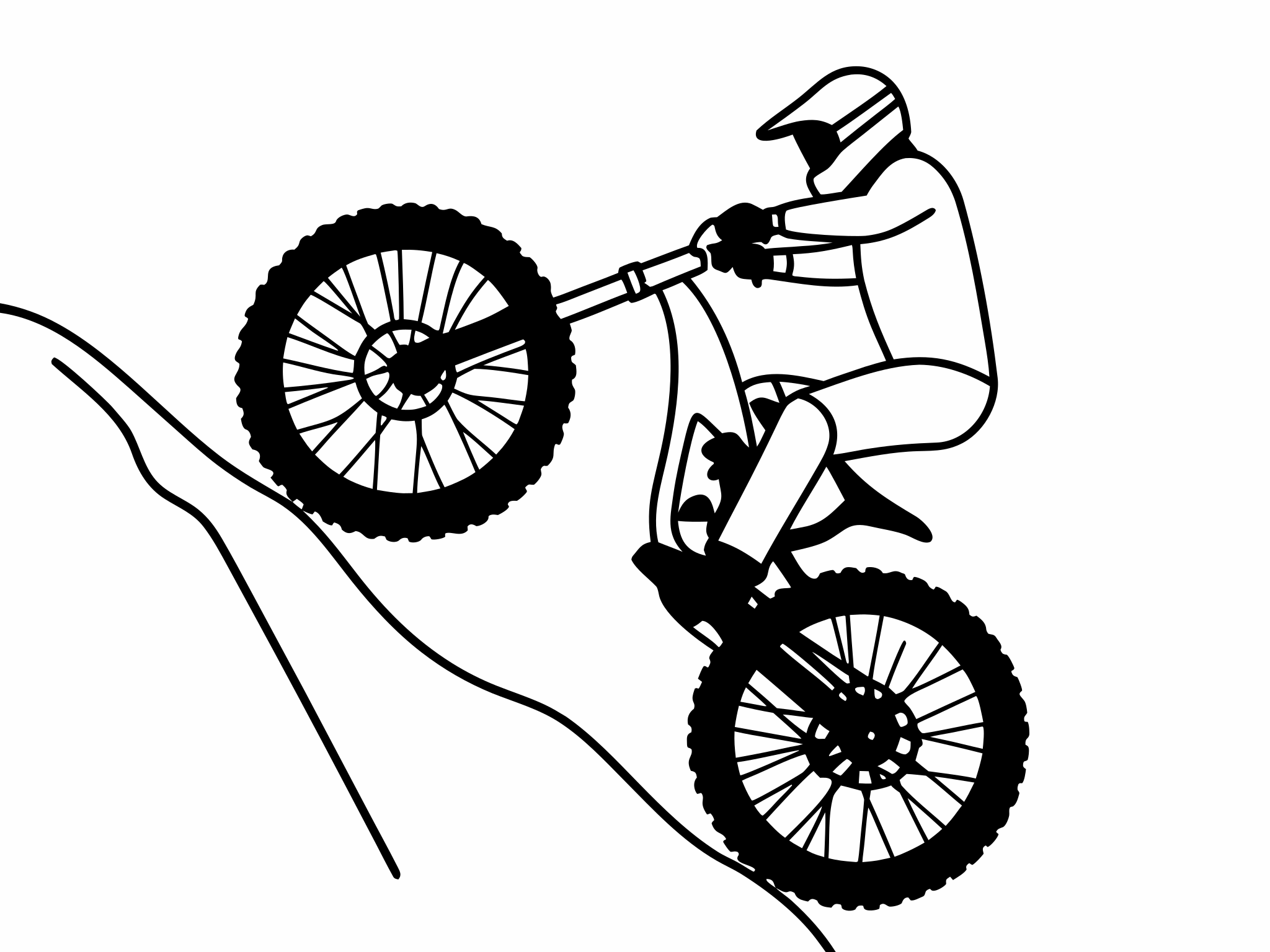
A splatter (or "splat") climbs a short vertical face that has no ramp. You use a kicker — a small rock, root or rise a short distance before the face — to compress the rear and launch the front high, so the bike is rotating backwards as it reaches the face. The rear wheel hits the face first: your legs absorb the impact, your arms let the front drop onto the top, and the rear suspension's reaction and your drive carry the bike up and over. It's the most committing technique in this course. Learn it only once front-end lifts and logs are effortless, and start on a low step.
Updated October 2026. Sources are listed below. How we work
On this page
Why splatters matter in hard enduro
Some obstacles can't be hopped. A rock ledge taller than your front wheel, a wall at the top of a climb, a fallen tree too big to roll: the front can't ride up it, and a normal double blip just parks the bash plate on the edge. A splatter gets you up anyway, by putting the rear wheel against the face.
It comes from trials. Dirt Bike Magazine's splat feature notes that riders like Cody Webb, Taddy Blazusiak and Graham Jarvis "perform moves on full-size machines that started life as hard-core trials skills", on a "240-pound dirt bike, not a 152-pound trials bike". Kyle Redmond, who demonstrates the move in that feature, compares it to "the pre-jump log splat" Webb used in a race.
Most riders won't need splatters often. When you do, the only other way up is usually getting off and pushing.
Splatter, double blip or wheel tap?
People use these names loosely. The difference is which wheel meets the obstacle first.
| Technique | What hits first | Use it for |
|---|---|---|
| Wheel tap / double blip | Front tyre, on top of or high on the obstacle | Logs and steps the front can reach. See logs and rocks. |
| Front-wheel drive-in | Front tyre, low on the face, driven in hard to lift the rear | Big, rounded logs. |
| Splatter | Rear tyre, after launching off a kicker with the front carried high | Vertical faces taller than the front wheel. |
Swipe the table sideways to see every column.
How a splatter works
The Western Districts Trials Club explains it neatly: "A well executed splatter actually has the rider beginning a back flip, but the rear wheel hits the object first and prevents the flip."
That's the whole idea. The kicker lets you compress the rear and throw the bike into a backwards rotation, like a big front-wheel lift with a little air under it. Before it rotates too far, the rear tyre meets the face. The impact stops the rotation, the rear suspension compresses hard, and the front is thrown down onto the top of the obstacle. The club notes that "as the front wheel of the bike is forced down it provides a lot of momentum." Redmond, in Dirt Bike Magazine, then "shifts his weight back, legs flexed and accelerates off the obstacle."
Dirt Bike Magazine's summary: "Clutch use and weight transfer are the keys to making this a success. Go at it half-baked, and the end result could be messy."
How to splatter, step by step
This is the basic splatter onto a low step. Redmond approaches "slowly … (in second gear)"; the trials club suggests "usually second or third depending on your approach speed".
1Find or place a kicker
Don't just ride at the face. Redmond "finds a lift point (many times a rut with a bit of rise in front of the obstacle)". The trials club says the kicker "will usually be located at about the same distance from the obstacle as its actual height", and suggests a movable rock when learning "so you can move it around to get the desired distance". Australasian Dirt Bike Magazine uses "a log or rock a metre from the base of the rock face". Match your speed to the gap. Cross Training Enduro's splat video: if the kicker is close to the face, ride slower; if it's further away, come in faster.
2Decide before the kicker
Line up at 90 degrees to the face, standing, in second gear, at a slow, steady speed. Right foot over the rear brake, one or two fingers on the clutch. If the speed or line is wrong as you reach the kicker, don't launch: roll off, brake and go round again. Once you've left the kicker, you're committed.
3Compress and launch the front high
At the kicker, push down into the rear of the bike and give it a strong burst of clutch and throttle. Redmond "revs the machine hard while squatting down into the rear wheel", and "the front end is carried super high, as it's critical to clear the obstacle."
Pat Smage's trials how-to adds the timing. He comes in just fast enough to coast to the kicker, with the clutch in and the revs up. He compresses both ends, then pops the clutch as the front leaves the kicker and extends his body hard so the bike rotates. If it doesn't rotate, the skid plate hits instead of the rear tyre.
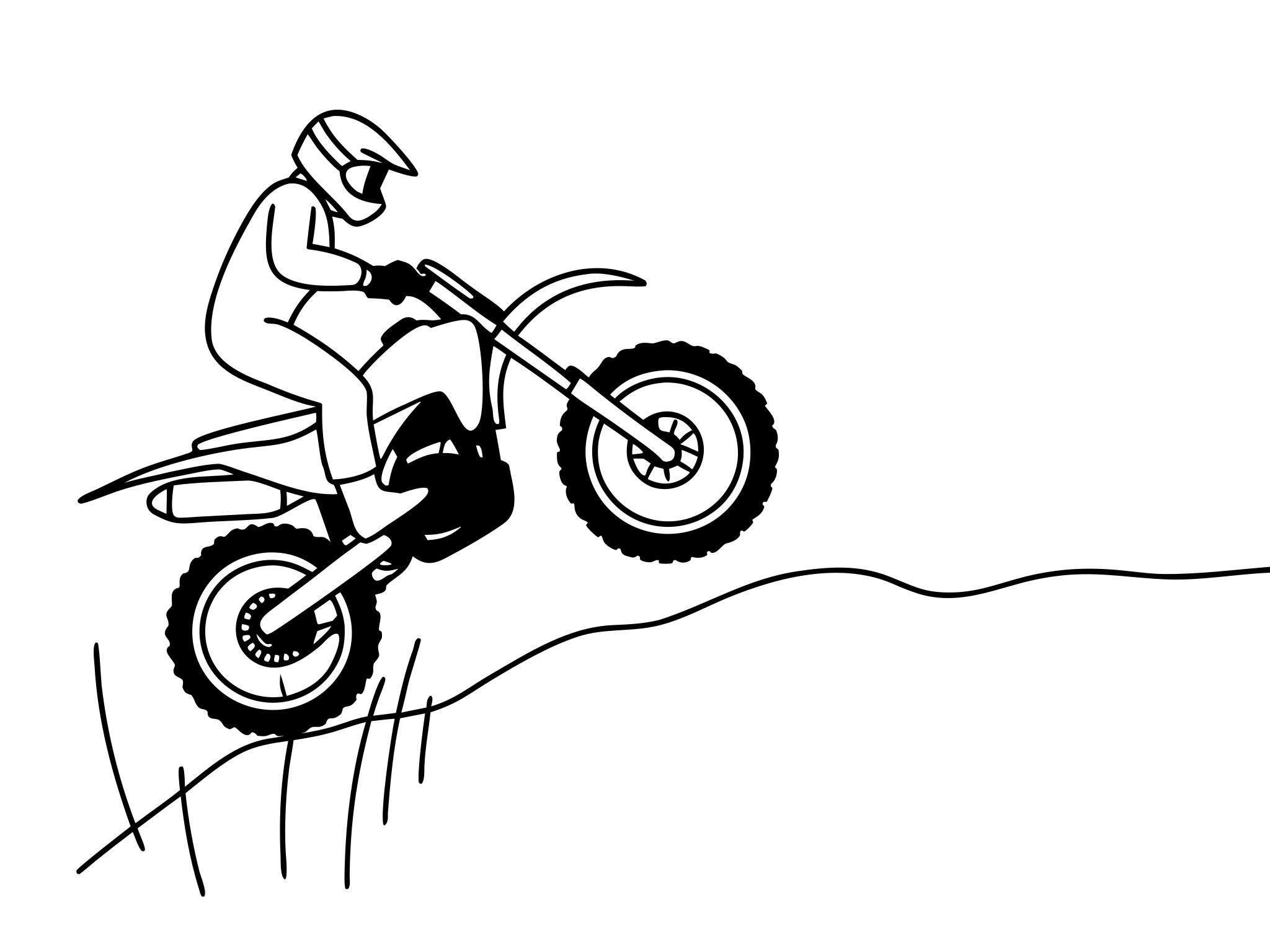
Off the kicker the bike should be rotating backwards, front high, so the rear wheel reaches the face first. 4Rear wheel into the face
With the front high, the rear tyre meets the face. The trials club: "Ideally the rear wheel should hit the obstacle first. Let your legs take the impact and straighten your arms to let the front wheel drop."
5Over the top
As the front lands on top, ease off the throttle, then drive again as you extend your legs and the rear climbs. Stay back. Your instinct is to throw your weight forward to stop a backflip, but Cross Training Enduro keeps the body to the rear. Pat Smage stays back for traction and slips the clutch as the rear lands, because the tyre hits the rock spinning fast. Keep your foot over the rear brake: if the front comes up again at the top, a tap brings it down.
When to abort
A splatter fails in two ways, and one of them hurts.
- Front too low. If the front hits the face instead of going over it, the bike stops dead and you go forward. Transmoto's log guide warns that a half-hearted attempt at a big obstacle "could well see you slam the front wheel to a halt". The time to abort is before the kicker, not at the face.
- Front too high. If the bike keeps rotating after the rear hits, it loops. Your foot on the rear brake is the fix, as in every front-end lift.
The trials club's reminder: "Make sure the bike is doing the splatter, not your body against that rock ledge!" If you're hauling the bike up the face with your arms, the timing is wrong.
Consequences rise quickly with height
A splatter onto a shin-high step is low risk. The same move on a head-high ledge is not. Build height slowly and keep sessions short and controlled: the move is hard on the clutch, the suspension and your wrists.
- Spot it. The trials club says: "Make sure you have someone spotting for you at the top too when learning." The spotter stands to the side at the top, never in front of the face, and grabs a safe part of the bike if it starts to go over backwards.
- Check the top. Know what the bike lands on. A splatter onto loose rock or a slope that falls away is two problems, not one.
- Prerequisites. Only add splatters once your front-end lifts, logs and wheelies are effortless.
- Fresh only. Splatters are for the start of a session. Run the STOP/GO criteria first, and stop as soon as your timing slips.
How to train splatters
Start with very low, safe faces and build height gradually.
1High lifts on flat ground
Practise lifting the front high and bringing it down with the rear brake. You need to put the front where you want it, at the height you want, every time.
2Kicker launches with no obstacle
Put a small, solid rock or log on flat ground. Ride at it in second, compress at the kicker and launch the front high, then land rear wheel first and ride away. This teaches the timing without a face to hit.
3A shin-high step with a movable kicker
Choose a low, solid step with a flat top. Place your kicker about the step's height in front of it. Aim for the rear wheel to meet the face just after the front clears the edge. Move the kicker closer or further until the timing feels natural. Ten clean attempts before you go higher.
4Knee height, with a spotter
Raise the step to knee height with a spotter at the top. Same kicker distance rule, same gear.
5Build height slowly
Go up one step at a time. Stop the session when your timing gets worse, not when you're exhausted.
Splatter mistakes and fixes
The front hits the face and the bike stops dead.
Fix: The front wasn't high enough, or you launched too late. Move the kicker or launch harder, and abort before the kicker if it doesn't feel right.
The bike loops after the rear hits.
Fix: Too much lift or drive. Keep your foot over the rear brake and tap it to bring the front down. Don't throw your body forward: stay back so the rear keeps its grip.
The rear spins on the face.
Fix: Too many revs as the rear hits. A spinning tyre can't climb. Slip the clutch as the rear lands, stay back over it, and let the bike's momentum do the work.
Your body hits the ledge.
Fix: You're too far forward too early. Let your legs absorb the hit and your arms extend.
No kicker.
Fix: Riding straight at a face and trying to lift from nothing rarely gets the front high enough. Find or place a kicker.
A 20-minute splatter session
Keep it short. Rest between attempts and stop when your timing starts to slip.
| Time | Drill | What to focus on |
|---|---|---|
| 0–5 min | High front lifts on flat ground | Height on demand, rear brake to land. |
| 5–10 min | Kicker launches with no obstacle | Front high, rear wheel lands first. |
| 10–18 min | Splatters onto a shin-high step, with a spotter | Rear meets the face just after the front clears the edge. |
| 18–20 min | Two calm attempts, then stop | Finish on a good one. |
Swipe the table sideways to see every column.
You're ready to move on when…
- You can lift the front high on flat ground and land it with the rear brake every time.
- You can launch off a kicker and land rear wheel first, ten times in a row.
- You can splatter a shin-high step ten times in a row with the rear wheel meeting the face first.
- You decide to commit or abort before the kicker, not at the face.
- You never haul yourself up the face with your arms.
Splatter questions
What's the difference between a splatter and a double blip?
In a double blip the front tyre lands on the obstacle first. In a splatter the front is carried high and the rear tyre hits the face first.
What gear should I use for a splatter?
Second for most. The trials club suggests second or third depending on approach speed; first usually makes the drive too sharp.
Can I learn splatters on an enduro bike?
Yes, but it's harder than on a trials bike because the bike is much heavier. Start on low steps and build up slowly.
All lessons in Advanced Techniques
Related lessons and guides
- Logs and rocksThe double blip, and when a splatter isn't needed.
- Controlled front-end liftsThe lift every splatter starts with.
- Controlled wheeliesFront height and rear-brake control.
- Cody WebbEnduroCross and hard enduro rider named in Dirt Bike Magazine's splat guide.
- Taddy BlazusiakFrom trials to extreme enduro and EnduroCross.