Lesson 4 of 4 in Stamina & The Mental Game
Race Day and Long Events
Race day in enduro is a long, paced effort. Know your format first: a time-card enduro times the special tests and penalises you for arriving early or late at time checks; a hare scramble is laps from a mass start; hard enduro uses a prologue to set the start order for a main race of up to eight hours. Prepare the bike and kit the day before, eat a carbohydrate meal a few hours before the start, and ride the first hour well inside your limit. Penalties, getting stuck and crashing cost far more time than a steady pace.
Updated October 2026. Sources are listed below. How we work
On this page
Why a long event is different
FIM Europe's enduro rules allow a competition day of up to seven and a half hours. The Hard Enduro World Championship allows two to eight hours of racing a day, on multi-day events too. Your fitness and your fuel have to last all of it.
Race day also changes your pace without asking. Seat Time's enduro guide suggests you first make sure you can ride 45 to 55 miles with friends, because race day "always seems to tick up the pace".
Keep your head on the next job, not the whole day. Rich Larsen, who presents IRC Tire's hard enduro videos, put it this way: "If I'm at the beginning of a Hard Enduro stuck in a tough situation and I think man I've got six more hours of this I'd go crazy before the first hour is over. Instead I take it one obstacle" at a time. The tools for that are in the mental game lesson.
Race formats on the day
The sport itself is explained in what is enduro and hard enduro. This table covers what each format means for your pacing. Always read your event's supplementary regulations: club rules vary.
| Format | How you start | What's timed | What it asks of you |
|---|---|---|---|
| Time-card enduro (FIM Europe rules) | Two to four riders at a time, at the time on your card | Special tests, to 1/100 s, plus penalties at time checks | Ride the liaison to schedule. Save yourself for the tests. |
| US national enduro | By row: row 44 starts 44 minutes after key time | Test sections, added together for the day | Race the clock in the tests, not the riders on your row. |
| Hare scramble | Mass start, each class on one row | Laps of a marked course, for a set time or number of laps: usually an hour or two (AMA) | Even laps. The start matters less than it feels. |
| Hard enduro (FIM world championship) | A prologue usually sets the start order. Riders then go one at a time or in rows, as each event's rules set out. | Prologue, sprint and main race all score; 2–8 hours a day | Getting through obstacles without getting stuck. Multi-day events add recovery. |
Swipe the table sideways to see every column.
Reading a time card
In a time-card enduro the clock runs all day. Under FIM Europe's rules:
- Your card shows the time allowed for each section. Arrive at the next time check early or late and you're "penalised 1 minute per minute". The time you're booked in becomes your start time for the next section.
- The flags tell you where you are. White flags stand 200 m before the control table and yellow flags 20 m before it. A clock at the yellow flag shows the time. Wait short of the yellow flag and cross it in your minute.
- Don't stop between the yellow flag and the table. That costs a minute on top of anything else.
- Never miss a check. "A rider who misses a time check will be excluded." So is a rider more than 30 minutes behind schedule for the day.
For a first enduro in the US timekeeping style, Rich Lafferty's advice is to relax: "If you're a C rider and it's your first Enduro going in, I wouldn't worry about timekeeping at all." Introduce yourself to an experienced rider on your number and follow along. And "I wouldn't just blitz and try and hare scramble the whole thing either."
The day before
- Check the bike. Run through the pre-ride checklist in bike setup. Fix it now, not on the start line. Know how far a tank takes you on this kind of ground.
- Sign on and pass technical inspection. In FIM Europe events your time card is issued then, or at parc fermé on the first morning.
- Read the route information. Know where fuel, water and help are allowed. Red Bull Romaniacs sends refuelling details the afternoon before and holds a briefing at 20:00 each day. Smaller events have a riders' meeting.
- Walk the test or the prologue if the rules allow it. FIM Europe lets riders inspect special tests "on foot but not by wheeled vehicle". Look for the lines that keep you moving.
- Race in what you've trained in. New boots, a new hydration pack or a new food is a race-day gamble.
- Pack tonight. Lay out the kit list below, fill the hydration pack and charge anything that needs it. Then go to bed.
Kit for a long event
Check your event's list first. Red Bull Romaniacs, for example, makes riders carry "1 Litre of water (minimum)", a survival blanket and a waterproof jacket, among other things. Missing kit costs 30 minutes. For any long day, carry:
- Water in a pack you've used before, and food you can open with gloves on.
- Tools for the jobs that end races: a puncture, a bent lever, a loose bolt.
- Zip ties, a spare spark plug and spare fuses.
- A phone in a waterproof bag, and a navigation device with spare batteries if the event needs one.
- A small first-aid kit: see trail first-aid basics.
- At the pits: fuel, spare goggles, more food and drink, and a towel.
Race morning
Eat early. The joint position of the American College of Sports Medicine and two dietetics bodies gives "1–4 g/kg consumed 1–4 h before exercise" for pre-event carbohydrate. It adds that foods "high in fat/protein/fiber may need to be avoided" to protect your stomach. Seat Time's nutrition guide says to finish eating 60 to 90 minutes before the start. Eat what you've eaten before training rides.
Get to the start early. In FIM Europe events you may enter parc fermé "5 minutes before" your start time, only to push the bike to the start area. No work is allowed there.
Expect nerves. Use the 20-second routine from the mental game lesson on the line.
At a mass start, let the line go. Donnie, of Dirt Biking with Donnie, suggests a first-timer start five seconds behind the field and miss the first-turn chaos. For beginners, "it's rare that five, ten, or even 30 seconds makes a difference after two hours of racing".
Pacing a four- to eight-hour day
Ride the first hour below your limit. Donnie's warning: "The adrenaline will push you hard for the first 15 minutes or so and leave you drained when it wears off." And: "It does you no good at all to put everything you have into the first lap if you can't maintain that pace for a full race."
Race the clock, not your row. In an enduro you start a test with the riders on your row. Seat Time's advice: "Don't then decide to race them into the first turn. It's not a cross-country race." Your score is your time, so you're "really racing the clock".
Know where time really goes. A steady pace costs seconds. These cost minutes, or the race:
- Time-check penalties. A minute for every minute early or late. Ride the liaison to your schedule, not flat out.
- Getting stuck. Before his first Erzbergrodeo, EnduroGP champion Andrea Verona told Enduro21 "you need to avoid getting stuck and pushing as much as possible if you don't want to drain your energy."
- Crashing and breaking the bike. Verona again: "You need to be able to go up and down without making big mistakes or falling down so you don't break the bike."
- Tired decisions. Late in the day, choose the easier line. See long days and tired decisions.
On hard enduro obstacles, take a line you can ride without stopping over a faster line you might stall on.
Fuel and water on race day
How much to eat and drink is in endurance: carbohydrate per hour, the 2% body-weight limit and salt. This section is about when and where.
1Know where you can refuel
The rules decide where you get fuel, water and help. In FIM Europe enduros you refuel only in marked areas between the white and yellow flags, and outside help is allowed only at time checks with assistance and in the final assistance area of the last time check. In the Hard Enduro World Championship, outside assistance includes "obtaining tools, spare parts, water and food and drink on the track". So whatever you need between pits, you carry, unless the jury sets up water stations in extreme heat. Red Bull Romaniacs has drinking water at its Tank Points.
2Set up the gas stop
At a club enduro the riders' meeting tells you where the gas stop is. If it's away from the paddock, Seat Time suggests a bag strapped to your fuel can with water, snacks and a towel. Seat Time's nutrition guide calls the gas stop a good place for a little whole food.
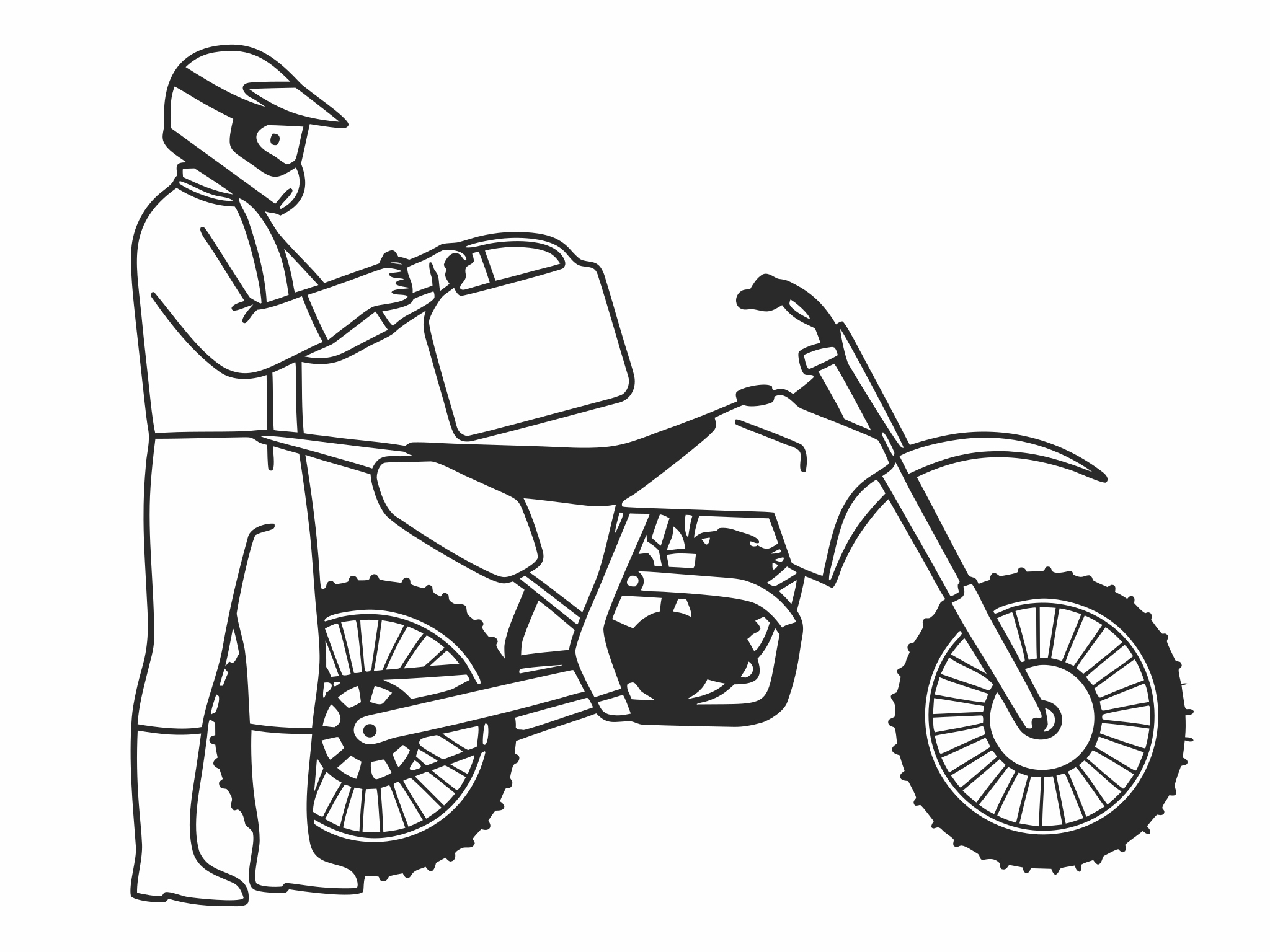
Plan the gas stop before the start: fuel, drink, food and a towel in one place. 3Drink on the transfers
In a test you need both hands and your eyes. Seat Time's nutrition guide: "If you're drinking during a test section, you are not properly hydrated during the race." Drink from the pack on the transfer sections and while you wait at the start of a test. In a hare scramble or hard enduro, drink on the easy parts of each lap or stage.
4Eat before you're hungry
Eat small amounts from the first hour, on easy ground. The same guide's test: "If you get to a gas stop and you're already hungry, you're kind of behind". The joint position says opportunities to eat and drink "vary according to the rules and nature of each sport", and that athletes should practise their refuelling plan. Practise yours on long training days, with the hydration pack you'll race with.
Recovery between days
On a multi-day event, day two starts the moment day one ends.
Drink back what you lost. If you weighed yourself before and after (see endurance), the joint position advises drinking more than the deficit, "1.25–1.5 L fluid for every 1 kg BW lost", because you keep losing fluid after you stop. Dietitian Jordan Sullivan gives the same rule on Gypsy Tales: put back "1.2 to 1.5" times what you lost. The joint position also says athletes "should not be advised to restrict sodium" after exercise, because sodium helps you hold on to the fluid. Salt your food.
Eat soon. Have a carbohydrate-rich meal soon after you finish. The joint position recommends "0.25–0.3 g/kg body weight or 15–25 g protein" in the first two hours to help muscles repair.
Skip the beer. The joint position encourages athletes to "minimize or avoid alcohol consumption in the post-exercise period when issues of recovery and injury repair are a priority."
Fix the bike when the rules allow. In FIM Europe events the bike goes into parc fermé after day one. You may only push it in and out, and no work is allowed there or in the start area next morning. You have 15 minutes from the pre-finish time check, through the last service area, to the final time check. Use that window. At club events with no parc fermé, do the jobs straight away, not at midnight.
Get ready for tomorrow. Dry your kit, refill the pack, read the next day's information and sleep.
Save energy on the bike
The basics are in save energy while you ride: a light grip, letting the bike move, steady breathing, lines that keep you moving, and momentum over effort. On race day, add these:
- Rest on the liaison. Sit on smooth transfers, as body positioning explains: sit on purpose, to rest. Shake out your hands, drink and breathe.
- Stay off the ground when you're tired. Larsen notes that "especially when you're tired you lose balance and need to dab". Keep your weight on the pegs and dab lightly. Each heavy dab costs grip and energy.
- Push less. Verona's point about getting stuck is the big one. A line you can ride beats a faster one you might have to push up.
Nerves tighten your grip, and a tight grip brings on arm pump. The arm pump guide covers it.
Race-day mistakes
You flew the first hour and spent the last three hanging on.
Fix: Ride the first hour at a pace you could hold all day. Adrenaline wears off; the course doesn't get shorter.
You got to the time check early and rolled straight to the table.
Fix: Under FIM Europe rules, early costs the same as late: wait short of the yellow flag and cross it in your minute. Check how your event scores early arrival.
You were starving and empty by the gas stop.
Fix: Eat and drink on the transfers from the first hour. The gas stop tops you up; it can't rescue you.
You were up late on night one fixing the bike and celebrating.
Fix: Do the jobs in the window the rules allow, skip the alcohol, and get to bed. Tomorrow is another full day.
You're ready for race day when…
- You've ridden a full race distance at a steady pace and finished with something left.
- You've read the supplementary regulations: timing, penalties, fuel, help and mandatory kit.
- You know how far your bike goes on a tank on this kind of ground.
- You've eaten and drunk on the bike in training, using the food and pack you'll race with.
- On a multi-day event, you have a plan for each evening: drink, food, bike, sleep.
Race day questions
Should my first race be a hare scramble or an enduro?
Either works. A hare scramble keeps you on one marked loop, so the pits come round every lap. A time-card enduro adds a route, a schedule and time checks. The beginner's guide covers licences and entering a first race.
Can someone help me if the bike breaks?
Only where the rules allow. FIM Europe allows outside help only at time checks with assistance and in the final assistance area of the last time check. In the Hard Enduro World Championship the rider must do any repairs, though another rider in the race may help. Red Bull Romaniacs limits even rider-to-rider help. Read your event's rules.
What if I'm late to the start line?
Under FIM Europe rules you have one minute after your start signal. After that it's a minute's penalty per minute late, and after 15 minutes you're classed as retired. Club rules vary.
All lessons in Stamina & The Mental Game
Related lessons and guides
- EnduranceHow much to eat and drink, and how to save energy while you ride.
- Mental gameNerves on the line and decisions when you're tired.
- Enduro for beginnersLicences and entering a first race.
- What is enduro?The formats explained.
- Hard enduroThe races and what makes them hard.
- Red Bull RomaniacsA multi-day hard enduro with a prologue.