Lesson 1 of 3 in Stamina & The Mental Game
Endurance
Endurance for hard enduro means an aerobic base big enough that a long day of riding doesn't push your heart rate to its limit, plus enough high-intensity fitness to recover quickly from hard sections. Build it mostly with easy, conversational sessions: cycling, running, rowing or hiking. Add one hard interval session a week once the base is there. On long rides, practise fuelling: sports-nutrition guidance is 30–60 g of carbohydrate an hour for one to two and a half hours, and up to 90 g beyond that. Drink to a plan so you lose no more than about 2% of your body weight.
Updated September 2026. Sources are listed below. How we work
On this page
Why endurance matters in hard enduro
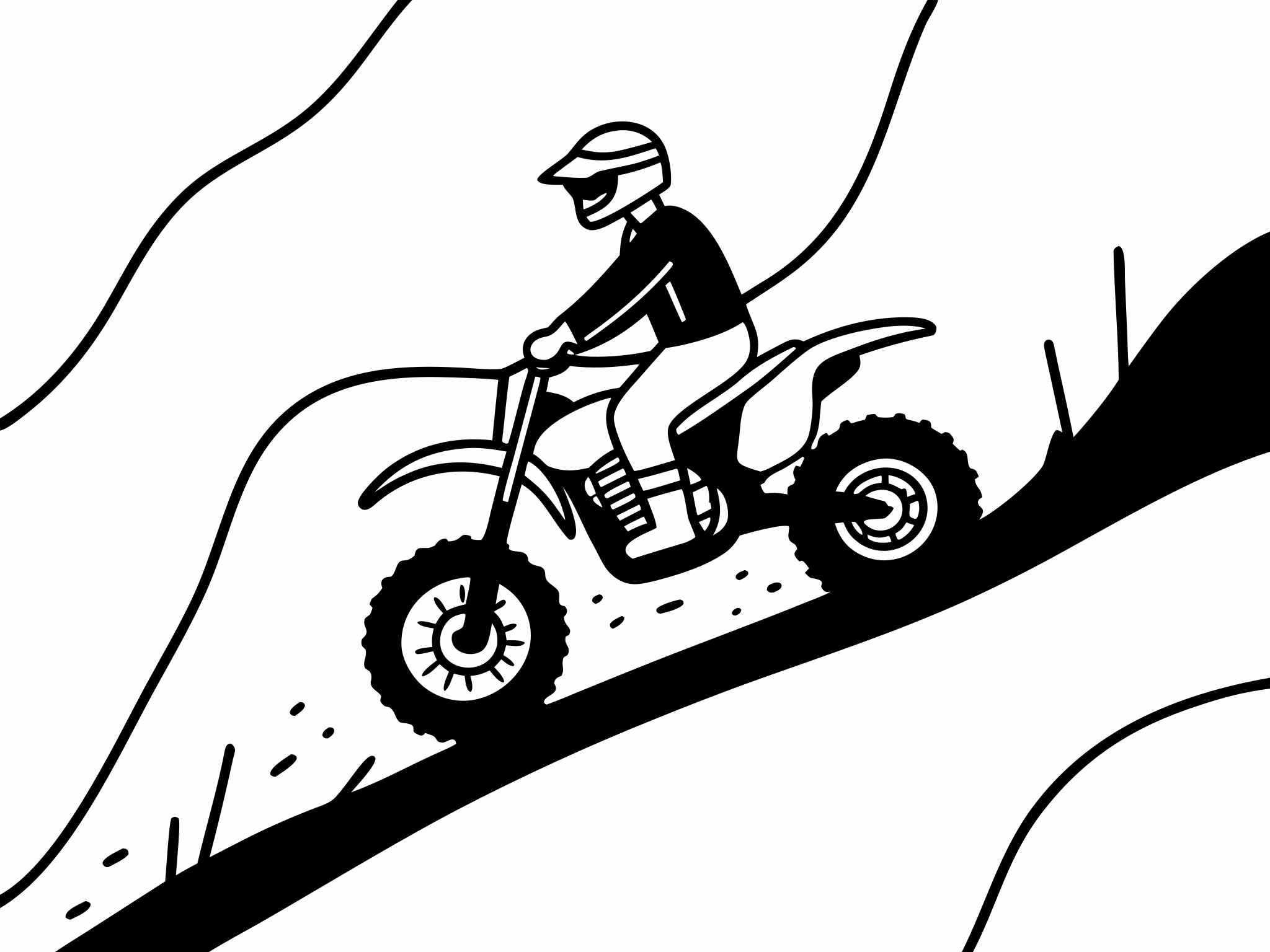
Most failures in hard enduro aren't caused by one obstacle. They're caused by fatigue making every decision worse. A solid aerobic base keeps your hands relaxed, your eyes up and your clutch hand gentle hours into a ride.
The demands are real. In a study of fifteen enduro riders in Frontiers in Physiology, heart rate rose "from 96.5 ± 12.8 bpm at rest to 153.1 ± 17.7 bpm during riding" in a ten-minute session, with peaks near 200 bpm in some riders. The authors note that enduro "competitions last from 6 to 8 h". They didn't measure the riders' aerobic fitness, but suggest that "aerobic fitness is potentially a precursor to Enduro performance, especially for long-lasting competitions."
Motocross research, where the riding is faster but shorter, shows the ceiling. In a simulated 30-minute race, riders "spent 87% of time above 90% of their HRmax", and grip strength dropped afterwards. Hard enduro is usually slower, but it goes on for hours, on terrain where one tired mistake can end the day.
What the research on off-road riding shows
The studies are small and most involve motocross, but they agree: riding a dirt bike off-road is a hard aerobic and upper-body effort.
| Study | Riders | Key finding |
|---|---|---|
| Sanna et al., 2017 | 15 enduro riders, 10-minute session | Heart rate from about 97 bpm at rest to about 153 bpm riding; peaks near 200. |
| Konttinen et al., 2007 | 9 motocross riders, 15-minute ride | Mean heart rate at 95% of maximum; grip strength down 16% after riding. |
| Ascensão et al., 2008 | 15 motocross riders, simulated 30-minute race | 87% of the race above 90% of maximum heart rate; grip and arm power reduced afterwards. |
Swipe the table sideways to see every column.
How to think about endurance training
Mostly easy. Elite endurance athletes, in Stephen Seiler's review, "converge on a typical intensity distribution in which about 80% of training sessions are performed at low intensity", with about 20% hard. You don't need to copy an Olympic rower, but the principle holds: most sessions should feel easy.
What "easy" means. Easy aerobic work, often called Zone 2, is a pace you could hold for an hour while talking in full sentences. The NHS's test for moderate effort is similar: "you can still talk, but not sing." If you're gasping, it isn't easy.
Polarised or not? A 2025 network meta-analysis found no overall difference in aerobic gains between a strictly polarised plan and a "pyramidal" one with some middle-intensity work, and suggested that "recreational athletes may improve more with a PYR TID". In plain English: for most riders, a mix of mostly easy work with some moderate and a little hard training is fine.
Add intervals once the base is there. A meta-analysis of interval training found that endurance training and high-intensity intervals both produce large gains in aerobic fitness, "with the gains in VO2max being greater following HIT". One interval session a week is enough for most riders, on top of the easy work.
Build time before intensity. Add time to easy sessions first. Add hard sessions only once you're training consistently.
Ways to build it
Pick what you'll actually do. Consistency matters more than the choice.
| Activity | Good for | Watch for |
|---|---|---|
| Cycling (road, gravel or mountain bike) | Long easy sessions; mountain biking adds balance and line reading | Saddle time doesn't train grip or standing. |
| Running or hill walking | Time-efficient; hill walking trains legs for pushing bikes up hills | Build running volume slowly to avoid overuse injuries. |
| Rowing machine | Whole-body aerobic work, including back and grip | Keep the stroke rate low for easy sessions. |
| Long ride days on the bike | The most specific endurance there is | Skills degrade when you're tired; stop practising hard lines then. |
| Intervals (bike, rower or hill repeats) | Recovering quickly after hard sections | Only once a week, and only on top of a base. |
Swipe the table sideways to see every column.
A sample week
For a rider with a job, riding once or twice a week. Adjust around your riding days: don't put the interval session the day after a big ride.
| Time | Drill | What to focus on |
|---|---|---|
| Monday | Rest or 20 minutes of mobility | Recover from the weekend. |
| Tuesday | 45–60 min easy (cycle, run or row) | Conversational pace throughout. |
| Wednesday | Strength session | See [strength & mobility](/training/stamina-mental/strength-mobility). |
| Thursday | Intervals: 10 min easy, then 5 × 3 min hard with 3 min easy between, 10 min easy | Hard but controlled; the last one should look like the first. |
| Friday | Short strength session (30 min) or rest | Light enough to be fresh for the weekend. |
| Saturday | Ride day | Technique first; practise fuelling and drinking. |
| Sunday | Long easy session (60–120 min) or a second ride | Time on your feet or on the pedals. |
Swipe the table sideways to see every column.
Fuelling on long rides
A long hard enduro day burns through your carbohydrate stores. Running low shows up as heavy legs, clumsy hands and poor decisions.
The joint position of the Academy of Nutrition and Dietetics, Dietitians of Canada and the American College of Sports Medicine gives clear numbers. For endurance exercise "including 'stop and start' sports" of one to two and a half hours, it recommends 30–60 g of carbohydrate an hour. For longer efforts, "in very prolonged events (2.5+ h)", it says "higher intakes (up to 90 g/h) are associated with better performance." Its table links those higher intakes to products with "multiple transportable carbohydrates (Glucose:fructose mixtures)". Build up to them in training; a sudden jump can upset your stomach.
What that means on the bike:
- Eat early and little. Start within the first hour. Small, frequent amounts are easier to digest than a big lunch at the halfway point.
- Use what you can eat with gloves on. Gels, chews, bars you've opened in advance, or carbohydrate in your drink.
- Practise it in training. Learn what your stomach handles while you ride. A race day is the wrong time to try a new gel.
- Eat a proper meal after. Riding days end tired; plan the recovery meal before you leave.
Hydration: enough, not too much
Sweat rates vary a lot. The joint position gives a range of "0.3–2.4 L/h" depending on intensity, heat and fitness. In a hot race in full gear, you can be near the top of that.
The American College of Sports Medicine's aim is "to prevent excessive (>2% body weight loss from water deficit) dehydration". Dehydration beyond that level also affects thinking: a meta-analysis found it impairs "attention, executive function, and motor coordination when water deficits exceed 2% BML". Those are exactly the things you need in a rock garden.
- Know your sweat rate. The ACSM says "individual sweat rates can be estimated by measuring body weight before and after exercise." Weigh yourself before and after a two-hour ride, allowing for what you drank and ate.
- Sip regularly. A hydration pack lets you drink without stopping.
- Add salt on long or hot days. The joint position says sodium "should be ingested during exercise when large sweat sodium losses occur", and lists high sweat rates, "salty sweat" and "prolonged exercise exceeding 2 hours in duration". Most hard enduro days qualify. Electrolyte drinks or tablets do the job.
- Don't overdrink. The heat consensus warns that "recreational athletes involved in prolonged exercise should be cautious not to overhydrate". The joint position calls over-drinking "the primary cause of hyponatremia" (low blood sodium). Its symptoms include nausea, headache and confusion, and it needs prompt medical attention. If you weigh more after a ride than before it, you drank too much.
Riding in the heat
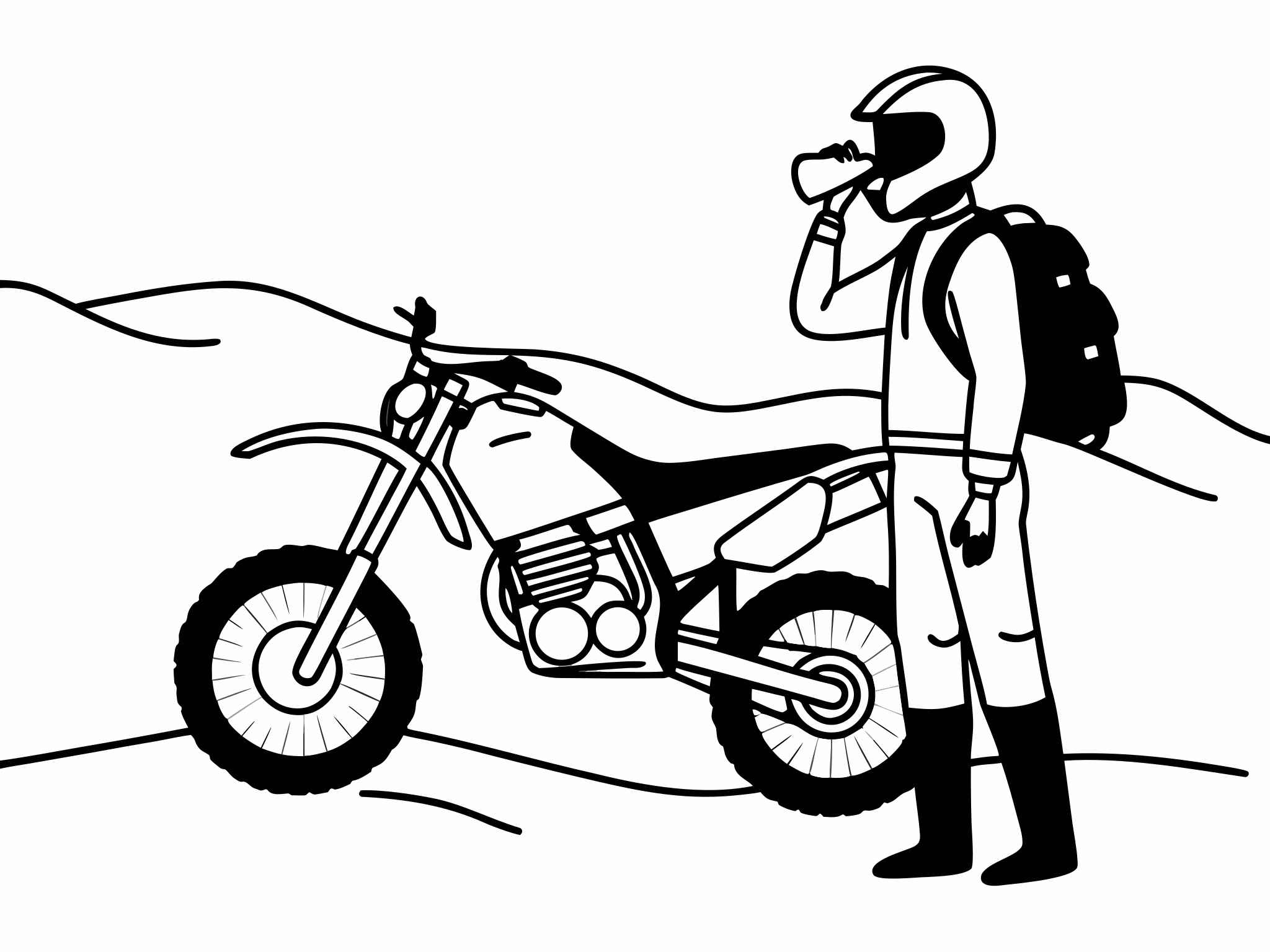
Full enduro gear in summer heat is a serious load on the body. Heat makes the same effort feel harder and dehydration faster.
- Acclimatise before a hot event. The heat consensus recommends "repeated exercise-heat exposures over 1–2 weeks", with sessions lasting "at least 60 min/day", and notes most adaptations come in the first week.
- Manage it on the day. Shade at every stop, vented gear, cold water on your neck and head, and slower pace in the hottest hours.
- Know the warning signs. The NHS lists the symptoms of heat exhaustion as including tiredness, dizziness, headache, feeling sick, heavy sweating, pale clammy skin, cramps and being very thirsty. It says heat exhaustion "does not usually need emergency medical help if you can cool down within 30 minutes", but "heatstroke is a medical emergency".
- Cool a rider down. The NHS's four steps: move them to a cool place; remove unnecessary clothing (for a rider, armour and jersey, and the helmet only if there was no crash and no neck pain); give them plenty of water or an isotonic sports drink; and cool their skin by spraying or sponging with cool water and fanning them. They "should start to cool down and feel better within 30 minutes."
- When to call for help. Among the NHS's reasons to call 999: "still being unwell after 30 minutes of resting in a cool place, being cooled and drinking fluids", hot skin that isn't sweating, confusion and lack of coordination, a fit, or loss of consciousness. Outside the UK, call your local emergency number. A rider with heat illness doesn't ride themselves out.
Endurance training mistakes
Every session is hard.
Fix: You never recover enough to improve. Keep most sessions easy and conversational; save one for intervals.
Training only on the bike, once a week.
Fix: One ride a week isn't enough to build aerobic fitness. Add two or three short easy sessions between rides.
Fuelling for the first time on race day.
Fix: Practise eating and drinking on every long ride so your gut and your routine are ready.
No drinking plan on a hot day.
Fix: Know your sweat rate, drink to it from the start, and add electrolytes on long or hot days.
Pushing on when technique falls apart.
Fix: Skills first, then fitness. When your riding gets sloppy, stop the hard stuff and ride easy terrain or rest.
What good feels like
- You recover quickly after a hard section and your breathing settles within a minute or two.
- Your heart rate on a familiar loop is lower than it was a month ago.
- Your hands stay relaxed late in the day.
- You finish a four-hour ride with your technique still working.
- You know how much you need to eat and drink an hour, and you do it without thinking.
Endurance questions
What is Zone 2 training?
Easy aerobic work at a pace you could hold for an hour while talking in full sentences. Heart-rate zones differ between people, so the talk test is a simpler guide than a number.
Is cycling good training for hard enduro?
Yes. It builds the aerobic base with little impact, and mountain biking adds balance and line reading. Add strength work for grip and the standing position, which cycling doesn't train.
How much should I drink on a ride?
Enough to lose no more than about 2% of your body weight. Weigh yourself before and after a long ride to learn your own sweat rate, and add electrolytes in the heat.
Do I need to see a doctor before training?
If you have a heart condition, another medical condition or symptoms such as chest pain, fainting or unusual breathlessness during exercise, see a doctor before you start hard training.